🥃 Investing in Japanese Whisky
Quiet rows of casks
Mizunara leaves its mark
Depth before its time
Welcome to the Alts Sunday Edition 👋
I hope you enjoyed last week's issue on Bonsai as an Alternative Asset.
Based on your feedback, that was a fan-favorite! Thanks for all the kind words, and an extra special thanks to Hayato Takahashi for penning such a great issue (and not in his native language!)
Today, we’re staying in the far east, taking a look at Japanese whisky.
We’ve discussed whisky cask investing in the past. But our coverage has mostly focused on areas like Scotch (Scotland) and bourbon (USA).
Japanese whisky, however, is a fundamentally distinct market. Production volumes are tiny, maturation timelines are compressed, and unique barrels command strong premiums.
For cask investors, these dynamics create genuine scarcity, and the potential for attractive returns.
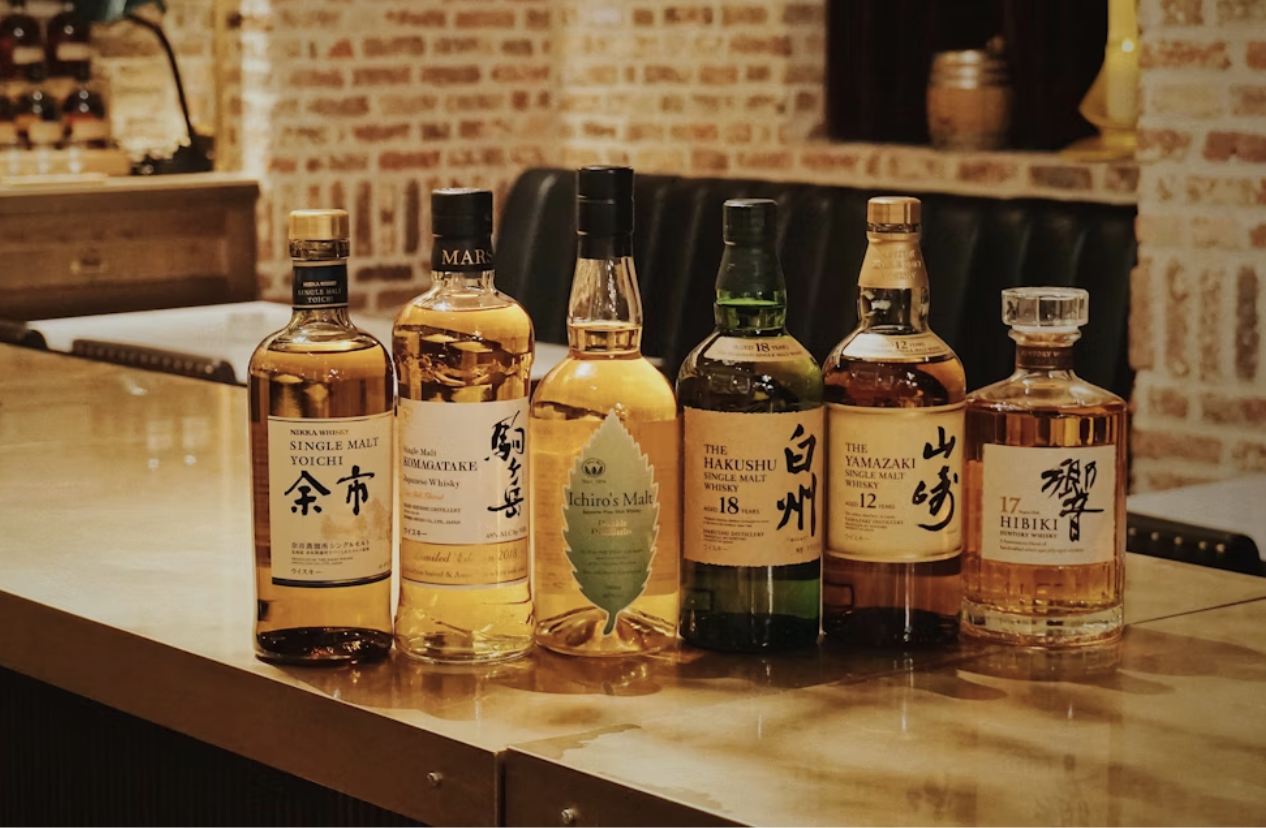
As we’ll see, Japanese whisky has its roots in Scotch production. However, a distinct climate and different distillation methods create a truly unique flavor profile. Image: Yuri Lu
We’re also looking at dekantā, one of the leading whisky brokers. Their direct relationships with Japanese distilleries offer something increasingly rare: casks stored on-site with verified ownership and a clear path to exit.
You'll learn:
Why supply constraints set Japanese whisky apart from other spirits markets,
How Mizunara oak leads to faster maturation and deeper complexity
What projected cask economics look like in practice
And how investors can participate in this offering through an upcoming Altea SPV with staggered maturities and defined exit windows.
The Japanese whisky industry has gone through a profound transformation in the past few years, making this opportunity more timely than ever.
Let’s go 👇
A brief overview of Japanese Whisky
The origins of Japanese whisky lie with one man: Masataka Taketsuru.
A chemist by training, Masataka was born into a sake-producing family. But in 1918, he made a pilgrimage to Scotland to study the techniques of Scotch whisky producers, hoping to make the spirit in Japan.
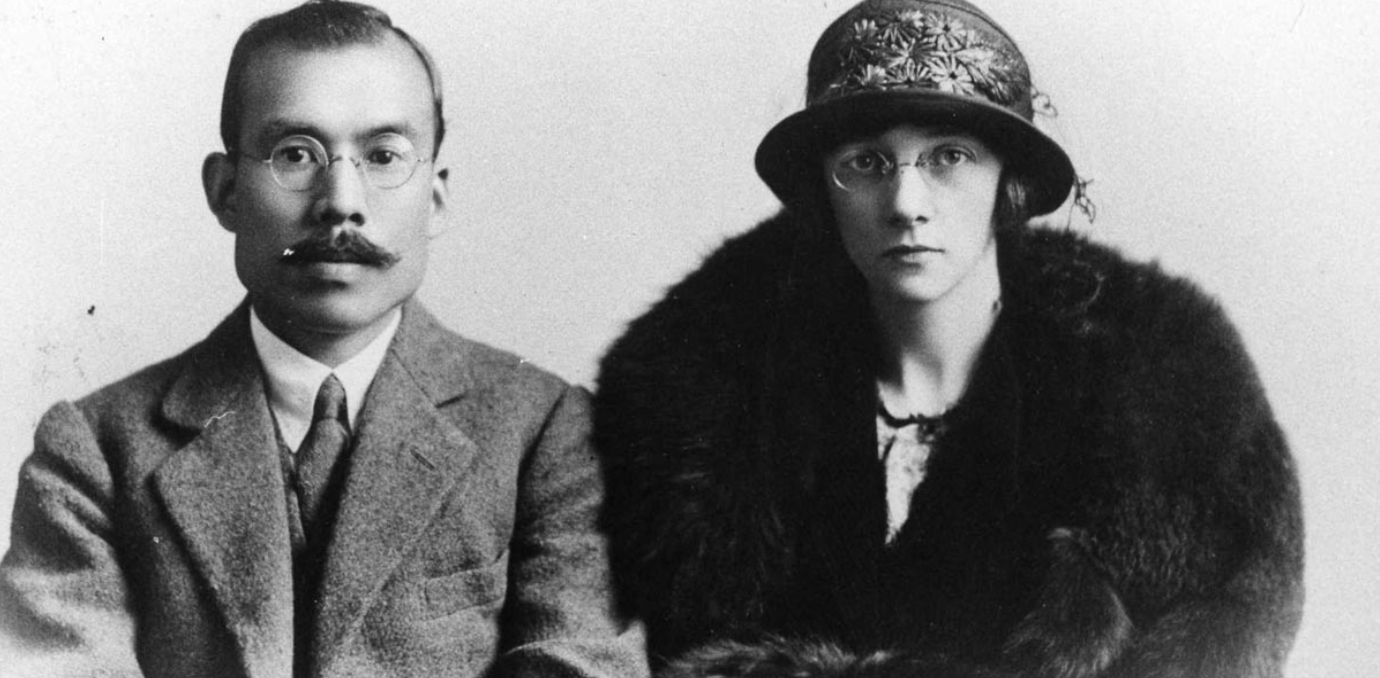
During his time in Scotland, Masataka fell in love with his future wife, Rita Cowan (much to the chagrin of both families).
When Masataka returned to Japan, he partnered with entrepreneur and businessman Shinjiro Torii.
With Masataka as the engineer and Shinjiro as the financier, the two launched Japan’s first commercial whisky distillery.
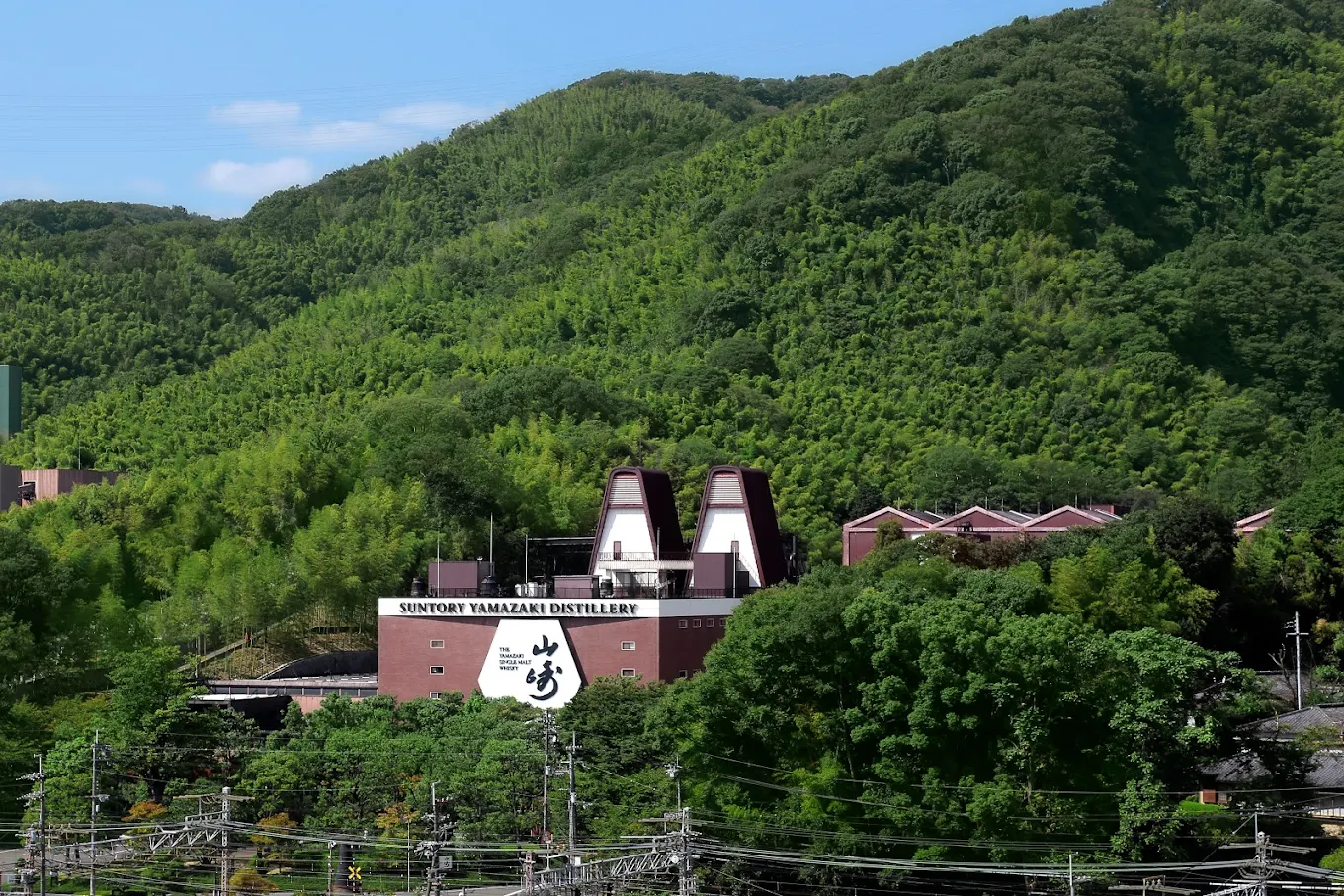
Opened in 1923, the Yamazaki Distillery was Japan's first commercial whisky distillery. The distillery sits in a misty valley between Kyoto and Osaka. Torii chose the location because of its exceptionally pure water, which had been famous for centuries and used in traditional tea ceremonies. Today it is owned by Suntory.
But their differing visions would define the industry for decades to come:
Masataka focused on authenticity and craft. He wanted to make whisky that was as close to Scotch as possible.
Shinjiro focused on profitability and adaptability. He wanted to tailor Japanese whisky to local tastes to ensure commercial success.
Eventually, the two men would come to form independent firms: Nikka Whisky (Masataka) and Suntory (Shinjiro). These two companies remain Japan’s leading domestic whisky firms to this day.
Modern Japanese whisky retains the impact of both visions.
The spirit is rooted in the same origins as Scotch. But local variations (such as the country’s soft water sources and distinct climate) make it a unique drink in its own right.
The modern era: The Great Japanese Whisky Shortage
For years, Japanese whisky was under-appreciated by aficionados.
Following a peak in the 1980s, the domestic market entered a decades-long decline. International sales were poor too. Several major distilleries were even mothballed entirely, including the famous Karuizawa in 2000, and Hanyu in 2004.
But in the 2010s, the stagnation began to reverse:
In 2015, Suntory’s Yamazaki Sherry Cask 2013 was awarded the title of World Whisky of the Year. This prestige helped raise awareness of Japanese whisky among tastemakers.
That same year saw the conclusion of the Japanese TV drama Massan. This hugely popular show, inspired by the story of Masataka Taketsuru, is credited with dramatically reviving the domestic market.
Shortly after, international sales of Japanese whisky began to explode. Exports climbed by roughly 5x between 2016 and 2022.
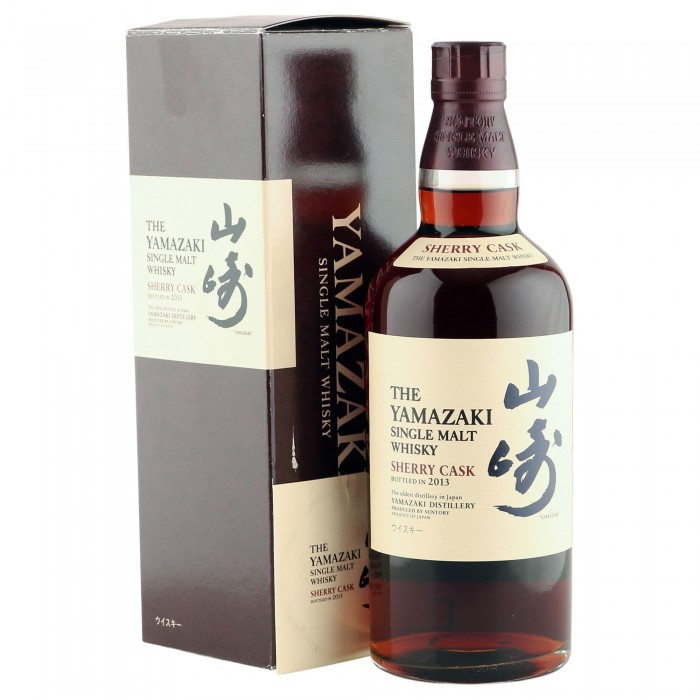
When Yamazaki Sherry Cask 2013 was named World Whisky of the Year in 2015, it marked the first time a Japanese whisky received the award. Crafted entirely from sherry-cask malts at the Yamazaki Distillery, it was described as “near indescribable genius." Today, bottles retail for roughly $11,000 each.
Unsurprisingly, booming interest and limited supply meant that prices soared.
The Japanese 100 Index, which tracks the prices of 100 collectors’ bottles, grew by about 22% annualized between 2016 and 2023.
Don't discount the effect of Lost in Translation! Bill Murray’s promotion of Suntory in the 2003 film helped boost recognition of Japanese whisky among Western audiences.
The market is now maturing
Everyone knew that rapid expansion couldn’t last forever.
Today, the Japanese whisky market is normalizing, going through a post-boom recalibration.
And a few key themes are arising:
Diversification (away from the duopoly)
Historically, this industry has been dominated by the duopoly of Suntory and Nikka.
But that’s changing due to the rise of Japan’s ‘ji-whisky’ distillers like Ontake, Kiyokawa, and Gakkogawa. These are smaller producers of craft whisky, and they're helping reverse the supply crunch.
Strict definition
For years, ‘Japanese whisky’ was a loosely defined term, something that unscrupulous distillers took advantage of.
But in 2021, the industry took a lesson from Champagne and Tequila, and set clear standards strictly defining what makes a true Japanese whisky.
To be labeled Japanese whisky, a spirit must:
Contain malted grain
Be made with only grain and Japanese water
Be saccharified, fermented, distilled and bottled (to >40% ABV) all within Japan.
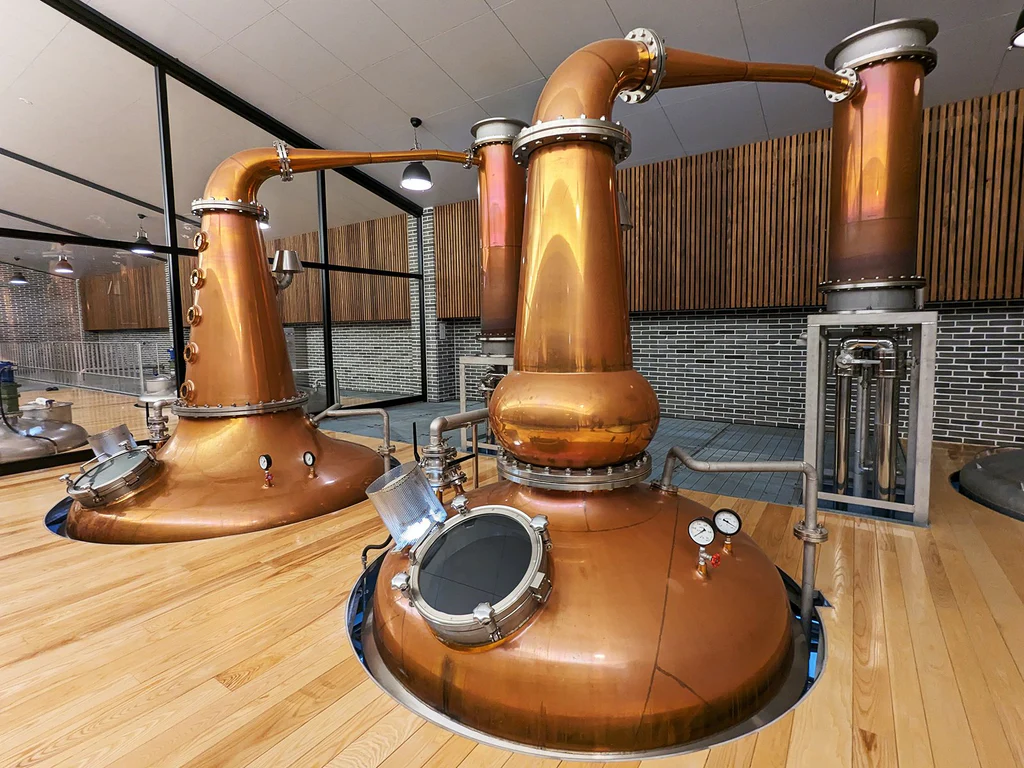
Founded in 2019, Ontake Distillery sits high above sea level on the Satsuma Peninsula. The distillery produces a light, delicate spirit using bespoke stills and matures it in Oloroso sherry and American virgin oak casks, with casks sold exclusively through Dekantā. It is known for having the world’s first onsite 18-hole golf course exclusively for cask owners. Image courtesy of The Spirits Business.
Differentiation
Price action is no longer acting uniformly. Instead, there’s increasing differentiation, where prices for ultra-high-end bottles have dipped noticeably, but retail prices for premium options have actually increased.
In short, the Japanese whisky market is maturing – and dekantā has been on the front lines of that shift.
What is dekantā?
dekantā is the world’s largest online retailer of Japanese whisky.
The company was founded in 2015 by Japanese whisky expert Makiyo Masa. Her insight was simple but profound – the main issue holding Japanese whisky back wasn’t quality, but distribution:
“Back in 2011, I was living in Hong Kong and noticed how much more attention Scotch whisky [was getting at auctions] compared to Japanese whisky.
I realized the potential global market of people who could not access Japanese whisky, as it was so hard to get hold of outside Japan.
And so, dekantā was born...giving people from all over the world the chance to taste Japanese whisky.”
Today, the company carries an inventory of 2,000+ expressions, ranging from rare premium editions to entry-level releases from small distillers.
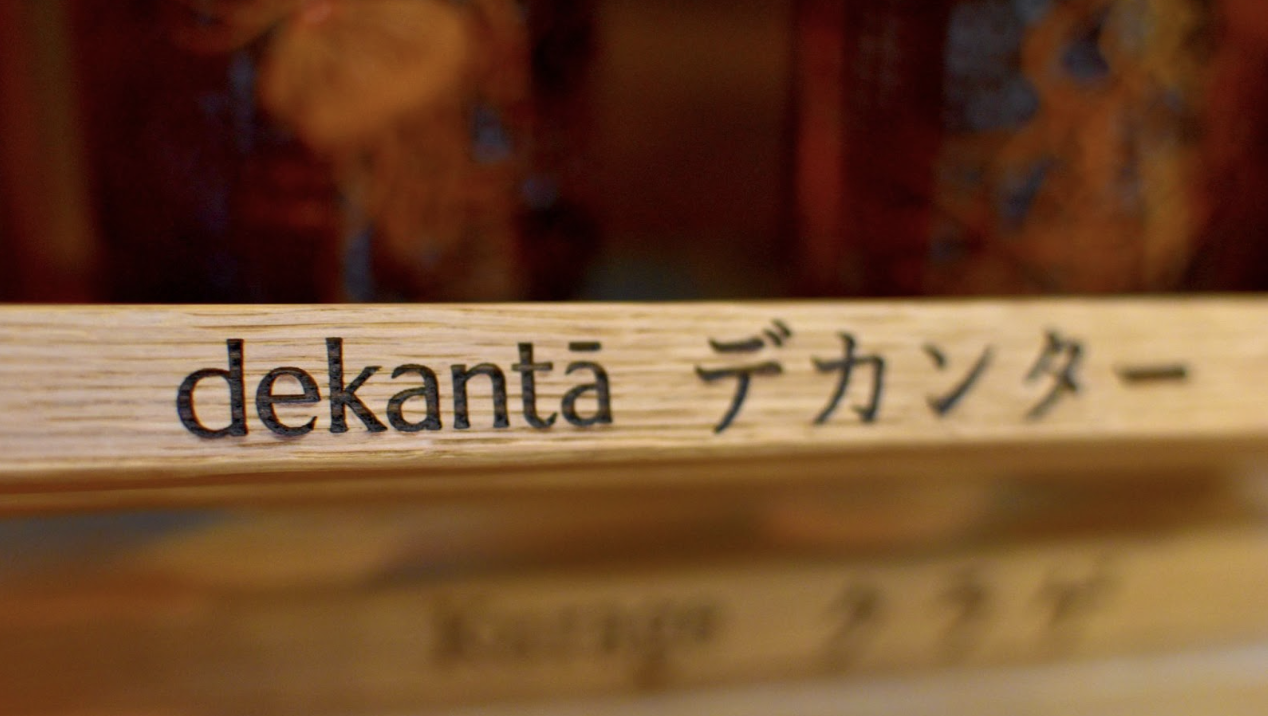
Beyond just selling spirits, dekantā is also an active bottler. The company was recognized as Japan’s independent bottler of the year in 2022, and also won a Gold Award for taste at the International Wine & Spirit Competition for their Shimai World Blended Whisky.
As dekantā has grown, the company has become more than what you might expect from an online retailer.
Direct distillery relationships. dekantā has direct relationships with many of Japan’s leading distilleries and ji-whisky producers. These relationships mean access to limited releases and superior pricing.
Whisky cask purchases. These direct distillery relationships also allow customers to purchase entire whisky casks – not just bottles. Casks are stored and managed on-site at the distilleries.
Brokerage service. While customers can purchase bottles through dekantā’s platform directly, the firm offers high-touch brokerage services for customers seeking premium or rare products. That includes sourcing exits for both bottles and casks.
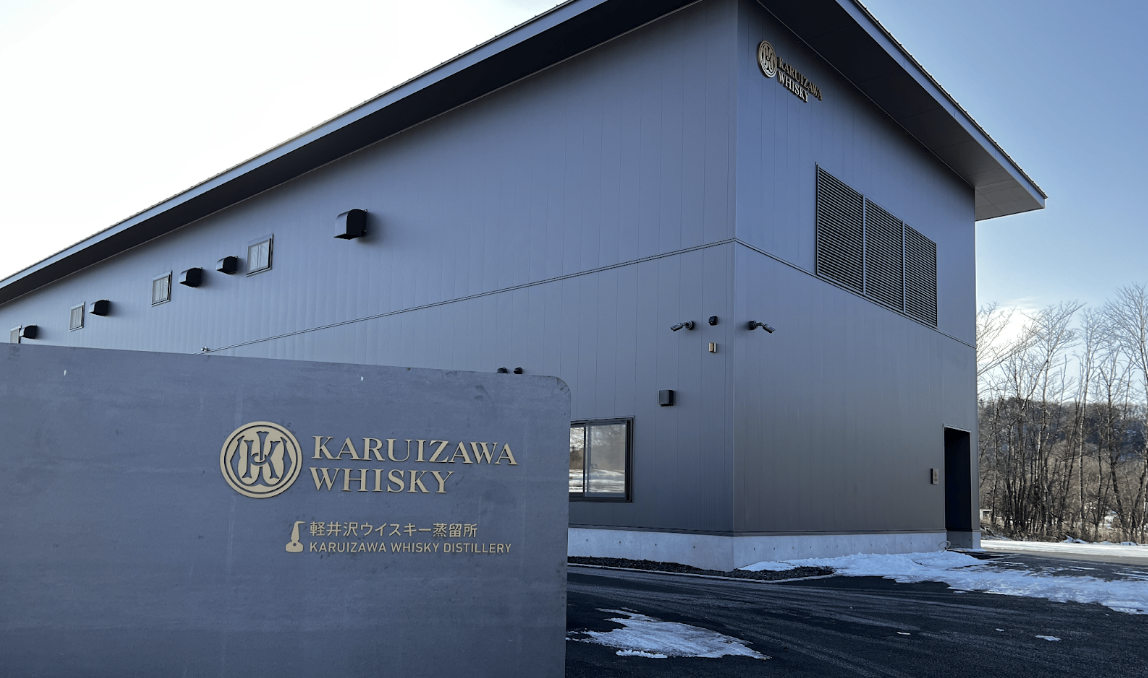
dekantā’s distillery partnerships include one with Karuizawa, which was revived in 2022 over two decades after closing. It’ll still be a few years before their new casks reach maturity.
When it comes to investing, acquiring whisky casks has some compelling attributes over bottles. Gradual maturation of whisky casks creates a natural appreciation, and casks give a wider variety of exit options.
But Japanese whisky in particular has additional advantages.
What are the advantages of Japanese Whisky?
1) It's very scarce
The first and most important benefit of investing in Japanese whisky: it’s scarce.
Sure, the industry’s recent shortage is fading. But compared with other whisky markets, Japan still produces an astonishingly small volume!
There are about 150 distilleries in Scotland, which together produce over 1 billion bottles of Scotch each year.
In comparison, Japan has 118 distilleries (including those under construction). However, these distilleries are generally much, much smaller – in many instances, filling just one cask per day!.
As a result, Japan only produces about 100 million liters of whisky annually, just 10% of Scotch output.
This low production volume means that small changes in demand can have a significant impact on the market. For investors, there’s clear value in the scarcity of Japanese whisky compared to bourbon, Scotch, or Irish whiskey.
2) It ages faster
One of the most important reasons Japanese whisky differs is climate.
Japan tends to have four highly distinct seasons, with hot, humid summers and cold, dry winters. Due to climatic variation, Japanese whisky often needs fewer years to reach the same level of maturity as its Scottish counterparts.
While Scotch drinkers are accustomed to age statements of 12, 18, or even 25 years, Japanese expressions can achieve comparable complexity in under a decade.
That’s obviously terrific news for investors. Shorter maturation timelines means faster capital recycling, which has a direct impact on returns. You’re not waiting two decades for a payoff.
3) Mizunara Oak
Japanese whisky’s final advantage comes down to a unique domestic material: Mizunara oak.
Mizunara is a native Japanese oak that imparts deep, incredibly complex aromas reminiscent of sandalwood, coconut, and incense – a profile often described as evoking the atmosphere of ancient Japanese temples.
During WWII, Japan faced trade blockades, losing access to international casks. Distilleries were forced to experiment with native oak trees, which has now become a prized material.
Ironically, Mizunara is not a wood particularly well-suited to cask-making. It’s difficult to manipulate, permeable, and prone to leaking. What’s more, Japanese oak trees take 2-3x longer to mature than traditional oaks.
Due to this rarity and sensitivity, Mizunara casks are often used for a brief 3-5 month finishing period rather than full maturation.
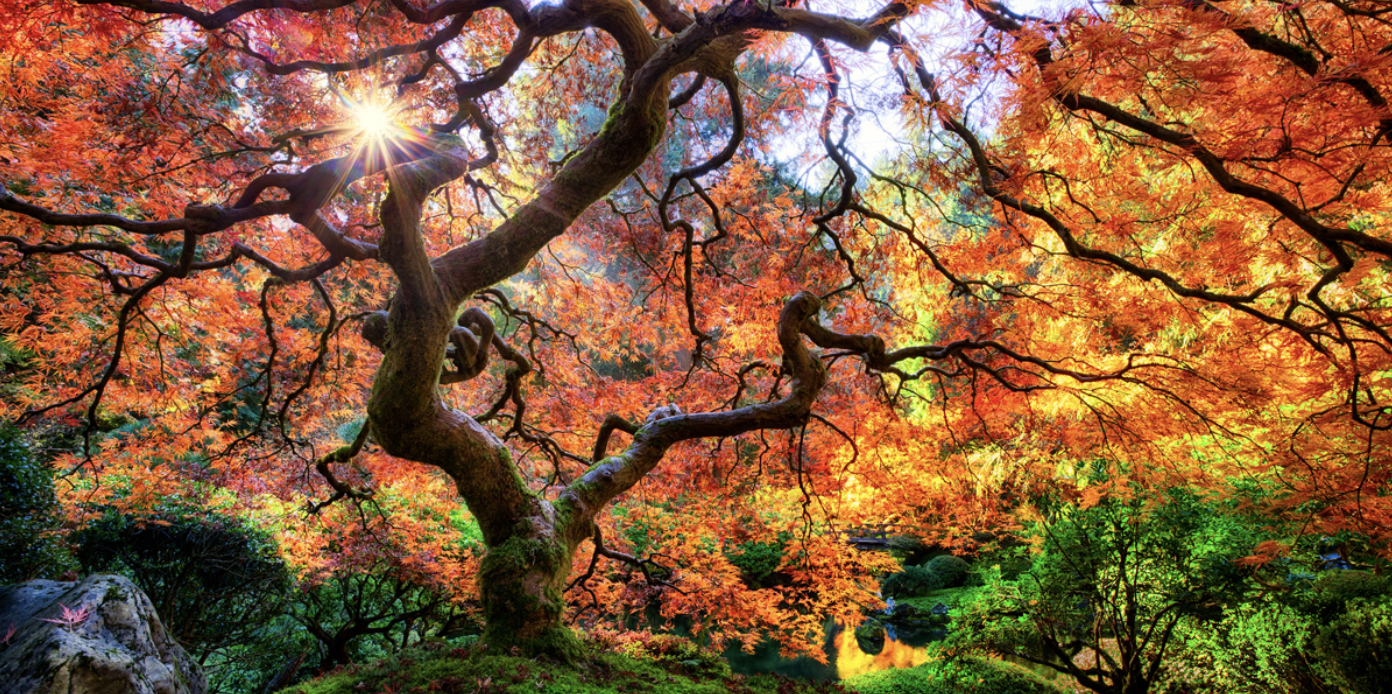
Mizunara oak trees need to grow for two hundred years before they're suitable for cask production! But you better believe all that complexity makes its way into the bottle. Unlike Scotch, Japanese Whisky can reach full complexity in under a decade. Mother Nature does the heavy lifting.
Now, not every Japanese whisky utilizes Mizunara oak barrels. They're typically reserved for luxury expressions.
For instance, the casks in our upcoming SPV focus on high-quality sherry and fortified wine maturation – styles widely sought for producing rich, complex spirits.
Nonetheless, Mizunara represents a native oak with a flavor profile found nowhere else in the world. Today, a number of Japanese distilleries are even using American or European oak bodies with Mizunara heads.
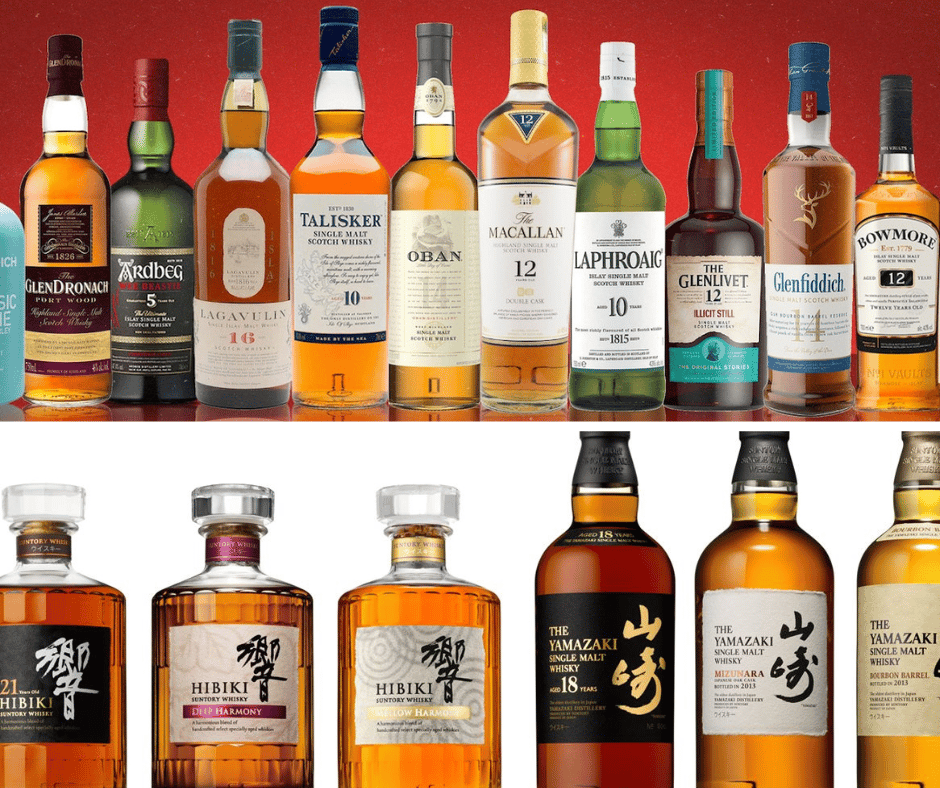
Japanese whisky is generally lighter, more delicate, and floral compared to the often bolder, smokier, and peatier profile of Scotch. Japanese whisky is known for its refined, "clean" taste, often utilizing unique Japanese Mizunara oak.
Japanese Whisky investment analysis
We’ve been discussing the theory behind Japanese whisky cask investing. But what does this look like in practice?
There are no guarantees here. Spirit investments can be highly dependent on tastes years into the future – and estimating bottle prices a decade out is more art than science.
However, projected figures from dekantā can give us some insight into the typical mechanics and pricing of a cask investment.
How cask economics work
The basic mechanics of a cask investment through dekantā are straightforward:
Purchase. You buy a cask at a fixed price, typically ranging from $30,000 to $100,000, depending on the distillery and cask type.
Maturation. The cask ages at the distillery for a set period – anywhere from 3 to 15+ years. During this time, the whisky develops its flavor profile, and the cask is monitored by distillery staff.
Bottling. Once mature, the cask is bottled. A typical cask yields between 200 and 600 bottles, depending on size and evaporation (the angel’s share).
Sale. Bottles are sold, either through dekantā’s retail platform, to private collectors, or at auction. dekantā takes a 20% fee on gross proceeds in exchange for handling the sale.
Your return is what’s left after that fee, minus your initial investment and any shipping costs.
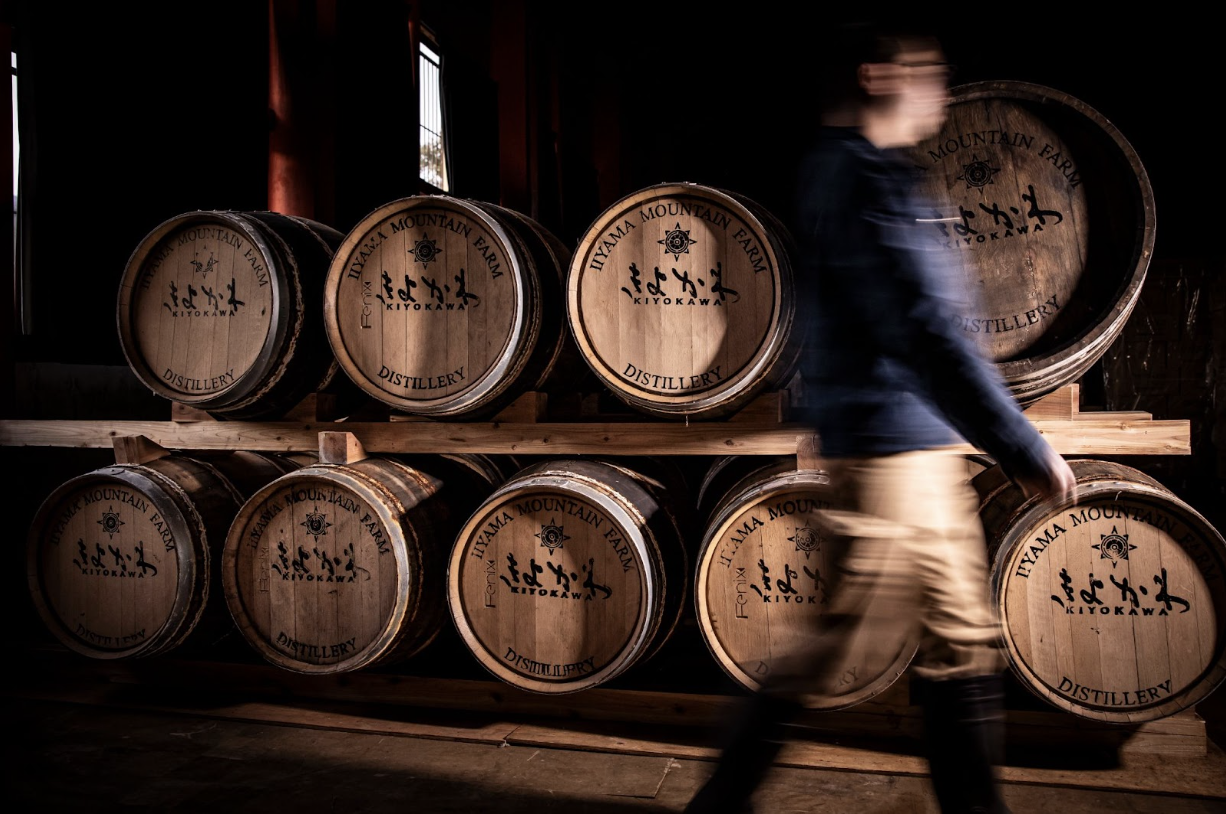
Of the 400 casks that dekantā has placed, there have been just two instances of leaking, which occurs due to imperfections in the wood. Both casks were proactively replaced by the distillery.
Example
Let’s walk through a representative example from projected figures that dekantā provided: a first-fill sherry cask from the Kiyokawa distillery with a 4-year maturation window.
Kiyokawa is Japan’s first ‘farm to bottle’ producer, using barley grown at the distillery’s own farm. As a result, bottles from the distillery’s initial batches are expected to be in high demand.
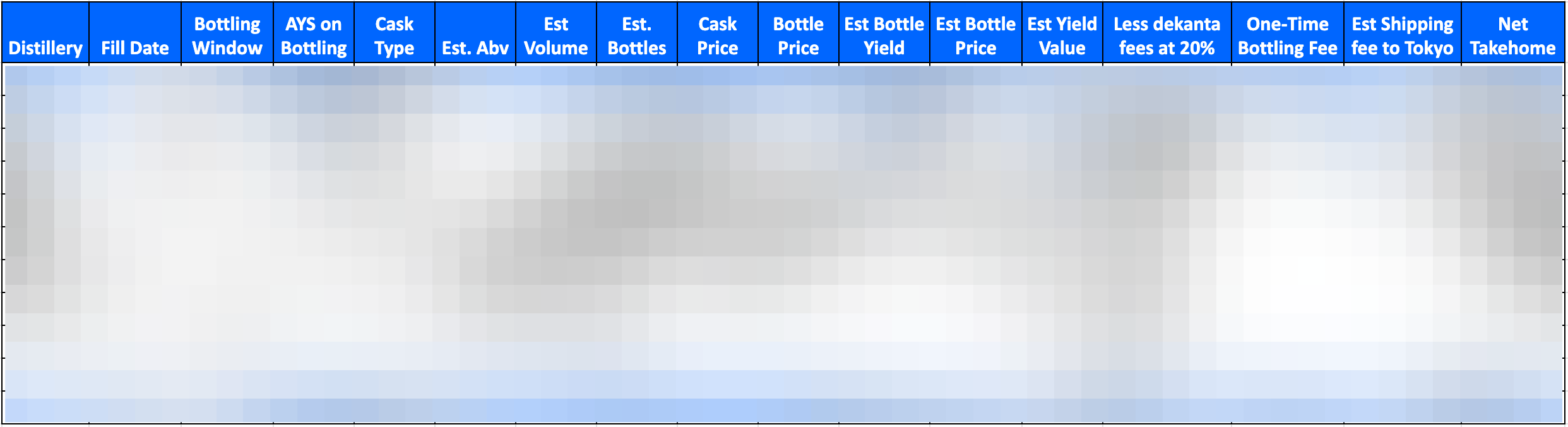
Here are the cask details and projections:
Fill Date: March 2023
Bottling Date: March 2027
Cask Price: $34,000
Estimated Bottle Yield: 389
Projected Bottle Price: $320
Projected Sale Proceeds: $124,480
Net Proceeds: $99,584
Projected Returns: 30.8%
~31% returns are definitely solid for a 4-year hold! But it assumes bottles sell at the projected price – which is the key variable in this analysis.
Future prices could come in lower if demand softens or supply increases. To account for this, we can model more conservative scenarios:
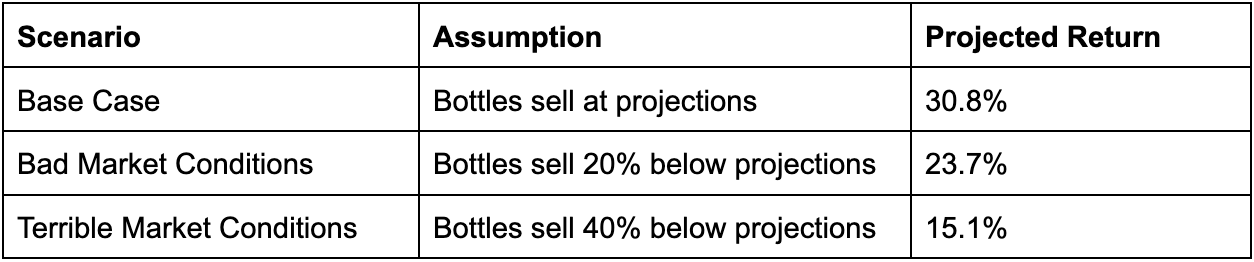
Even in the most conservative scenario, projected returns remain competitive. This indicates the ample premium associated with purchasing whisky at the cask stage, rather than the bottling stage.
For investors looking to gain exposure without betting on a single cask, a diversified portfolio approach can help smooth out these variables.
Investing with dekantā: Altea SPV opportunity
Investing in Japanese whisky casks remains a niche strategy, but it’s not unprecedented.
Investment platform Rally previously offered access to Karuizawa casks that sold out quickly – demonstrating appetite among collectors and investors alike.
Our deal with dekantā will be different.
The Altea Whisky I SPV will focus on investing in a portfolio of casks from different distilleries and with different timelines – resulting in staggered maturities of various expressions.
dekantā’s direct distillery relationships will help provide competitive entry pricing that most investors can’t access. And on the back end, their sales expertise will unlock the liquidity necessary to realize returns.
The full deal memo is coming soon.
In the meantime, here's what we can tell you:
We plan to acquire 11 casks from 4 distilleries
This SPV will be open to accredited investors only
It will have a $10,000 investment minimum.
Express interest to see full cask details.
If you haven't already done so, you can express interest below.
Express Interest →
Closing thoughts: Custody matters
As we’ve seen, the economics of whisky cask investing can be lucrative. But the last few years have also given investors several examples of what can go wrong in this market.
In 2025, the collapse of Braeburn Whisky, a popular cask investment firm left investors scrambling. When administrators took over, investors discovered they couldn’t actually locate their casks or verify ownership.
Eight months later, the same thing happened with Oeno Group!
As Wyatt says, if you cannot prove the barrels are yours and get them out when you need to, they’re not really your barrels.
This is why dekantā’s approach stands out. Rather than storing casks in third-party warehouses with murky ownership records, dekantā’s casks are held on-site at the distilleries themselves. Direct relationships mean verified ownership, proper documentation, and ongoing monitoring by the people who filled the barrels in the first place.
It’s not a guarantee against all risk. But it’s a fundamentally different custody model than the ones that have burned previously whisk(e)y investors – and one of the biggest reasons that we chose to partner with dekantā on this opportunity.
By the way, if you want to learn more about Japanese whisky before taking the plunge – or even want to pick up a few bottles for yourself – check out dekantā’s site. 🥃
PS - Altea trip to Japan 🇯🇵
For investors who want to see what they’re investing in firsthand, we're also planning a trip to Japan this fall to visit our partner distilleries.
We've seen massive demand for this already, but these distilleries do not allow huge tours!
This means we can realistically only take 10-12 people max on this trip. So if you're interested in joining and haven't expressed interest already, get yourself on the list.
---
That's it for today!
Until next time, Brian
Disclosures
This issue was written by Brian Flaherty and edited by Stefan von Imhof.
This issue was sponsored by dekantā
Alt Assets, Inc has no current holdings in any companies mentioned in this issue. However, we are planning on creating an SPV with dekantā.
Big thanks to Ronan and Liam from dekantā for reviewing an early draft of this issue.
And thanks to Claude for the haiku