🇵🇾 Investing in Paraguay
Long a landlocked afterthought, this small but hard-working country is drastically underrated — and now, finally, investment-grade.
Welcome to the Sunday err, Monday Edition.
This issue arrived late as I'm finishing up a trip to Paraguay: the tiny landlocked country nested in the middle of South America. If you’re anything like me, you probably haven’t thought about it for more than four seconds. Neither had I, until recently.
But Paraguay is the fastest-growing economy in South America, by far. While countries like Argentina get all the attention, Paraguay is growing at 6.6% YoY — twice as fast as the rest of the continent.
I’m visiting the country with friend and fellow Altea member Tigran Kalaydzhyan, who knows this place quite well. I originally came down here to look at a persimmon farm we are potentially investing in. (More on that next week). But the more I dug around, the more I realized the farm is just one part of a much bigger story.
Demographics are destiny, and Paraguay has one of the highest birth rates on the continent. And it’s all sitting on top of the world’s second largest aquifer, and the cheapest clean electricity on the planet.
After a tragic history and 35-year dictatorship, Paraguay also boasts one of the lowest-tax setups in the western hemisphere.
Oh, and the timing is spectacular. Last year, S&P, Moody’s and Fitch all upgraded the country to "investment grade." Last month, the biggest trade deal in in EU history (EU-Mercosur trade deal) was ratified in Asunción. Meaning the country is now a tariff-advantaged production base with a direct line into 700 million Europeans.
Bottom line: this nation is far more interesting and investable than most people realize.
Today I’ll show you why.
Let’s go 👇
Note: This is the fourth issue in our series on international investing. Previously we explored investing in Mexico, The Philippines, Rwanda, and Singapore.
A history written in blood
Before we go any further, you need to understand that this country survived the deadliest war in the history of the Americas by the skin of its teeth.
It’s called the War of the Triple Alliance, and few outside South America seem to have heard of it. From 1864 to 1870, tiny landlocked Paraguay went to war against Argentina, Brazil, and Uruguay at the same time.
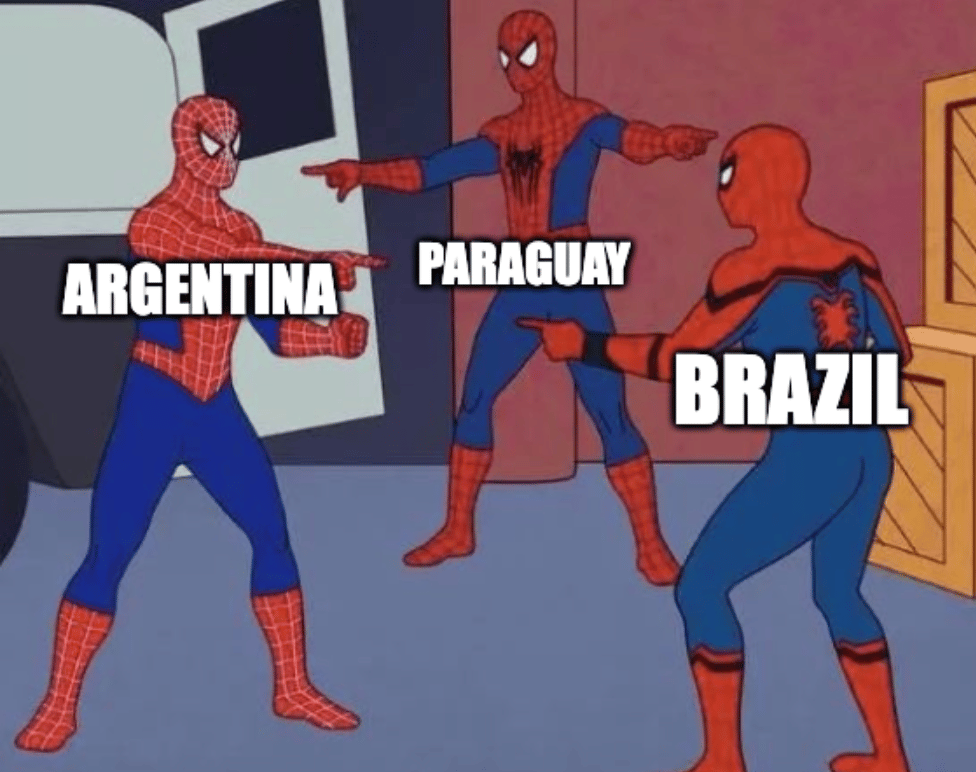
It went about as well as you'd expect.
The war was a catastrophe. By the time it ended, the country had been gutted. Nobody really knows how many people died, but it’s estimated that Paraguay lost between half and two-thirds of its entire population, and the overwhelming majority of its adult men. A postwar census counted just 28,000 adult men left alive in the whole country.
The result was that Paraguay lost huge chunks of territory to Brazil and Argentina, endured years of foreign occupation, and entered the 20th century hollowed out and broke.
And it more or less stayed that way for a hundred years.
35 years of one man
Paraguay clawed back from the war slowly, through decades of coups and chaos. And then in 1954 it got something worse: stability of the wrong kind.
His name was Alfredo Stroessner, an army general who rose through the ranks under a previous government, seized power in a coup in 1954 and didn’t let go until 1989.
Stroessner's playbook was standard Cold War behavior. Anti-communist enough to keep Uncle Sam's money flowing, brutal enough to make opponents disappear.
But he wasn’t all repression. He ran the country like a private enterprise, building roads, stabilizing the currency, and broke ground on Itaipú — a colossal dam which bankrolls the country to this day.
The dam that runs the country
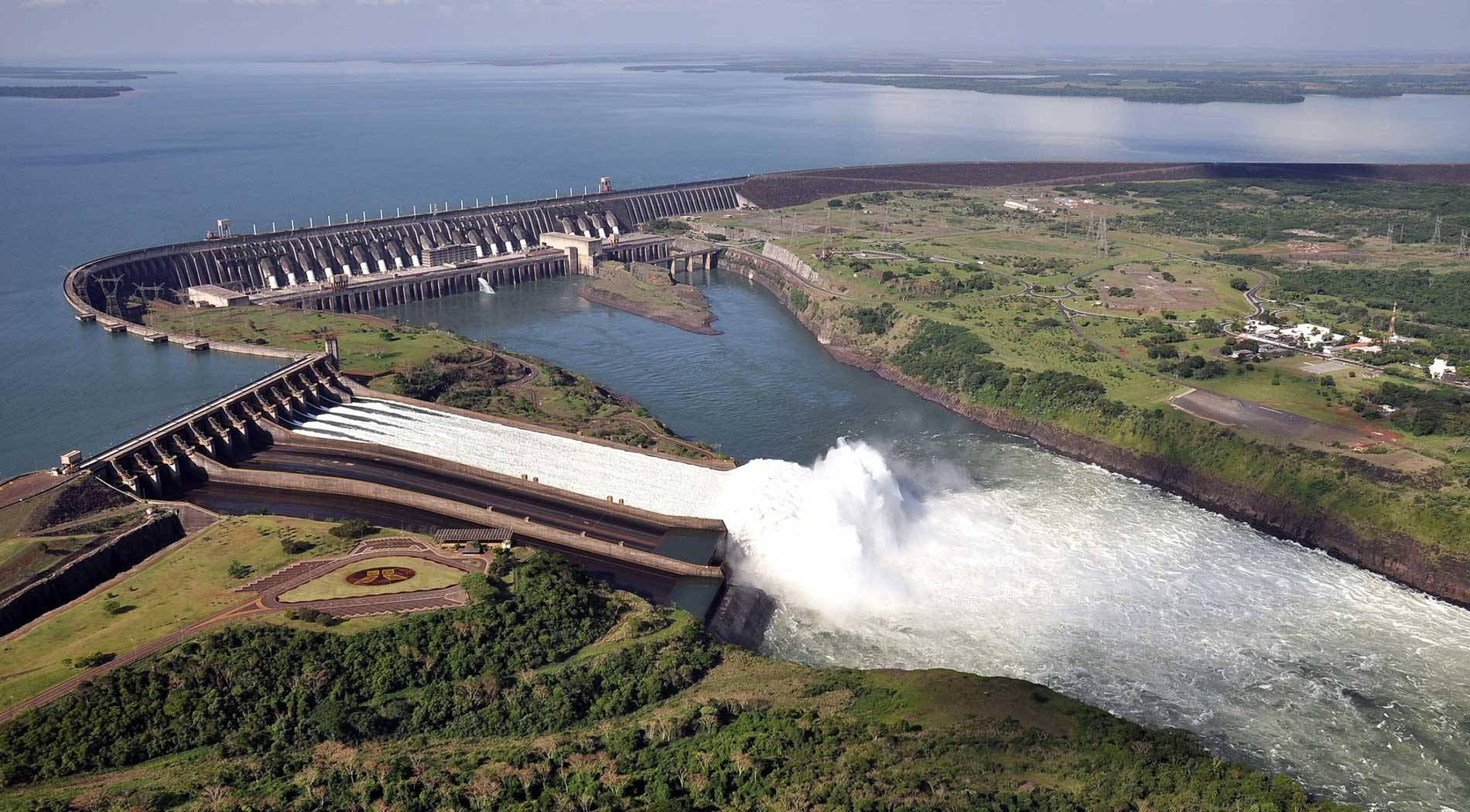
Itaipú is one of the largest hydroelectric dams on earth, only recently overtaken by China’s Three Gorges.
Interestingly, it’s a binational project, jointly owned and run by Paraguay and Brazil, pumping out 90 terawatt-hours a year. (To put that in perspective, each turbine can power a city of a million people, and this thing has 20 of them.)
And because Paraguay is small and doesn’t come close to using its half of the output, it ends up with a gigantic surplus of clean power every single year.
An absolute monster of a hydroelectric dam, Itaipú is arguably the single most important thing about Paraguay. This wall of concrete on the Paraná River explains the cheap electricity, the crypto rush, the industrial dreams, and the geopolitics.
So what happens to all that extra electricity? This is where it gets interesting.
Under the original treaty, Paraguay is entitled to half of all the energy Itaipú produces. But it was also required to sell whatever it doesn’t use to Brazil, at a price set well below what that power is worth. For decades, Paraguay handed its surplus to its much larger neighbor for a pittance.
In 2023, the dam’s construction debt was finally paid off, and suddenly Paraguay had leverage it had never had before.
This renegotiation with Brazil is happening right now, and it is messy. The two sides are pulling in opposite directions. There’s bad blood and espionage. And now US Secretary of State Marco Rubio wants to help steer the surplus towards US interests.
Why an investor should care: Paraguay’s long-term plan is to stop being a country that exports raw electricity cheaply and start being a country that uses that electricity at home to make things. The government wants to keep its share of the power and use it to industrialize, to add value rather than ship kilowatts across the border.
The fastest-growing economy you’ve never thought about
Paraguay’s economy grew 6.6% in 2025, its fastest pace in over a decade and the highest in South America.
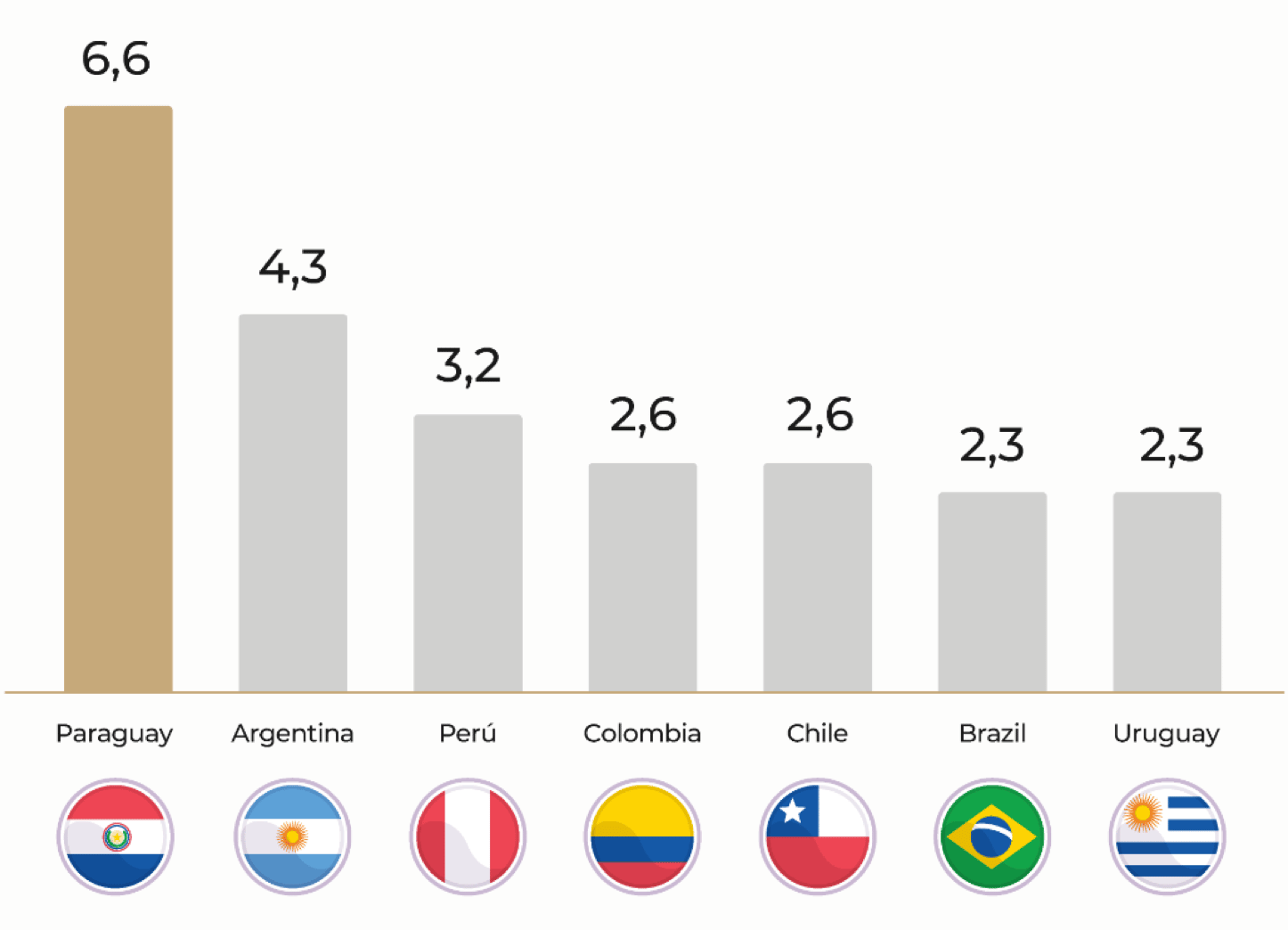
Paraguay is growing nearly 2-3x as fast as the rest of the continent. Yes, it’s coming off a small base — the country has just ~7 million people. But this isn’t a one-year sugar high — it’s been the case for years, with nearly four straight years of 4%+ growth on top of a two-decade track record. Chart courtesy of CIVIS.
One huge tailwind here is demographics. The workforce is young, growing, and nowhere near its productivity peak.
Paraguay’s median age is just 26, a full eight years younger than Brazil (34) and well below the high-30s you see across much of the region. It’s one of the few countries in the entire hemisphere actually having babies.
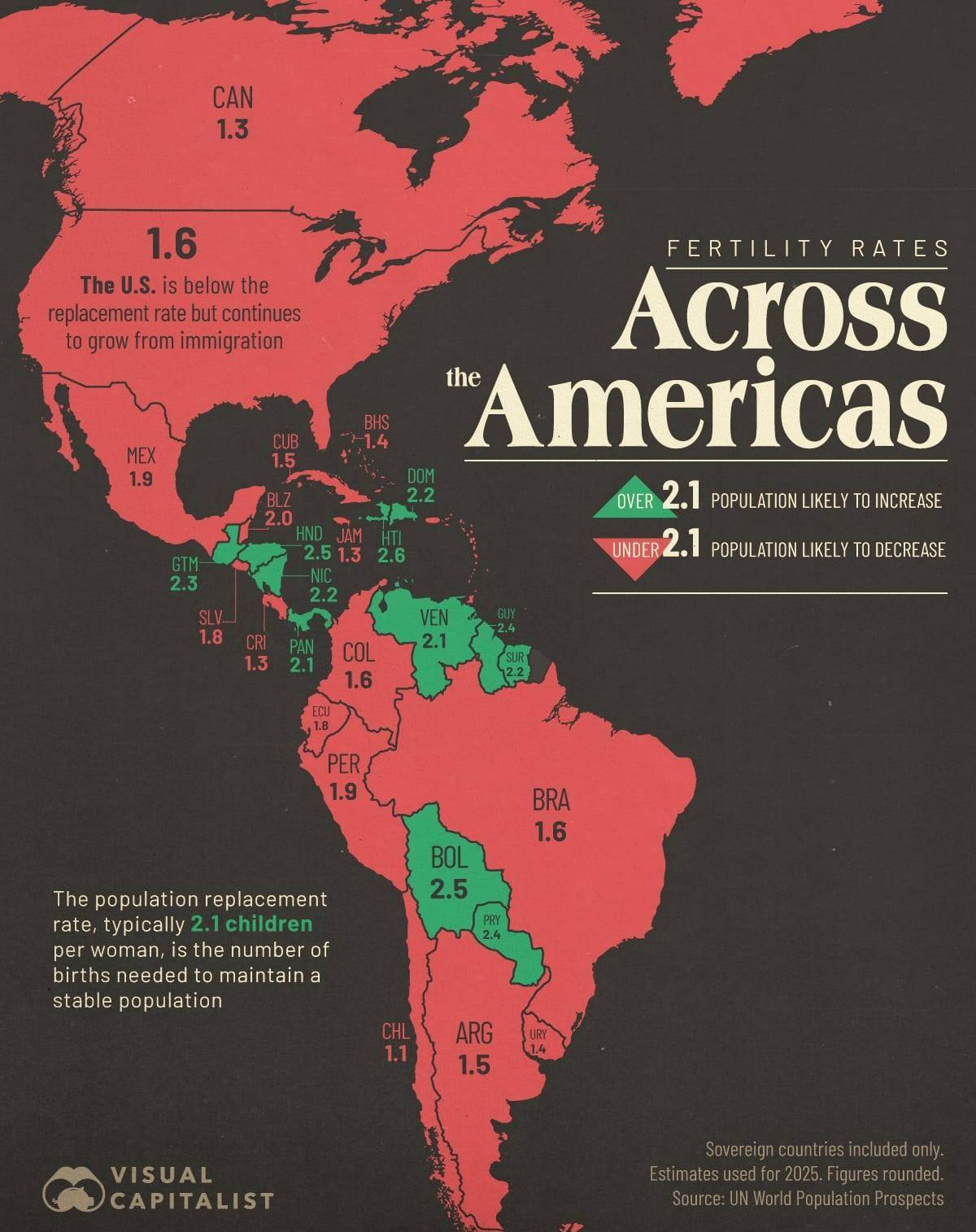
At 2.4 children per woman, birthrates are still above replacement, which almost nowhere else in the hemisphere can say. While most of the world is aging into a pension crisis, Paraguay has the opposite problem: Similar to the Philippines, it has too many young workers.
But this sustained growth is due to more than family formation. For decades, Paraguay has made a deliberate, concerted effort to get their financial house in order, invite foreign capital, and make international investors feel comfortable doing business here.
The debt-to-GDP ratio is a measure of how much a country owes compared to everything it earns in a year, basically its mortgage measured against its annual paycheck. Paraguay’s sits at just 36%, which for LATAM is incredibly low.
Inflation is low and targeted. The guaraní is one of the most stable currencies in South America.
International reserves have climbed from basically zero in the early 2000s to over $10 billion. The central bank governor was even named the world’s best central banker for 2025 by Global Finance — the kind of award nobody really notices but says a lot.
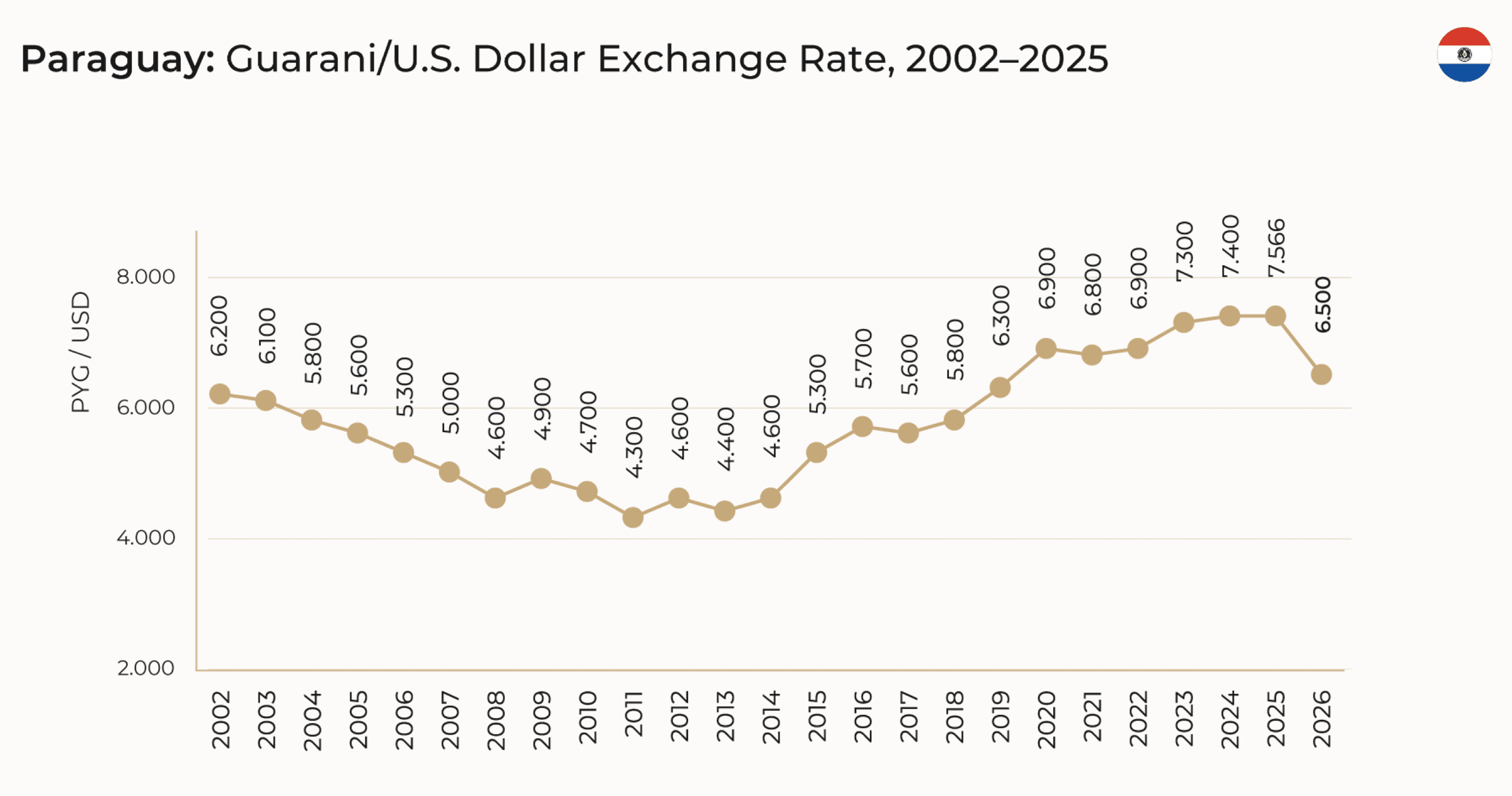
Paraguay’s currency has fluctuated fluctuated within a roughly 15% band over the past decade. This is no small feat on a continent that has produced some truly spectacular currency blowups
Paraguay is now investment grade
The results of all these efforts are showing up in hard numbers.
In late 2025, S&P upgraded Paraguay to BBB-, joining Moody’s and Fitch.
All three major agencies now stamp the country as investment-grade: a safe-enough place for serious institutional money.
This is tremendously good news for the nation! Huge swaths of the world’s most conservative money (pension funds, insurance companies, cautious family offices) operates under hard mandates: they are simply not allowed to put money into a country rated below investment grade. Doesn’t matter how good the investment is.
The moment all three agencies flipped Paraguay to investment grade, the gate opened. In fact, some big institutions now have a mandate to pay attention to Paraguay now that it’s rated.
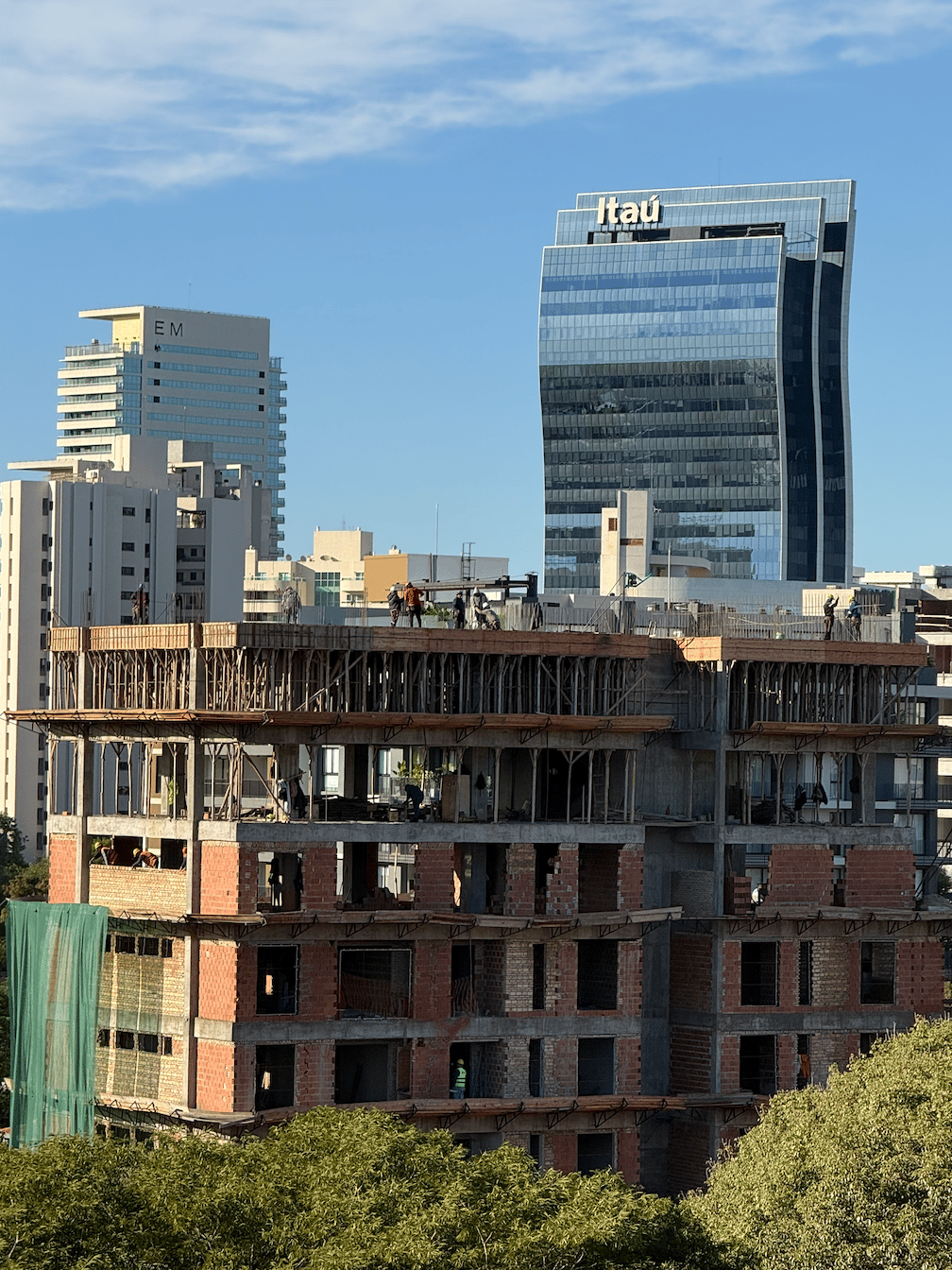
Paraguay spent decades building a reputation for being a disciplined steward of capital, and the investment-grade rating is the world finally certifying it. New money is flowing in through big funds , fresh ETFs, and index inclusion. Photo of downtown Asunción by Stefan.
How a landlocked country reaches the sea
How can a landlocked country become an serious agricultural exporter?
The answer is that the “landlocked” label hides two things.
The first is water. When you glance at a map, Paraguay appears to be far from the ocean.. But look closer and you’ll notice it sits smack on the Paraguay-Paraná river system (known as the Hidrovía), a massive river that flows down through Argentina and spills out into the Atlantic.
The second is the bioceanic corridor, a new highway running east-west across the continent, that runs straight through Paraguay. As I write this, the highway is nearing completion Once it’s open, Paraguay has a second export outlet, this time toward the Pacific and the fast-growing Asian markets beyond it.
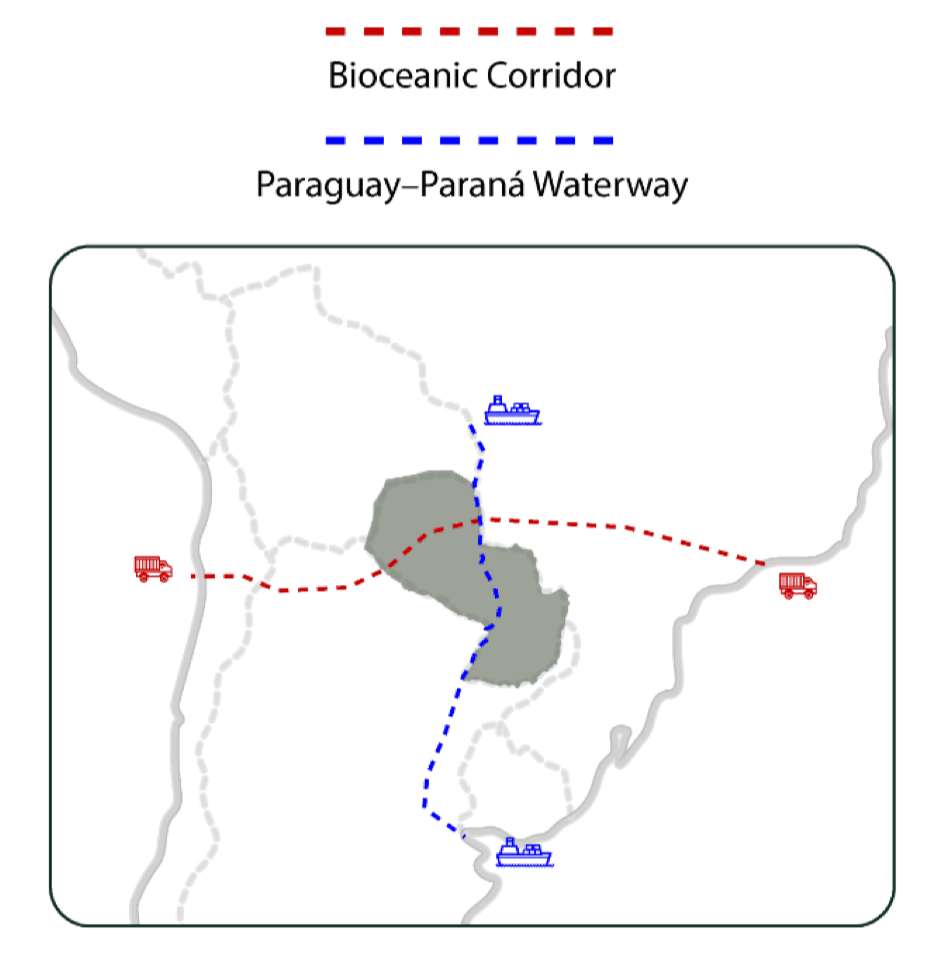
The ocean looks far away, but thanks to the river it essentially comes right to Paraguay’s front door. In fact, Paraguay operates the world's third-largest fleet of ocean barges. And with a fresh new highway to the Pacific, in many ways it could become the geographic crossroads of South America.
Where is investment actually going?
From bitcoin mining to AI
Back in 2021, the country became a serious behind-the-scenes player in global bitcoin mining. International mining outfits set up shop near the dam, plugging in to Paraguay’s surplus hydropower for ~ $0.03 per kw-hour, among the cheapest and cleanest industrial electricity anywhere.
But the easy money is over. Not only are bitcoin prices down, but the state electricity utility jacked up rates on miners, and demands eye-watering deposits before you can connect.
So now firms are pivoting from crypto to AI data centers. The catch is that AI data centers need a grid that doesn’t blink, and Paraguay’s heat and occasional blackouts make that hard.
Farmland
Paraguay’s real wealth comes from the ground. This is, and always has been, an agricultural country. If you want to understand the investment case, start with the dirt.
Soy and beef are the twin engines
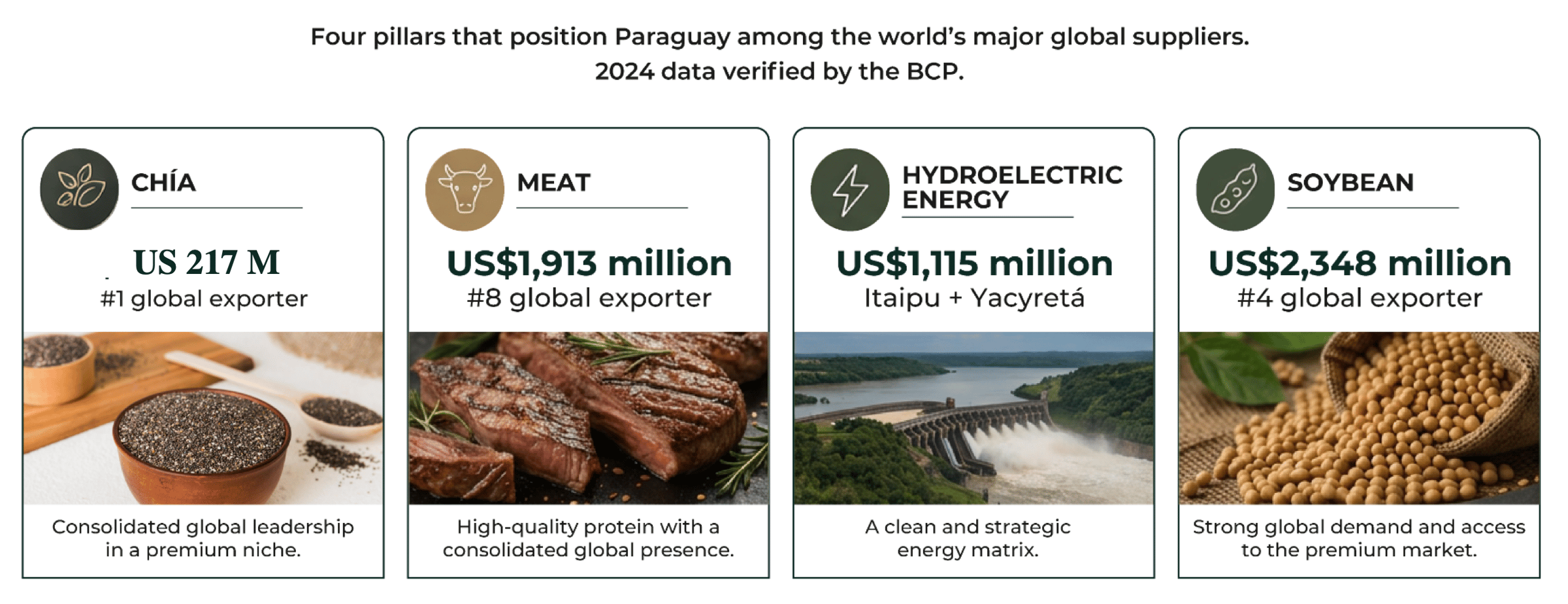
Paraguay is the world’s the third-biggest supplier of soybeans (which is absurd for a country this size.) Then there’s cattle. Paraguay is the eighth-largest beef exporter in the world, running a national herd of 14 million head.
There are roughly twice as many cows as people.
Sugar
Paraguay is the world’s single largest exporter of organic sugar, and the second-largest producer of stevia
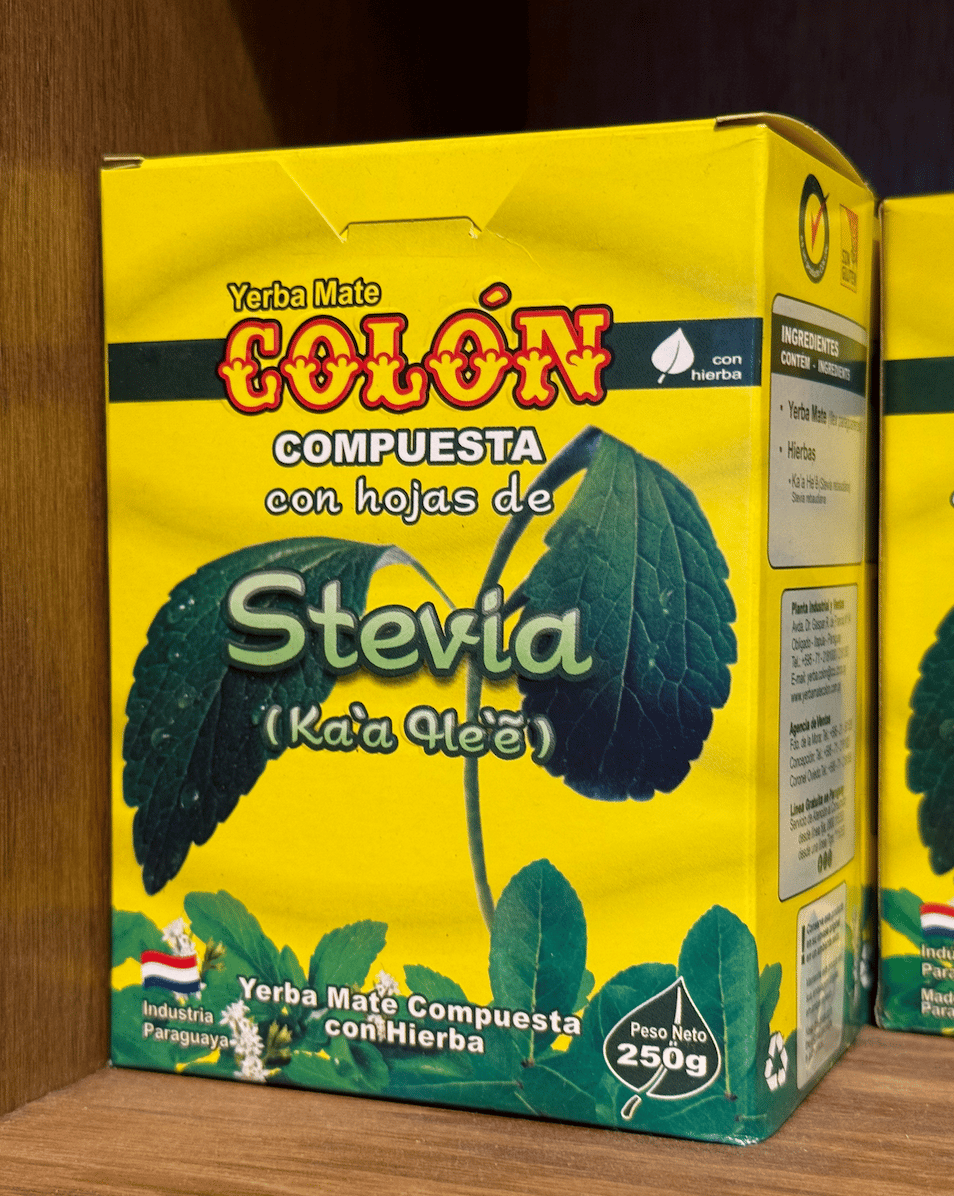
The sweetener plant is actually native to Paraguay and was used by the Guaraní for centuries before a single Western company got hold of it.
Chia
Then there’s chia seeds. Paraguay doesn’t just grow chia, Paraguay owns chia.
Chia is the tiny seed of a small flowering mint plant, and it’s been feeding people for a very long time. The Aztecs and Maya grew it as a superfood staple. Then the Spanish showed up, replaced it with wheat, and chia spent 400 years as a forgotten regional curiosity, until the health-food world rediscovered it fifteen years ago and turned it into a smoothie-bowl superstar.

If you’ve ever eaten chia, it probably came from Paraguay. Today, Paraguay is the world’s leading chia exporter, and it isn’t close. In 2025 it shipped 80,000 tons of this stuff, up from 10,000 tons a decade earlier.
There is actually a chia seed fund we considered investing in — a growth plan being packaged up for investors. The team involved are serious operators with a great track record in real estate, and a working export business.
But after looking hard, we’re passing on the deal. Ultimately we decided the growth and price assumptions were too aggressive.
(Reply if you’d like to see the deal anyways – I’m happy to share it)
Persimmons
Believe it or not, what originally brought me to Paraguay was a visit to a persimmon farm.
For the better part of a year, our friend and fellow farmland investor Tigran Kalaydzhyan has been in our ear about a terrific persimmon operation he invested in. At first I was skeptical, but he convinced me to visit Paraguay and have a look for myself.
I visited the farm this week, and yes, it is absolutely suitable for an Altea investment. (I will have much, much more to share on that in next Sunday's issue. Stay tuned.)
In the meantime, farmland investing is a bet on global commodity markets, farm operations, and the teams behind them — not a bet on Paraguay itself.
If you’re looking to invest in Paraguay’s structural growth story, the demographics, the urbanization, and the capital flooding in, real estate is the way to go.
Real estate
A direct bet on Paraguay's continued growth
Unlike say, chia, real estate isn't a bet on a commodity price. It's a direct bet on Paraguay's growth. All those young households, all that incoming capital, all those new residents have to live somewhere. And right now, there aren't enough places to put them.
The numbers are stark. Paraguay is urbanizing fast (69% urban today, heading to 80%), and forming around 80,000 new households a year while building only about 20,000 units. That's eight times more demand than annual supply, against accumulated demand of north of a million homes.
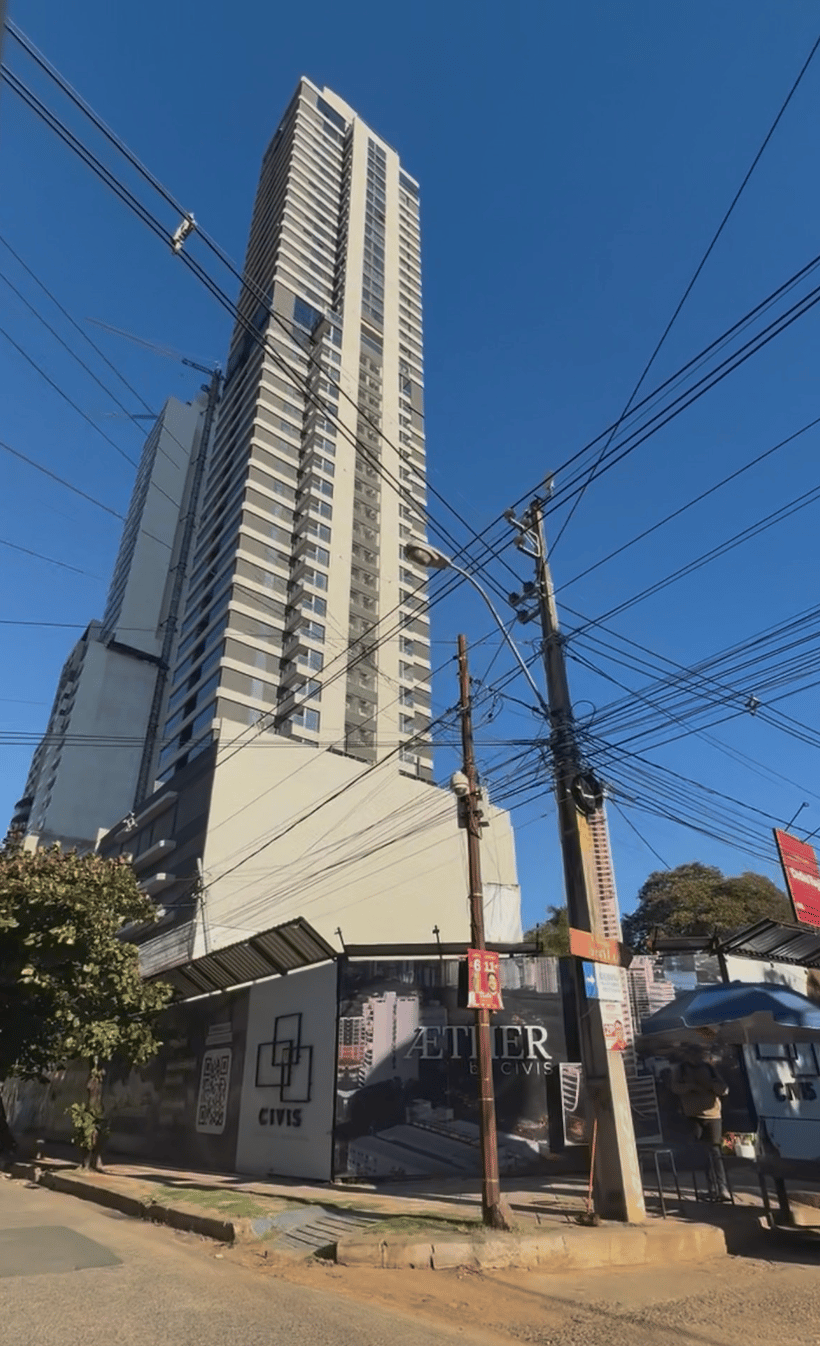
AETHER, a high-end residential skyscraper by CIVIS which just broke ground in downtown Asunción. Paraguay has the supply-demand gap real estate investors spend careers hunting for, sitting in plain sight in a market very little foreign capital has found yet.
Developers fund construction a different way: buyers purchase pre-construction in installments, which is exactly where the upside lives. You enter at the lowest price per square meter in a project's life and ride the appreciation as it gets built.
The kicker: there's essentially no mortgage market. Paraguayans save and pay cash. Demand is raw and unleveraged — no rate cycle to whipsaw it, no mortgage bubble to pop.
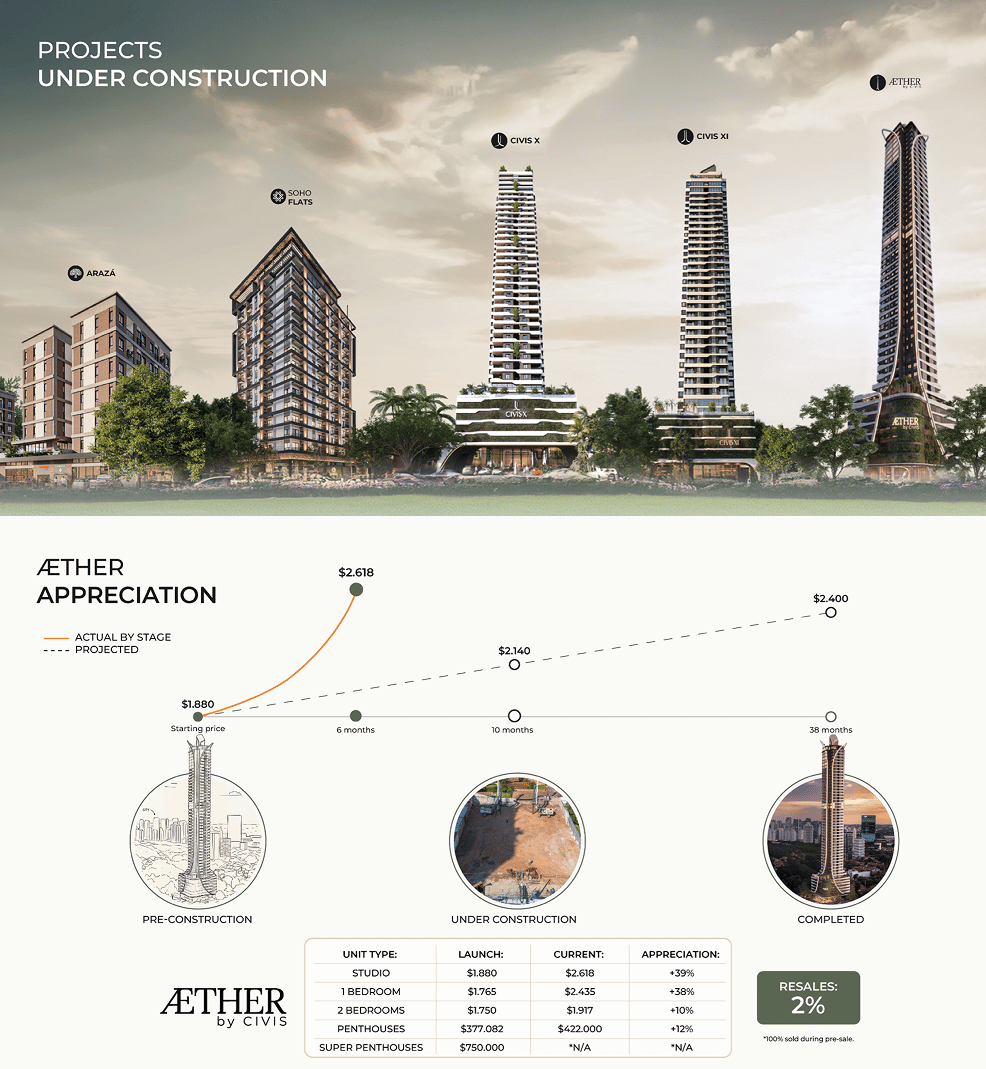
We met with Mauricio Crestinov to learn about CIVIS's chia fund. We left realizing that their Asunción real estate opportunities are far more compelling.
The tax and residency pitch
Paraguay runs one of the lightest tax regimes in the western hemisphere.
Corporate income tax and personal income tax top out at 10%, and Paraguay and takes a famously light touch on income earned outside the country.
No tax on wealth or inheritance.
No capital controls.
You can hold US-dollar accounts and move money freely in and out
A generation of Argentines and Brazilians have watched their wealth get trapped or inflated away, and Paraguay quietly offers what the whole region actually wants.
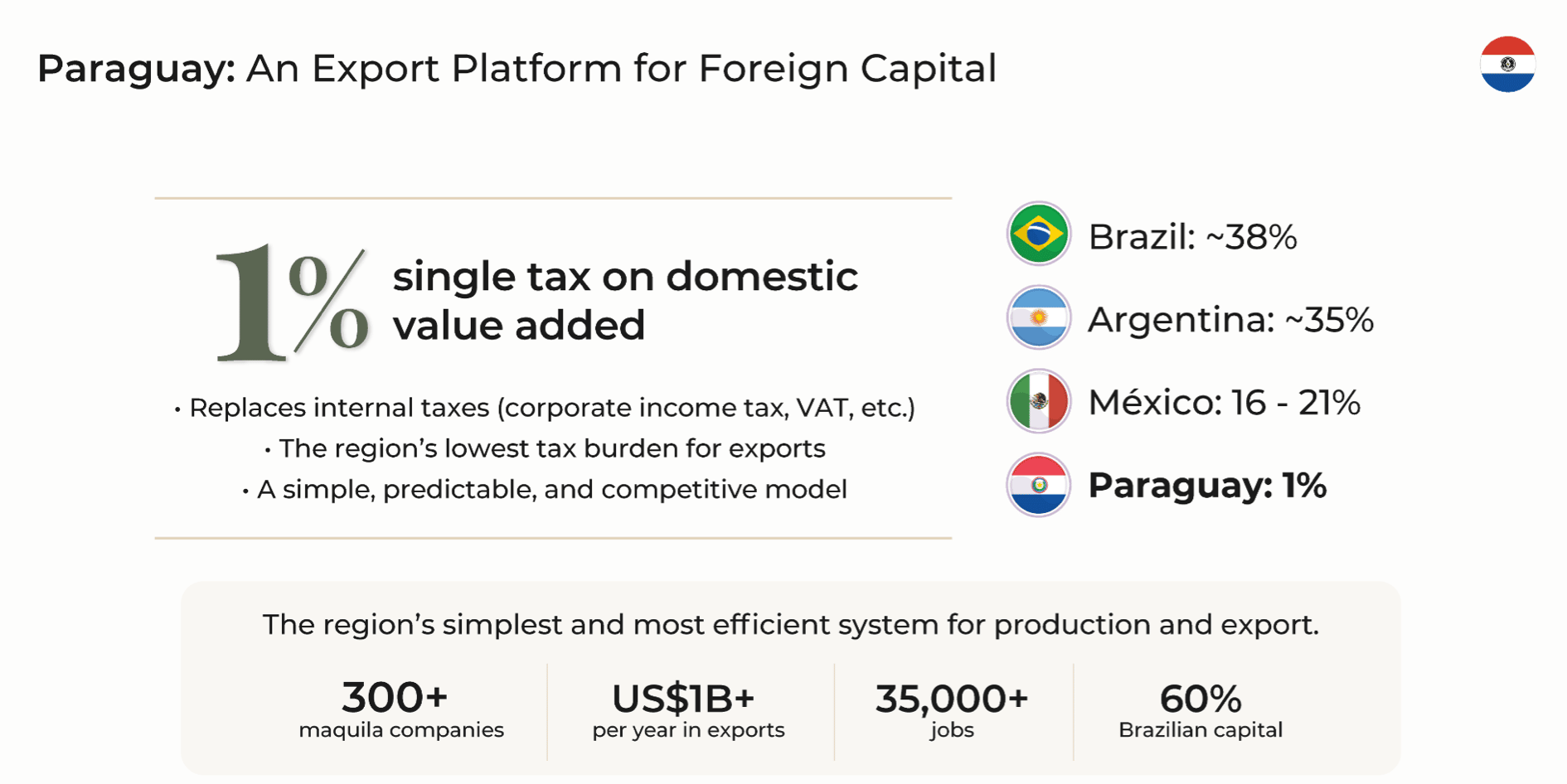
Then there's the maquila. A clever piece of policy: import raw goods, add value here, re-export, pay a single 1% tax on the local value-add. No income tax, no tariffs.
The maquila is an import -> add value -> export play. One example Tigran told me about is with shrimp. Paraguay produces zero seafood. Yet shrimp comes in from Argentina, gets processed and frozen in Paraguay, and ships to the US, paying just 1% on the work done locally. Over a thousand Paraguayan companies are now running this same arbitrage game!
Residency is the kicker. Paraguay recently overhauled the system and replaced it with an investor-oriented path that runs through a single window and leads straight to permanent residence. The threshold: roughly USD $200,000 into local real estate or a business. That's remarkably cheaper than most of the world's golden-visa programs, which usually require $500k to several million.
It's working. Brazilians and Argentines fleeing high taxes are lading the wave, but Paraguay has also attracted digital nomads and a crypto community of hundreds in Asunción.
Downsides and risks
Every issue in this series earns its keep by being straight about the downsides, and Paraguay has real ones.
Infrastructure is the big one, and it's a paradox. Asunción is charming — leafy neighborhoods, cobblestone streets — but scratch the surface and you see decades of under-investment. The roads, the logistics, the public works all lag where an economy growing this fast needs them.
The flip side, and this is the interesting part, is that Paraguay knows it: the government is courting private companies to build infrastructure with tax incentives, because the country (and frankly its citizens) would rather trust private operators than the state.
Governance. The same party has effectively held power for seven decades. Stability isn't the same as trust. The honest local read: the government is a reliable steward of the macro picture (low debt, stable currency, sound money) but nobody trusts it to spend money wisely or cleanly.
Macro-competent, micro-skeptical. Policy continuity is a genuine asset; corruption and institutional weakness are persistent facts you price in, not wish away.
Climate risk comes with a counterintuitive twist. The danger here is La Niña, not El Niño. La Niña brings drought to this part of South America, which hammers crop yields and drops the rivers that carry the exports.
A bad La Niña year can swing the whole national trade balance.
The financial system is thin. It's a debt market, not an equity market, with limited liquidity and no real public-equity culture. That shapes how you put money to work today: not day-trading local stocks, but owning real things — land, buildings, businesses — with a trusted partner.
Add no direct flights from the US, a language barrier (Guaraní shares the street with Spanish), and a bureaucracy that rewards local knowledge.
This is not a place you invest in from a screen. It's a boots-on-the-ground market. The opportunity is real and substantial. But capturing it means having someone you trust on the dirt, in the room, who knows which parcel has clean title and which developer actually delivers.
Closing thoughts
Paraguay is a country that was nearly erased from the map, then spent a century clawing its way back. It’s functional in a way Argentina and Uruguay isn’t. It works harder than its neighbors, it lives within its means, and it has spent thirty years building a reputation as a disciplined steward of capital.
Now the world is finally certifying that reputation, and Paraguay is about to start collecting on it.
Normally low debt and fat reserves are unambiguously good. But there’s another way to read them: a country sitting on too much dry powder, with debt-to-GDP this low, may be a country that has under-invested in itself for too long. The roads, the rivers, the infrastructure all need work.
The good news is Paraguay knows it, and is opening the door to private capital to help build it. That gap between what the country has saved and what it still needs to build is, in a sense, the whole opportunity.
But this is not a place you can easily invest in from a screen. Paraguay’s capital markets are unusual: it’s a debt market, not an equity market. More than a hundred local companies raise money by issuing bonds, often paying around 10% a year in local currency or 7-8% in dollars. Trades happen through old-school brokers, the casas de bolsa, not an app.
This is still a young, thin financial system. You don’t come here to day-trade. You come to own real things, land, buildings, businesses, with a partner you trust on the ground.
--
That's it for today!
A big thanks to Mauricio Crestincov from CIVIS for hosting us this week, and Tigran Kalaydzhyan for accompanying me on this trip.
Paraguay real estate is a very compelling opportunity. We don't have an SPV planned, but if you'd like to learn more about investing in Paraguay real estate, just reply and I'll personally introduce you to Mauricio.
Speaking of partners on the ground, next Sunday we'll dive into the persimmon farm. 🍊
See you then,
Stefan
Disclosures
This issue was written and edited by Stefan von Imhof
This issue was sponsored by Kraken. It contains no affiliate links.
Alt Assets, Inc has no holdings in any companies mentioned in this issue.
CIVIS did not pay to be featured in this issue.
If Stefan was not a double-taxed US citizen, he would absolutely consider buying Asuncion real estate (and declaring Paraguay residency for the tax benefits.)