Let's go to the auction
Welcome to the WC.
I'm in London today, attending/hosting our Big Meetup. London, as it happens, is important to the alts space this time of year for one big reason -- Auctions.
Twice a year, the world's major houses synchronise their sales in London, New York, and Geneva. The result is a concentrated two-week window where buyers, sellers, and dealers are all in the same rooms at the same time -- and the prices that come out of those rooms are about as close as you'll get to a real-time health check on the alternative asset markets.
Over the next few weeks, Christie's, Sotheby's, and Phillips all have major sales. So do RM Sotheby's and Gooding & Company in Florida. And Phillips in Geneva.
I want to talk about what to watch -- and more specifically, which individual lots are the canaries in the coalmine for each market.
Nothing here is investment advice. Do your own research. Please.
Let's go
The London art week that actually matters
Here is something the art press doesn't say loudly enough: the London March sales are not about London. They're about New York.
The London window -- Christie's, Sotheby's, and Phillips all selling on March 4-5 -- functions as a temperature check before the higher-stakes spring New York cycle. Auction houses have learned to use London deliberately: to test placement and appetite, front-load momentum, and stabilise confidence ahead of whatever comes next.
If the rooms are cold in London, New York consignors get nervous. If they're hot, prices follow.
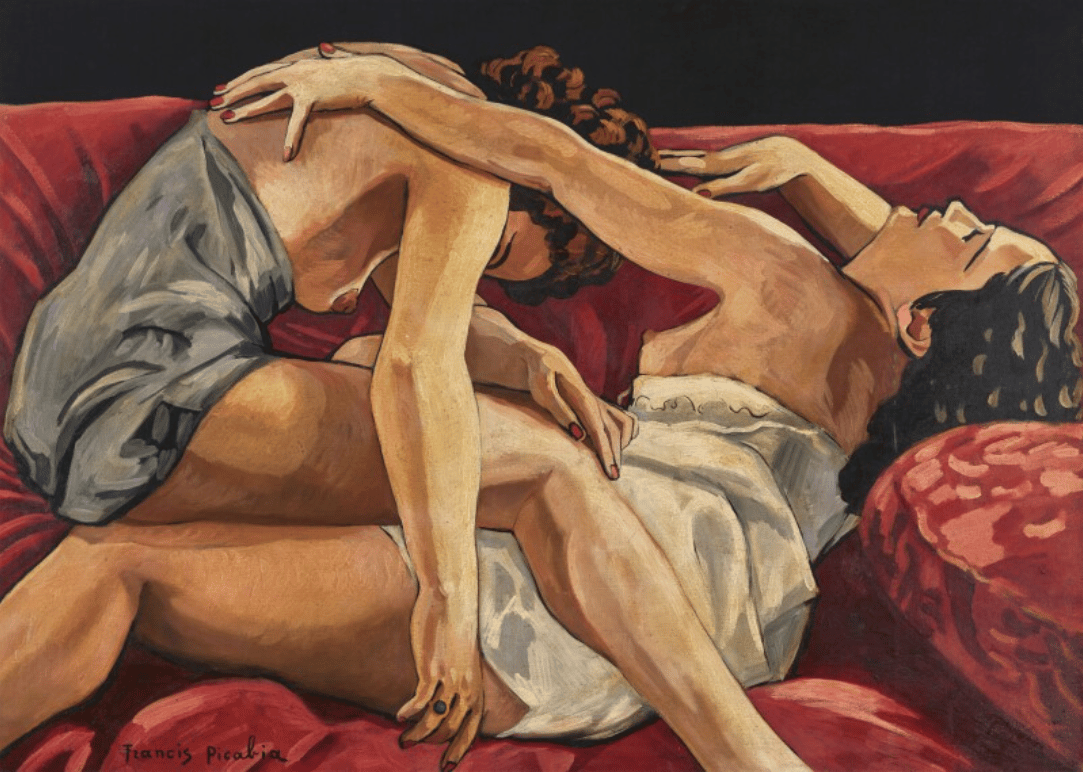
Francis Picabia's Deux Amis sold for 20% above its high estimate
The market coming into this season is genuinely hard to read. The November New York auctions totalled $2.2 billion, up 69% from the same cycle in 2024. That's not a typo. The Karpidas collection at Sotheby's London in September set the tone -- every lot sold, the room went wild -- and it built from there. A Gustav Klimt portrait fetched $236.4 million in New York in November, with the final competitor entering at $171 million. Artnet News
So the top end is fine. The question is whether that confidence is structural or whether it's a handful of exceptional collections doing exceptional things in exceptional rooms.
That's where this week's canaries come in.
Canary 1: Henry Moore at Christie's
Christie's 20th/21st Century: London Evening Sale and The Art of the Surreal Evening Sale both run on March 5, back to back at King Street.
The Surreal sale headlines with René Magritte's Les Graces Naturelles, which will be a spectacle. But the lot I'd be watching is the Henry Moore King and Queen.
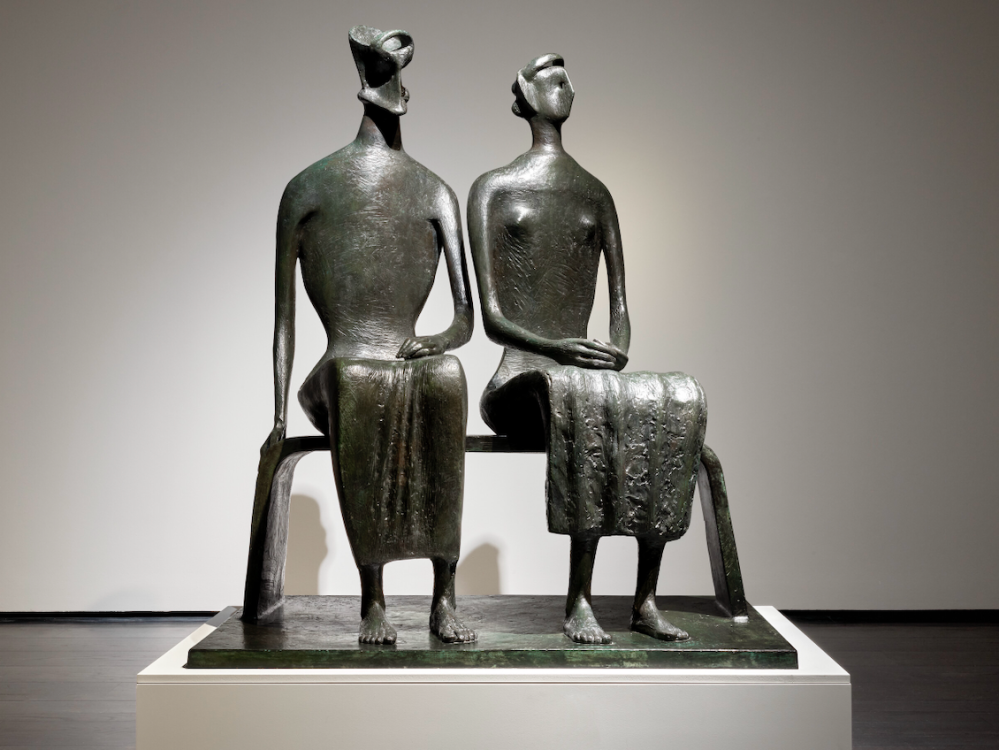
The 64-inch bronze carries an estimate of £10-15 million ($12.5-18.8M). It is the only cast of this work in private hands. Every other example is in a museum. If you want to own it, this is your one shot -- Moore's auction record, set by a Reclining Figure: Festival at Christie's London in 2016, was £24.7 million ($32.7M). There's room to run.
That kind of scarcity argument should be bulletproof. And yet. The overall value of the art market fell in 2024, and caution is expected to dominate as the market begins to accept that demand could be just as much of an issue as supply. We saw the RM Sotheby's Paris sale in January -- where the top consignment, a Ferrari 250 GT 'Tour de France' that should have been a sure thing, failed to sell when bidding stalled at €12 million.
If the Moore underperforms -- say, sells at or below the low estimate -- that's a signal. Museum-quality trophies with irreplaceable scarcity arguments are supposed to be the last things to crack. If they're cracking, the broader market is in trouble.
If it hammers above £15 million, the season's off to a very good start.
Canary 2: Hockney iPad drawings at Sotheby's

David Hockney The Arrival of Spring in Woldgate, East Yorkshire in 2011 (twenty eleven) - 14 April
The David Hockney Sale: The Arrival of Spring runs at Sotheby's on March 5 -- 16 iPad drawings from his 2011 Arrival of Spring series, estimated at £80-120K per work ($100-150K).
In October 2025, during Frieze Week, 17 iPad drawings from the same series sold for £6.2 million ($8.3M) -- more than double the high estimate. The top lot hit £762K against an estimate of £80-180K. It was a white-glove sale.
The decision to use Hockney as a calculated confidence anchor -- opening sales with his work to set tone and stabilise sentiment -- is now an established playbook.
The question is whether the October result was a one-time event (exceptional demand, the novelty of iPad drawings at scale, Frieze Week energy) or a genuine revaluation of the series.
£80-120K is the accessible middle market. These aren't trophies -- they're blue-chip contemporary at an entry-level price. And the middle market has been the real story of this recovery. According to research by Puck, the bottom segment in the New York auctions had a hammer ratio of 1.57, meaning that hammer prices were, on average, 157% of estimated values.
If the Hockney iPad drawings clear estimates again, the middle market is healthy, and October wasn't a fluke. If they struggle, the consignors who paid £762K in October just had a brutal four-month hold.
Watches: after a historic year, what now?
Phillips Watches had the best year in watch auction history in 2025. The house achieved $290 million in total auction sales -- the highest annual total ever for any watch auction department -- with a 99% sell-through rate by lot and 100% by value.
The sales featured bidders from 80 countries
Thirty-five percent of buyers were new to Phillips.
Five consecutive years above $200 million.
Two wristwatches above $10 million in a single year.
It's an extraordinary run.
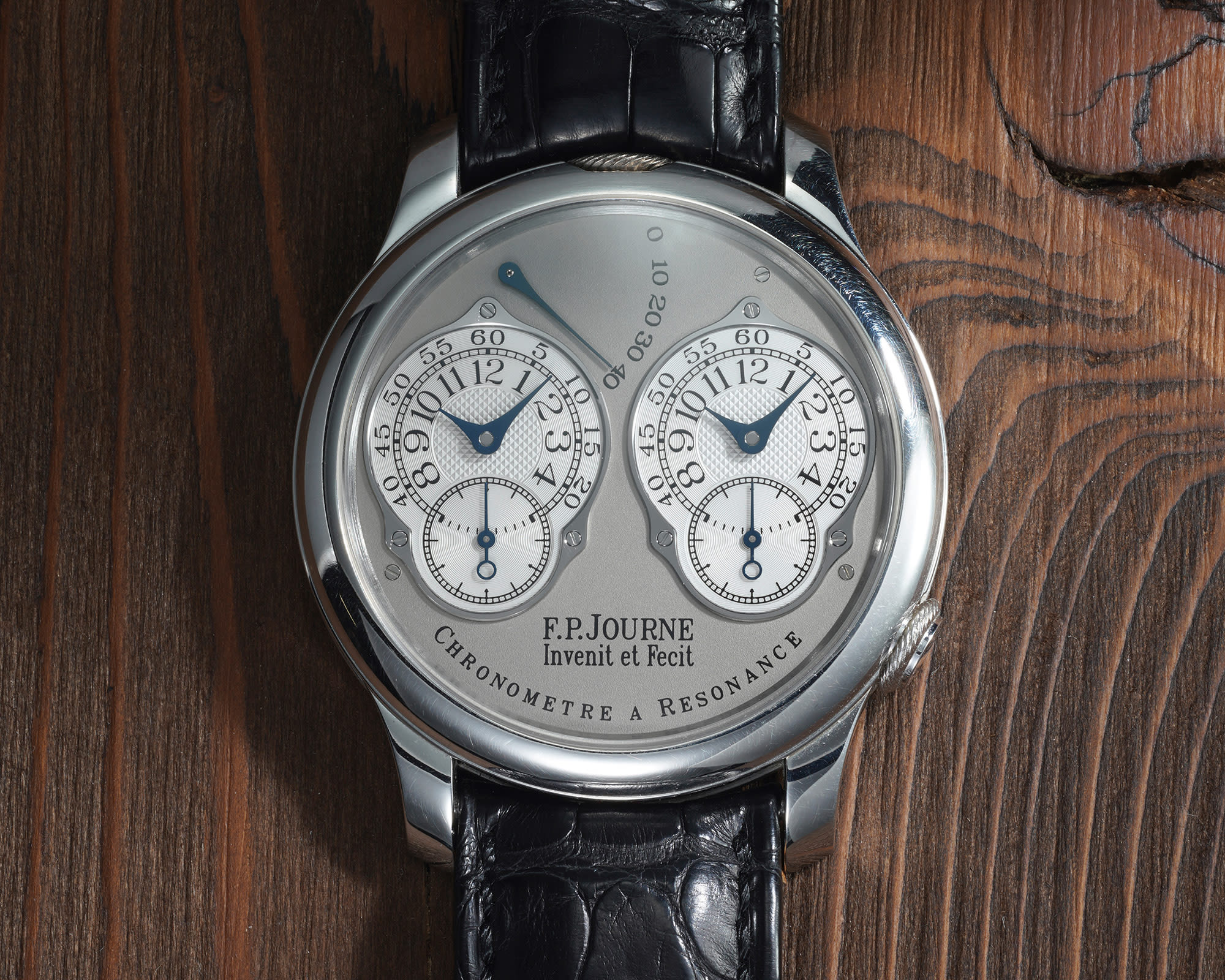
F.P.JOURNE Chronometre a Resonance in platinum
The Geneva Sessions, Spring 2026 runs online March 5-12. This is a quieter sale than the big Geneva live auction in May, but it's the season opener, and it sets the tone.
The canary here isn't a specific lot. It's the sell-through rate and the over/under on estimates for mid-tier watches -- Rolex sports references, AP Royal Oaks in steel, the things in the $50-150K range that drove the post-pandemic frenzy. These are the speculators' collectors' watches. They went bananas between 2020 and 2022, corrected hard, and are now supposed to be stabilising.
Rolex average resale prices peaked at $17,206 in March 2022, dropped roughly 31%, and have stabilised around $13,426. The new wrinkle for 2026 is US tariffs of up to 39% on Swiss watches -- which changes the maths for American buyers bidding in Geneva. If sell-through on mid-tier references slips meaningfully below the 99% we've been seeing, that's probably down to tarrifs.
There's also a secondary question: Is the F.P. Journe frenzy sustainable?
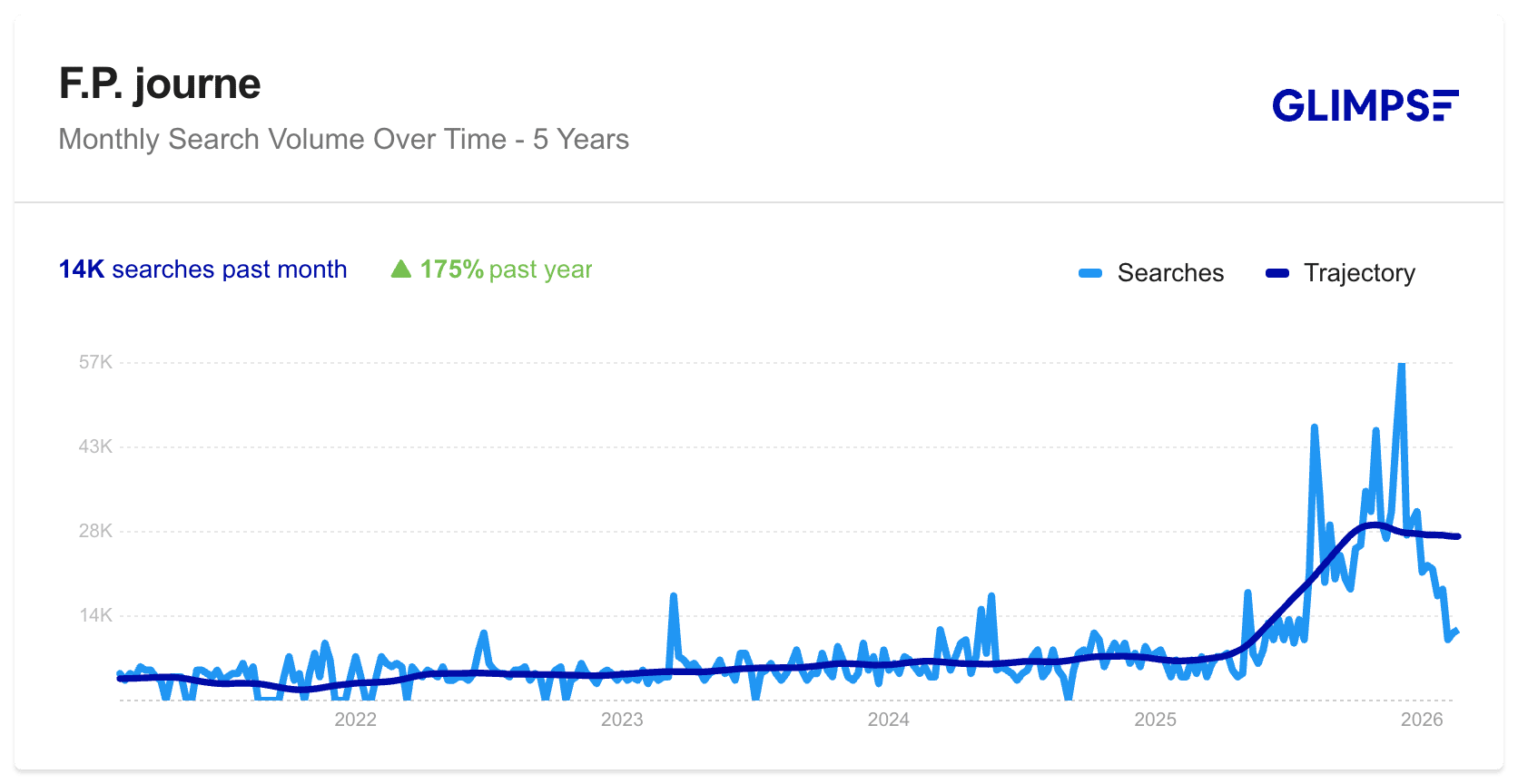
Cooling off
Independent watchmakers have been the growth story of the past two years. At Phillips' Geneva fall 2025 sale, an F.P. Journe Résonance Souscription sold for CHF 3.33 million -- double the pre-sale estimate, with only two phone bidders responsible for the result. A SJX Watche had two buyers. That's a thin market, and thin markets are fragile.
Cars: the Florida week
RM Sotheby's Miami runs February 27 through March 1 at the Biltmore in Coral Gables, and Gooding & Company's Amelia Island sale runs March 5-6 at the Omni Amelia Island Resort.
The collector car market just had its strongest year on record. RM Sotheby's achieved total sales of $1 billion across 44 auctions in 2025, with a 92% sell-through rate and 75 auction records set.
Ferrari hypercars have been particularly strong -- Enzos, F50s, 288 GTOs all hitting prices that looked impossible 18 months ago. A 2004 Ferrari Enzo became the fourth Enzo to sell for over $9 million in January 2026. Classic Car Auctions
The Florida week sits right at the beginning of the 2026 North American season. Amelia Island, in particular, is a concours-adjacent event -- the buyers who show up are serious money, not flippers.
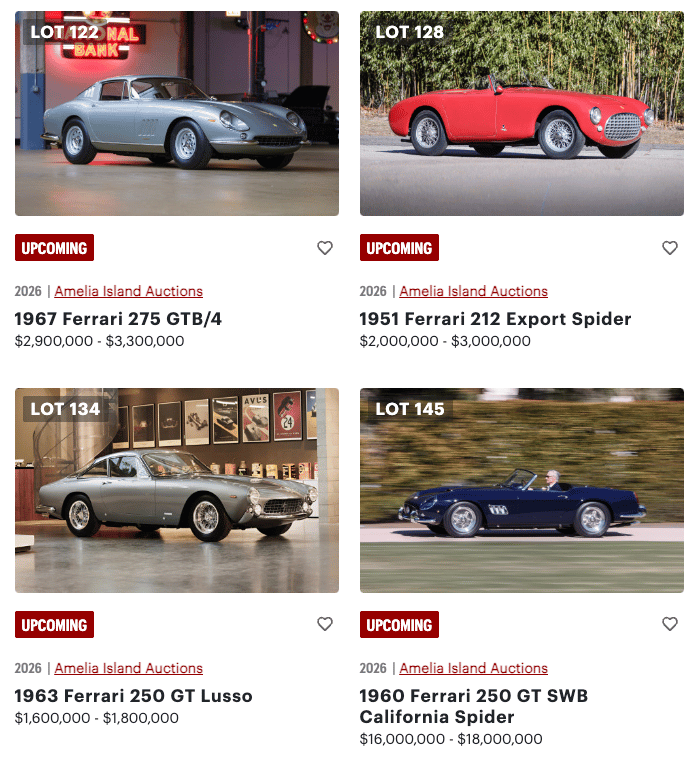
The canary for the car market is simple: are the Ferraris still trading at this level? A Ferrari F40 or Enzo selling in Florida at or above recent benchmarks confirms the hypercar market hasn't run out of buyers. If top-estimate Ferraris start failing -- like that 250 GT Berlinetta in Paris in January -- that's the first sign the frenzy is past its peak.
RM Sotheby's is presenting ModaMiami again at the Biltmore. It drew 10,000 attendees last year, and the vibe is nearly as important as the results.
What I'm actually looking for
Bull case
Henry Moore sells above £15 million.
Hockney's iPad drawings clearly estimate again.
Ferrari top lots hit or exceed benchmarks in Florida.
Phillips Geneva online sell-through stays above 95%.
That combination says: the market recovery from the 2023-2024 trough is real, middle-market buyers are back, and the watch correction is over.
Bear case
Moore underwhelms.
Hockney mid-market stalls (ugly for whoever paid £762K in October).
One or two headline Florida Ferraris buy-in.
Phillips sell-through slips to the low 90s.
That says: November's $2.2 billion New York session was a concentrated supply shock -- exceptional collections bringing exceptional buyers -- and the underlying market is softer than it looks.
I think the art middle market is healthier than the headline-watchers think, and the Moore will do fine. The car market might be approaching peak. And watches are the one to watch for tariff impact, which nobody's quite pricing in yet.
We'll know more by March 12.
That's all for this week; I hope you enjoyed it.
Cheers,
Wyatt