🇯🇵 Our Japan Startup Pitch Event
Japan is much more than a land of century-old companies. This week in Shibuya, six founders pitched us ideas ranging from duckweed protein to blockchain Pokémon cards.
Welcome to the Alts Sunday Edition. 👋
I'm writing this issue from a Shinkansen bullet train, catching my breath after an incredible week here in Japan.
There is so much to say about our epic Japan trip, and I can't wait to tell you all about it. The Kiyokawa whisky distillery & Bonsai Day. Formal presentations & casual conversations. Sumo wrestling & snow monkeys. We'll get to all of it in coming issues.
But first, let's talk Japanese startups.
There's a lot happening in Japan's startup scene right now, and most of it happens in Shibuya. Unlike "old money" Shinjuku, most Japanese startups are located in Shibuya — Japan's version of Silicon Valley.

Because of the sky-high rents, Japanese VCs often lease offices which their portfolio companies can use for free. One founder told us his office was a two-minute walk away.
Here's a look at each of these startups, what makes them special, what we liked and what gave us pause, and of course, the winner we picked.
Want to invest, partner with, or simply reach out to any of these companies? Express Interest under each one and we'll connect you.
Hajimemashou! 👇
🚙 Japan proved small cars sell. This car actually shrinks.
A shape-shifting EV that narrows while you drive.
Walk any street in Tokyo and you'll notice the cars are smaller. More than a third of new cars sold in Japan last year were kei cars, legally capped at 1.48 meters wide. And in most of Japan, you can't buy a car at all until you prove you have somewhere to park it.
Cities around the world all have the same problem. Roads are jammed, parking is scarce, and small cars usually give up stability and safety.
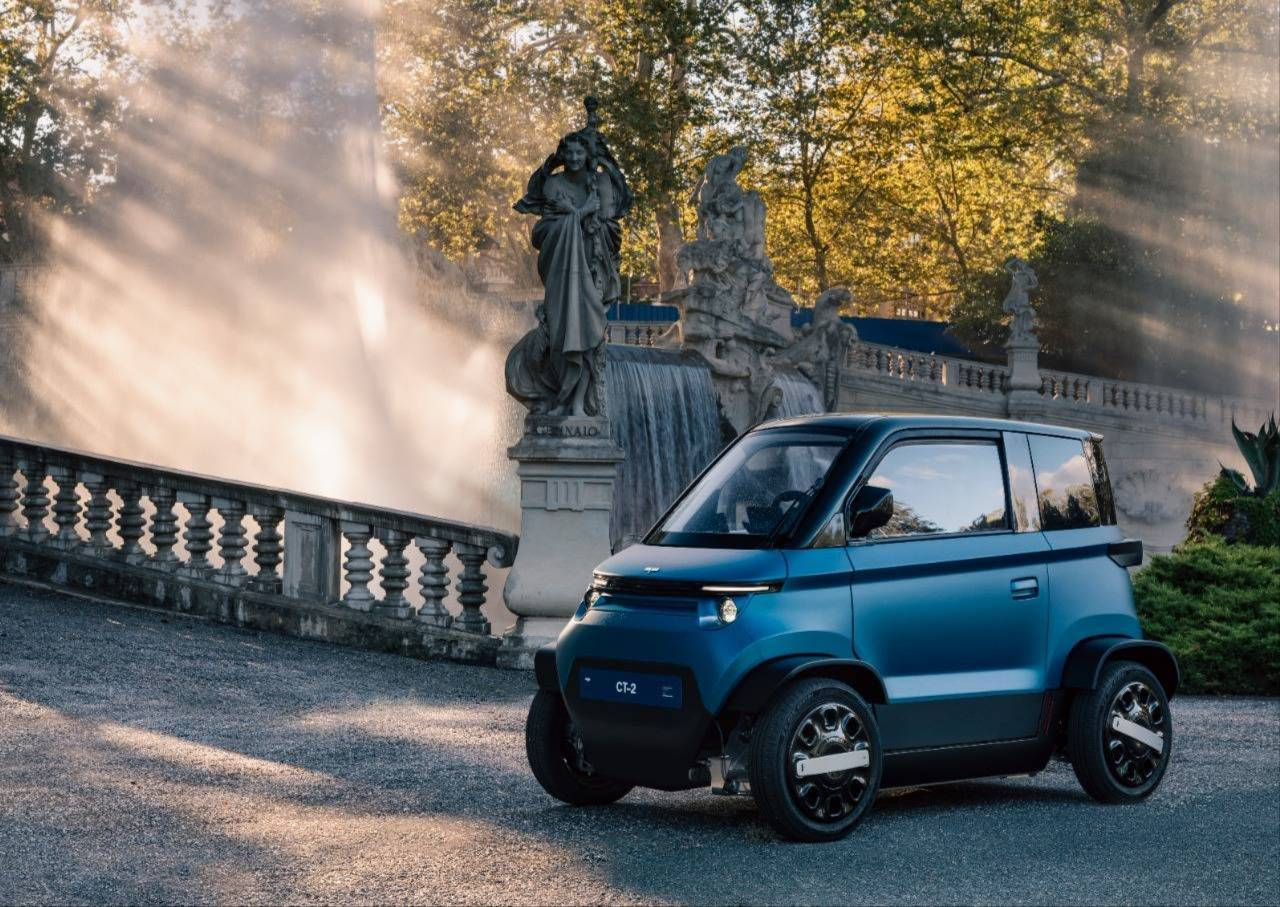
City Transformer's patented EV removes that trade-off. It drives at 1.4 meters wide with the stability of a car, then narrows to 1 meter while driving, slimmer than any kei car, to slip through traffic and into motorcycle-sized parking spots.
Investment notes:
~25,000 vehicles in pre-orders and letters of intent, ahead of mass production
~1,000 ordered by Israel's emergency medical service, for maneuvering through traffic in emergencies
Board and advisers include the former CEO of Volvo Cars, and the creator of the SMART car.
Named one of TIME’s 100 Best Inventions of 2020.
Won gold at the German Design Award & German Innovation Award. Wins at the Green Product Awards and IDA Design Awards
The opportunity:
Live angel round via ExitValley closes Nov 1
Strategic investors are in this round, new investors join on the same terms
Bonus shares for larger investments
$50,000 usual minimum, smaller allocations open to discussion
Every investment starts with a call with CEO Dr. Asaf Formoza
Open to both accredited and non-accredited investors.
Limited places. Eligibility requirements apply.
This is not an Altea SPV.
1. Share-Me 🤝
NFC business cards for a country that still runs on paper ones.
One thing you need to know about Japan is that it still runs on paper business cards.
Exchanging cards here feels a bit like an ancient ritual: two hands, a slight bow, and a careful read.
Sean Hill thinks that's a huge opportunity. Share-Me's 27-year-old founder and CEO wants to keep the ritual but lose the paper.
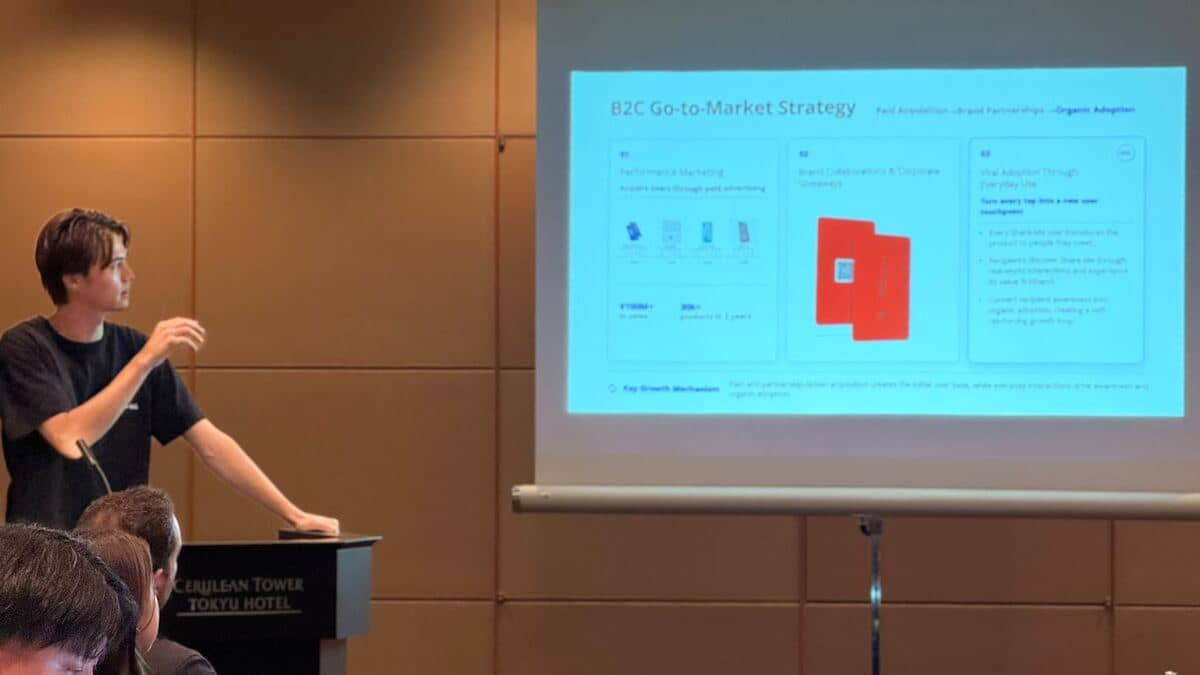
Sean Hill, founder and CEO of Share-Me.
Everything pulls in right away. Contact details, service videos, decks, case studies, etc.
Why use physical cards in the first place? Simple: "Japanese culture cares about the physical thing."

The unit economics are excellent. They manufacture for $1, and sell them for 5,000 yen — about $30 per card.
Share-Me has done ¥100M+ in hardware sales ($637k) and has 20,000 users, more than 6,000 of them company presidents and CEOs. Backers include Thierry Porte (former CEO of Morgan Stanley Japan) and tennis pro Yoshihito Nishioka.
The market is bigger than it looks. Research firms put digital business cards at just $194m a year. But Sansan, the listed company that manages Japan's paper cards, booked ¥53.8 billion ($342m) in revenue in the year to May 2026, up 24.4%. Japan pays real money to manage paper!
After tapping his card against my phone, I was impressed. I asked Sean an important question: "I was so proud to give you my business card. You gave me something much better. But now what? How do I become a repeat user?"
Sean's answer was the enterprise layer. Companies pay to manage every employee's contacts in one place and sync them to their CRM.
"We sell the hardware first and then the subscription follows later." — Sean Hill, Share-Me
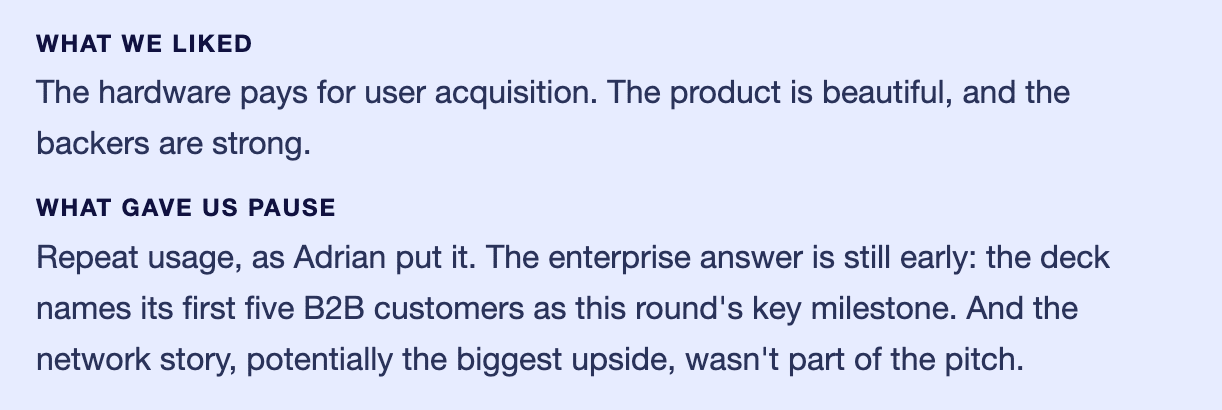
Fair enough. But talking it over with Altea member Adrian Boeckeler afterwards, we both agreed the bigger prize here would be the network itself.
Every tap records who met whom. Stack up enough of them and Share-Me holds a map of Asia's business relationships, which is roughly what LinkedIn built in the West.
Sean didn't really make that pitch. His deck hints at something like this, calling Share-Me "the infrastructure for real-world connections in Asia." But we went fishing for that answer and didn't really get it.
The ask: ¥100M (about $630K) in a post-seed round, to build recurring revenue and expand into Indonesia and Korea.
Interested in Share-Me's post-seed round, deploying smart cards at your company, or helping them expand?
Let us know and we'll introduce you to Sean.
Express interest in Share-Me →
2. Floatmeal 🌱
Protein powder made from Wolffia, the world’s fastest-growing plant.
Before she started, Moana Kitamura, Floatmeal's CEO, passed around a small dish of bright green powder.
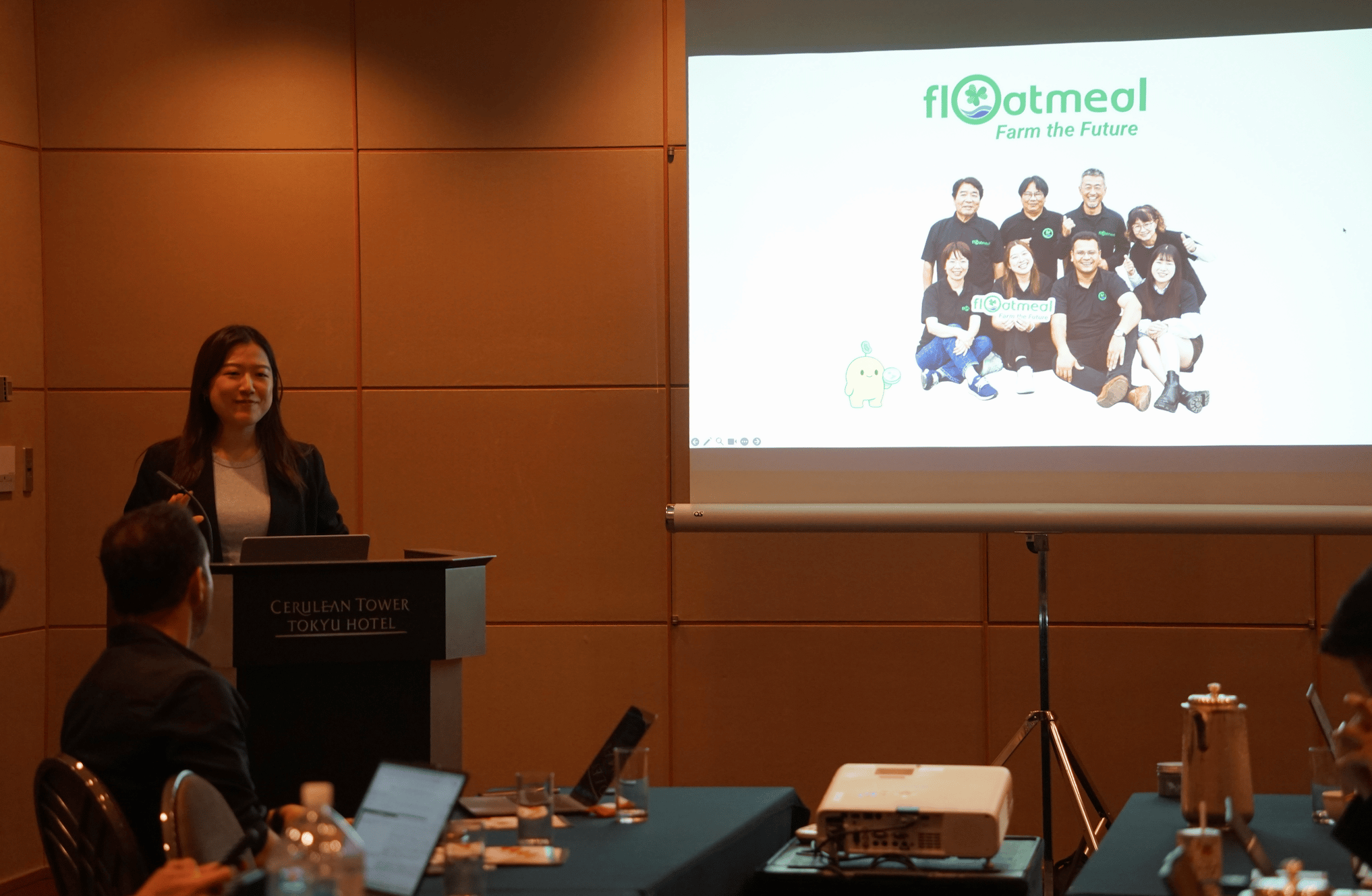
It was dried Wolffia, the world's smallest flowering plant. Researchers at the Salk Institute call it the fastest-growing plant known, able to double in as little as a day.
It looks like algae, but it's a plant. "You can also think of it as a vegetable," Moana said.
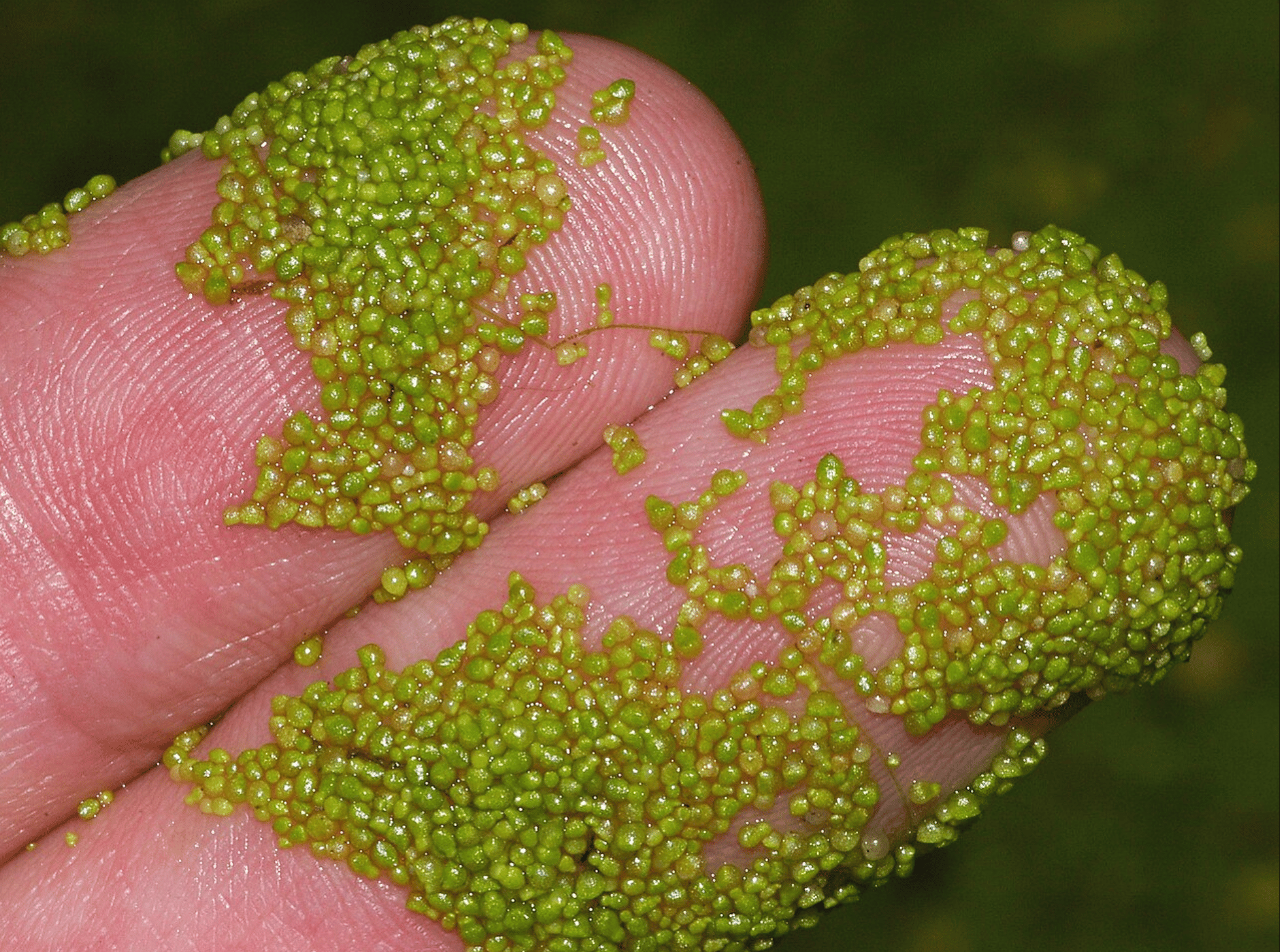
Wolffia is 44% protein by dry weight, versus 34% for soy, with 12 vitamins and 13 minerals. No extraction needed: Floatmeal simply harvests and dries it. Floatmeal sizes its global market at $28.6b, growing to $42.3b by 2030.
Whey is a competitor, but it's import-dependent and exposed to currency swings (ahem, see: the yen). Soybeans and peas bring off-putting flavors and allergens.
"The world needs a very affordable, abundant, reliable, and high quality protein." — Moana Kitamura, Floatmeal
Cost is everything in this industry. Floatmeal holds a Japanese patent on symbiotic microbes that accelerate Wolffia's growth. It farms in "semi-open" sites that are cheaper than plant factories and more controlled than open fields, and it uses sunlight instead of LEDs.
Floatmeal is a Hokkaido University spinout with more than 30 contract farmers in Thailand, where Wolffia is already eaten. The powder is already in jelly, smoothies and veggie gyoza.
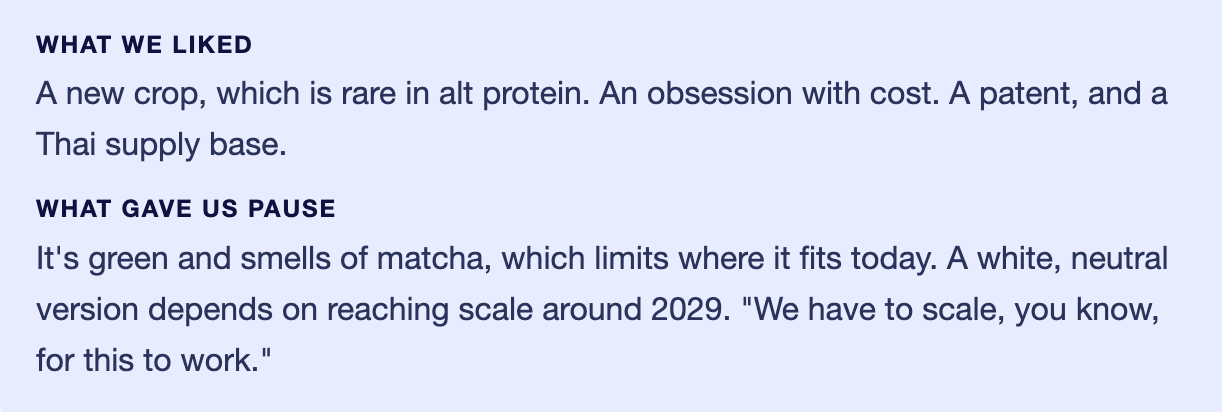
The ask: a seed round of about ¥200M (about $1.26M), targeting a February 2027 close.
Interested in Floatmeal's seed round, or in using Wolffia protein in your products?
Tell us and we'll connect you with Moana.
Express interest in Floatmeal →
3. DJ Insight ⏺️
AI that reads audience reactions using a single smartphone.
This AI would have caught us not paying attention!
Ryuju Saito, founder and CEO of DJ Insight, and his co-founder Takuya Asakura, PhD, built TsutaeAI.
This technology analyzes observable reaction signals (facial expression, voice, gaze and movement) and lines them up with what was being said at that moment.
One ordinary phone can cover up to 1,000 people over time. iPhone, Google Pixel, any device will do.

Ryuju Saito, founder and CEO of DJ Insight.
DJ Insight incorporated in November 2025, the first startup to come out of Tokyo Metropolitan KOSEN, a college known for hands-on engineering. In its first year, it raised ¥30m ($191k) in equity from THE SEED, a Japanese pre-seed VC, and Japan Finance Corporation, the government-owned policy lender, approved a further ¥20m ($127k) loan.
TsutaeAI has run more than 1,000 analyses, including free and trial use, across events, restaurants, staff training and senior exercise classes. Paid in-store pilots with two of Japan's leading cosmetics manufacturers start in December. Pricing starts at ¥700 per hour for audio and ¥20,000 per hour for video, and the company has filed 10 patent applications.
Funny anecdote to illustrate the opportunity: midway through Ryuji's pitch, I had to whisper something to Wyatt. (He had a smear of green powder on his cheek. Thanks, Floatmeal!). We were both distracted for a good 30 seconds.
I asked Ryuju if a speaker using TsutaeAI would find out? It turns out, not yet. For now, analysis happens after the event. real-time processing is on the roadmap.
The emotion AI market was worth $3.5b in 2025, forecast to reach $19.1b by 2034.
"In the beginning, they might be (uncomfortable). But after that, you know, they get used to it." — Ryuju Saito, on whether people act differently when recorded
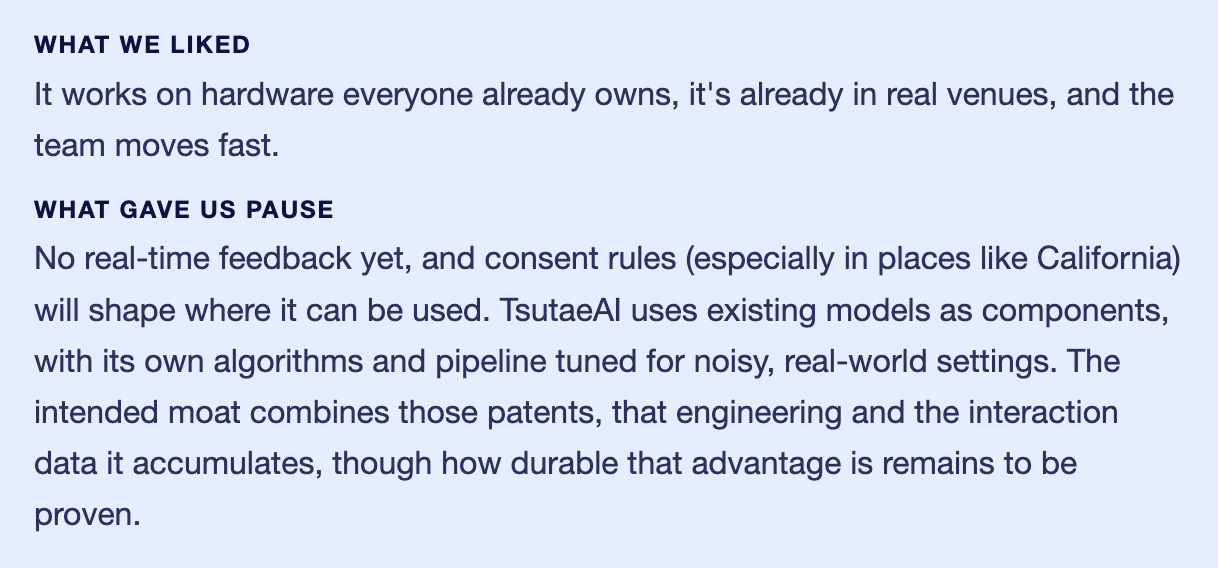
The ask: DJ Insight plans to raise $1m in a pre-Series A round in February–March 2027, targeting a $5m post-money valuation. Within that round, it's looking for two or three strategic investors at $50k to $100k each, ideally bringing US market access, enterprise connections, or expertise in healthcare, elder care and robotics.
Could you be one of those strategic investors, or want to pilot TsutaeAI in your stores, events or care facilities?
Let us know and we'll make the intro to Ryuju.
Express interest in DJ Insight →
4. UUUO 🐟
Online marketplace connecting seafood buyers with Japanese suppliers.
Takuma Sato, CFO of UUUO (pronounced “Yuu-oh”), opened with a question: “You can order almost anything online. Why is sourcing fresh seafood still so difficult?”
Imagine a high-end NYC restaurant asking its distributor for a specific cut of Japanese amberjack. Or perhaps a case of hamachi collars. If the distributor can't find it that day, the restaurant will turn to another supplier.
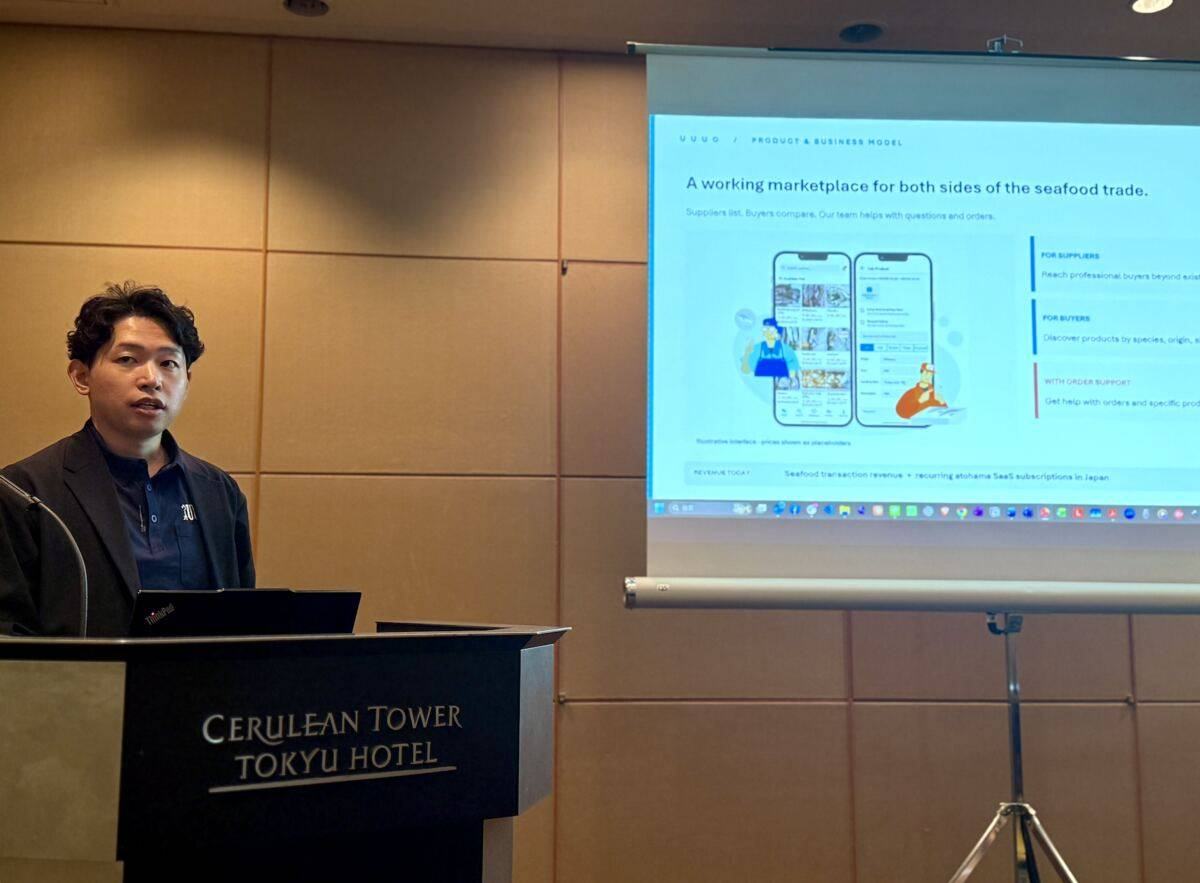
Takuma Sato, CFO of UUUO.
Part of the problem is how seafood gets traded. Traditional seafood trading often relies on established relationships, leaving buyers outside those networks with limited visibility into available supply.
UUUO is a marketplace where professional buyers search across Japan by species, origin, size and delivery date. If an item isn't listed, the team hunts it down.
The founders were fish traders in Tottori before they wrote a line of code, and they hold fish-market buying rights. Today UUUO has 200+ supplier companies, 10,000+ registered buyers and weekly paid orders from across Asia.
"We don't aim to replace traditional distributors...Building trusted relationships across regional markets takes time." — Takuma Sato, UUUO
The timing looks good. Japan's seafood exports hit a record ¥423.1b ($2.7b) in 2025, up 17.2%. The US is the second-largest destination at ¥82.7b, up 11.6%.
The ask: UUUO is not raising funds. Takuma wants introductions to US seafood importers and distributors already selling Japanese seafood.
Run a seafood import or distribution business, or know someone who does?
Let us know and we'll connect you with Takuma.
5. CryptoGames ⚡
Graded Pokémon cards that you can trade online and redeem for the real thing.
Pokémon cards, on the blockchain, sold live on TikTok from Akihabara.
That's the pitch from Jimmy Ishii, CryptoGames' Head of Global Alliances. (His day job at Toyota included leading its first sold-out NFT launch.)
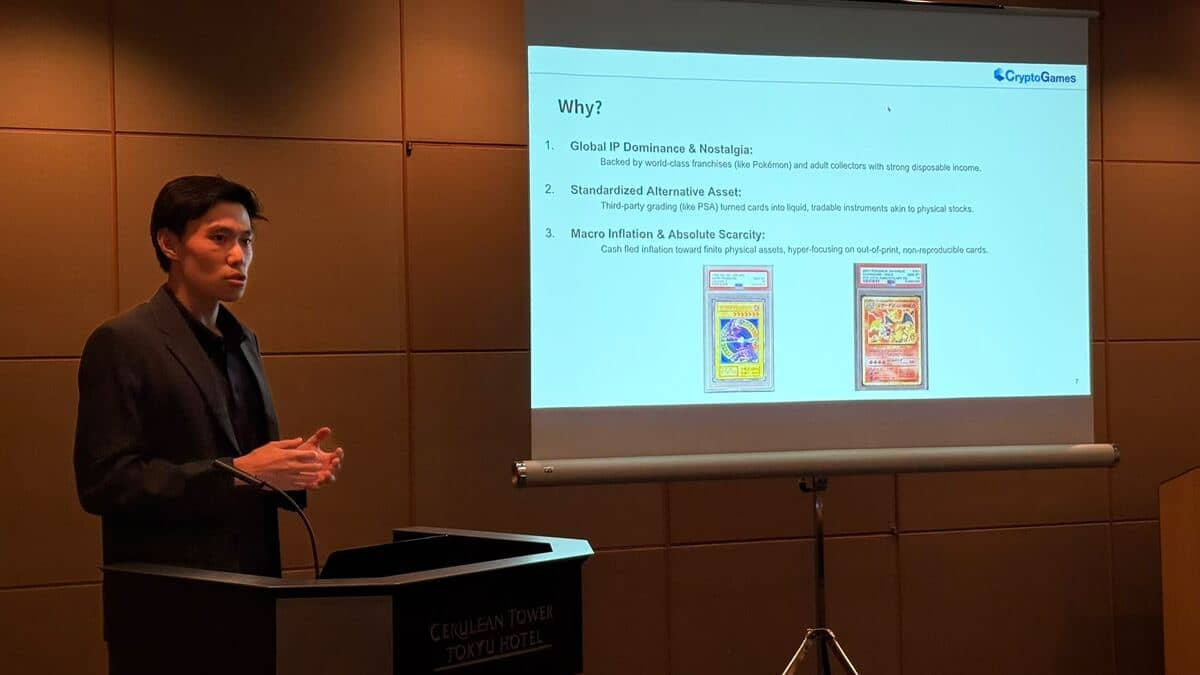
CryptoGames started in 2018 as a blockchain game company. Now it's all in on trading cards.
The thesis starts with IP. "Pikachu is everywhere, all over the world," Jimmy said. Grading turned cards into standardized assets, and vintage cards can't be reproduced in the same paper and print quality, which makes them "a bit similar to the Bitcoin."
He pointed out that Pokémon cards beat the S&P 500 last year. Card Ladder data has the average Pokémon card up about 46% over a year.
Their two shops in Akihabara handle retail.
Their TikTok live commerce does around ¥50m ($318k) a month in gross volume.
Their warehouse holds hundreds of millions of yen in PSA-graded cards, fully insured.
The TAM is huge: Japan's domestic trading card market passed ¥300b ($1.9b) in 2024.
Quasi-competitor Collector Crypt has put nearly $40m of graded cards on the blockchain. But Jimmy sees it as a different market: it focuses on English-language cards, while CryptoGames trades Japanese editions and buys them directly in Japan, where supply is tight.
The ask: partners and buyers interested in Japanese trading cards.
Looking to source Japanese trading cards, or partner with CryptoGames on distribution?
Tell us and we'll introduce you to Jimmy.
Express interest in CryptoGames →
6. Dishwill 🫘
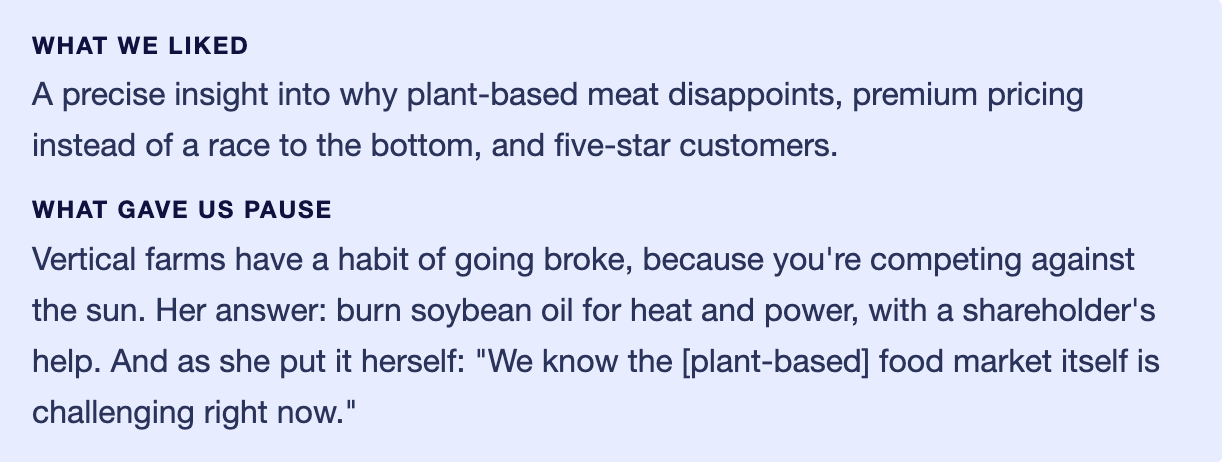
Dishwill is tackling the same protein problem as Floatmeal. Haruna Nishikawa was blunt about the catch: the world needs more protein, she said, but people don’t want to eat plant-based meat.
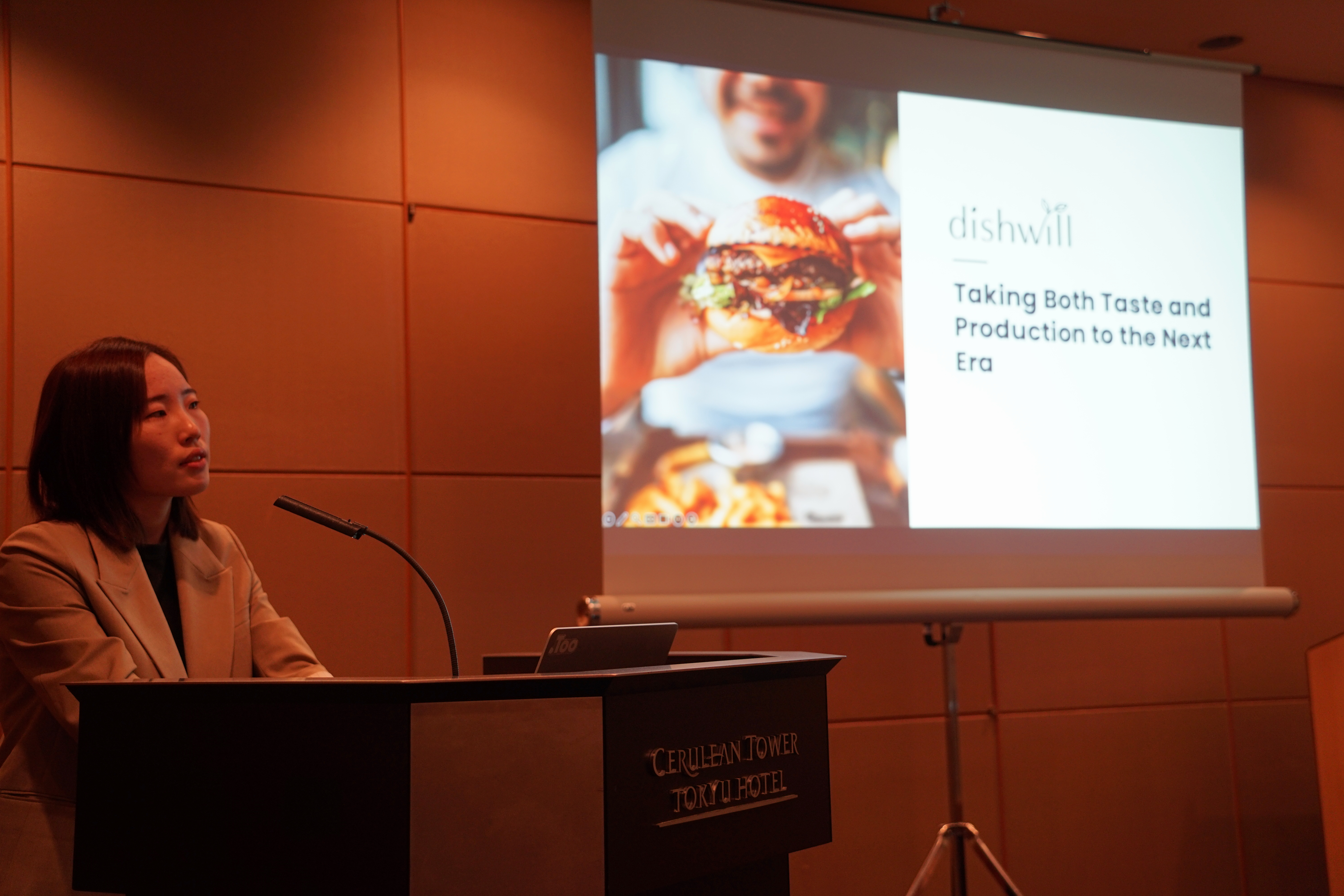
The culprit is hexanal, the compound behind the “beany” note that gives plant-based meat away. It peaks while you chew.
Most brands mask it with a strong aroma up front, which fades right as the beaniness arrives. Dishwill times its aroma release to match that peak.
The other half is production. Dishwill grows soybeans in shipping-container plant factories, producing about 50x more protein per square meter than open fields, with four harvests a year instead of one.
Its plant-based foie gras, burgers and fried chicken go to hotels like Palace Hotel Tokyo and The Ritz-Carlton, Okinawa (some partnerships still in development), at about 5 tons a year. "Our main customer is hotels because they can pay [a] high price," Haruna said.
Smart. This is the model employed by Vow Foods and other alternative proteins. Nobody wins a price war against soybeans.
The ask: distributors and partners in Singapore, China, Europe, the US and the Middle East.
Distribute food in one of those markets, or know a hotel group that should try plant-based foie gras?
Let us know and we'll connect you with Haruna.
Express interest in Dishwill →
And the winner is... 🥁
Floatmeal!
It was a close race, but ultimately Floatmeal came out on top.
The reason was novelty. Most alt-protein startups rework soy or algae. Floatmeal is bringing a totally new crop to the table.
It also sidesteps the trap that has sunk many vertical farms. Instead of paying for LEDs and climate control, Floatmeal grows Wolffia in semi-open sites under sunlight, which keeps costs down.
Then there’s timing. Protein is having a moment, especially in the US, where it’s being added to everything from coffee to cereal. There are real concerns about over-saturation, but demand for cheap, clean protein isn’t going away, and a powder slots into almost anything: shakes, noodles, pasta, baked goods, etc.
And in a country like Japan that imports most of its calories, a cheap protein grown on sunlight is hard to ignore.
Congratulations, Moana!
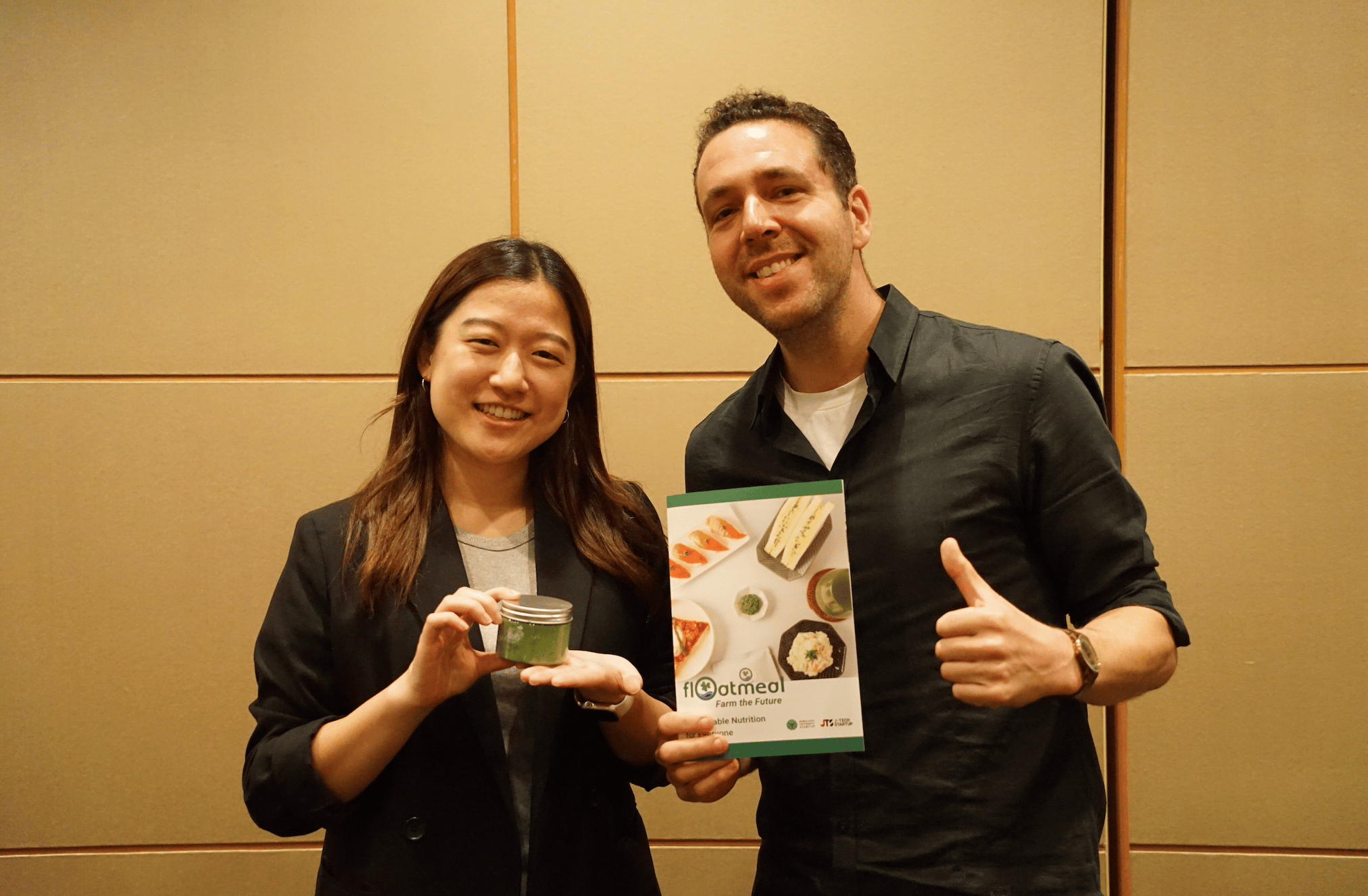
Congratulations to Moana and the Floatmeal team!
Express interest in Floatmeal →
Closing thoughts
It’s a rather tough market right now for Japanese startups. Fundraising is flat YoY, and the median round has shrunk.
The exit door is getting narrower too. Only 31 startups listed in 2025, a decade low, as the Tokyo Stock Exchange tightened its Growth market rules. IPOs in the first half of 2026 fell another 30% or so.
But a tough market doesn’t mean a shortage of good companies. The six founders we met were sharp, scrappy and building real businesses. There are great opportunities out there for investors willing to look.
And because Japanese startups are staying private longer and looking abroad for capital and partners, investors who show up in person have an edge. (And a good excuse for another trip!)
If one or more of these companies caught your eye, express interest and we’ll make the intro.
---
That's it for today. Much more to come next week.
See you then,
Stefan
Disclosures
This issue was written and edited by Stefan von Imhof
This issue was sponsored by CityTransformer
Alt Assets, Inc has no holdings in any companies mentioned in this issue. We received no compensation of any kind from any of the pitch competitors.