The economics & tax benefits of Bitcoin mining: A review of Abundant Mines (Updated Nov 2025)
"Don’t just ride the wave - own the surfboard."
- Business maxim
Since its launch in 2009, Bitcoin has outperformed virtually every other asset class.
It has evolved from a fringe experiment to become a globally recognized financial instrument, earning its place in the portfolios of hedge funds, sovereign wealth funds, and now, even pension plans.
From Aug 2011 - Feb 2025, Bitcoin generated an average annual return of 98.6%.
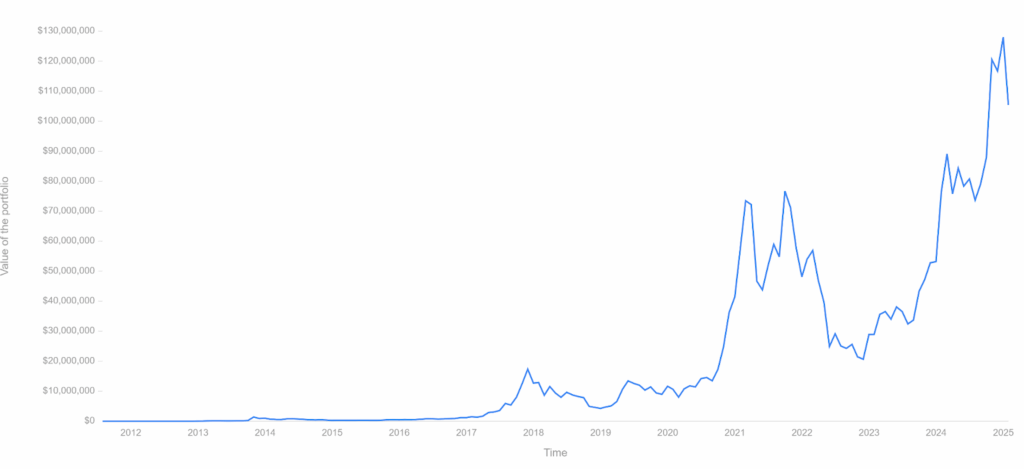
But as you know, it has not always been an easy ride.
Bitcoin is highly volatile, with drawdowns of 20% in a few days not uncommon, and in bear market conditions, drawdowns can peak at 80%.
While buying and holding Bitcoin has rewarded early adopters, there’s another, often overlooked, path to tapping into its explosive potential upside - owning part of the infrastructure that powers Bitcoin itself - Bitcoin mining.
Historically, Bitcoin mining has been reserved for deep-tech experts; folks who are comfortable managing firmware, network security, and optimizing machines operating at the edge of physics.
But now that has changed.
Today I'll be reviewing Abundant Mines: An innovative company that makes Bitcoin mining simple. They abstract away the technical requirements, and let you own your own hardware — complete with cash flow & tax benefits.
There has been lots of interest from the community on this company.
Let’s dive in 👇
Note: This issue is sponsored by our friend Beau Turner at Abundant Mines, with research & due diligence performed by crypto expert Tim Lea. As always, we think you'll find it informative and fair.
Part 1 of this issue was written by Tim Lea, and Part 2 was written by Brian Flaherty. Tim Lea is OG in the blockchain and cypto space, and a 20-year veteran of corporate finance and funding with GE Capital, HSBC, and Lloyds Bank. His previous issue for Alts was on crypto indexing. An author of two books and a keynote speaker at 130+ events, he’s also an award-winning independent film director.
Bitcoin's economics
Before we get into mining, it’s important to have a basic understanding of the drivers behind Bitcoin’s growth, volatility, and supply economics.
At a high-level, gold and Bitcoin have very similar characteristics
Both have limited supply
There is a complex and expensive process for mining
Bitcoin’s supply dynamic
As of today, there are 19.8 million Bitcoins currently in existence, and there will be a maximum of 21 million Bitcoins mined, which is programmatically fixed by code
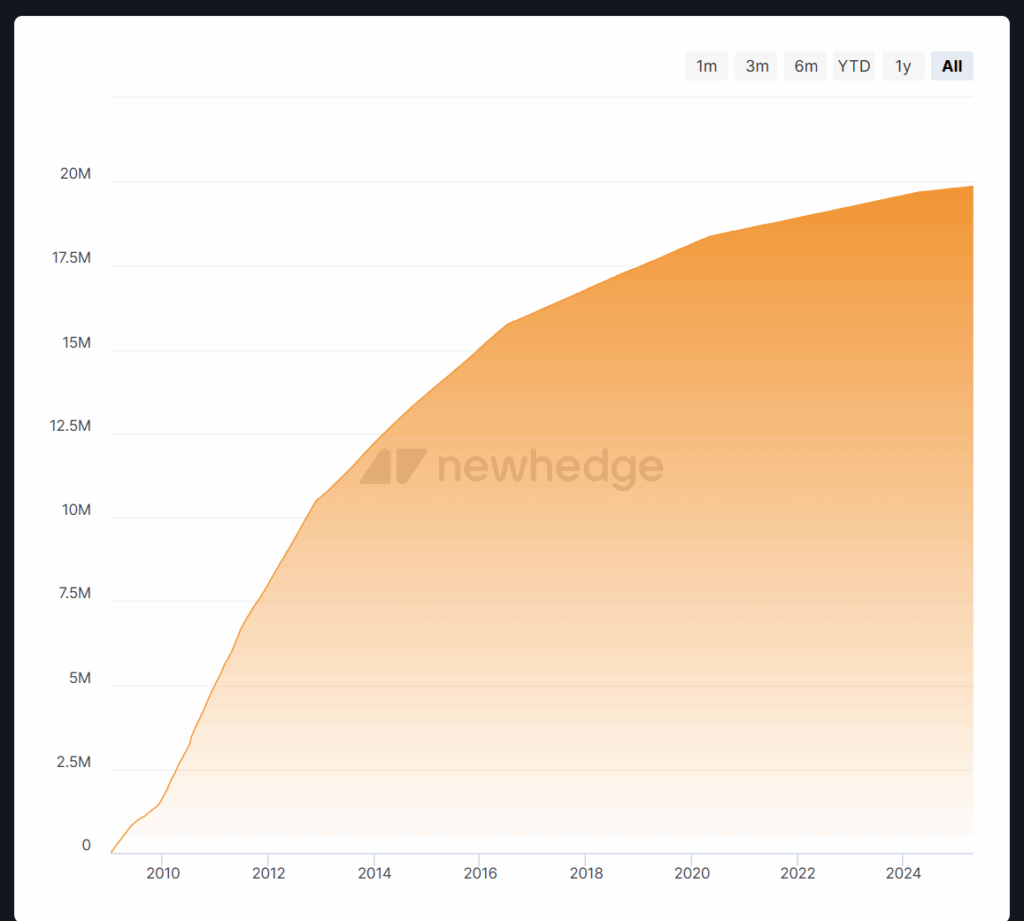
By design, Bitcoin mining gets harder over time, through something known as the Difficulty Adjustment. The last Bitcoin will be mined in the year 2140.
Satoshi Nakamoto, Bitcoin’s anonymous creator, is believed to hold 1 million BTC, which remains untouched. With a value of nearly $100 billion, this is the largest Bitcoin holding held by anyone. It's a massive stash that hackers have never successfully cracked, proving the security of the Bitcoin network.
Every four years, the number of Bitcoins mined automatically halves. The last halving happened in mid-2024, where mining rewards were reduced from 6.25 BTC to 3.125 BTC per block. The mining curve shows the number of Bitcoins mined since 2009 - but the story doesn’t end there.
Around 3 million Bitcoins have been accidentally lost or destroyed. There are stories galore of people losing their early Bitcoins. (You may be familiar with the man suing his local authority to dig up a landfill site where he says $800m worth of Bitcoin are sitting an old computer he threw out in 2013.)
Bitcoin’s demand dynamic
Does it still have room to grow?
No one has a crystal ball, but there is substantial momentum behind it:
Institutional adoption is accelerating
In January 2024, after years of regulatory hurdles, 11 Spot Bitcoin ETFs were approved and launched on Wall Street. These have opened the floodgates for institutional capital, retirement accounts, and family offices.
The latest Coinglass data shows there are no less than 19 active Bitcoin ETFs, with over $110 billion in AUM.
Sovereign/political interest is accelerating
On March 6, 2025, the Trump Administration signed an executive order to formally establish a strategic bitcoin reserve for the US, and is establishing budget-neutral strategies for acquiring additional Bitcoin.
Sixteen US states have also introduced Bitcoin reserve legislation, and multiple countries are also rumored to have already quietly started to acquire Bitcoin, with many looking to establish formal strategic Bitcoin Reserves.
The technological ecosystem has matured
Institutional-grade custody services, regulatory clarity, and enhanced security frameworks continue to mitigate the risks of investing in Bitcoin.
To put it simply: the Bitcoin network has increasing demand and is facing an upcoming supply crunch, with only 5% of the remaining Bitcoin being mined over the next 115 years.
What is Abundant Mines?
Abundant Mines is an Oregon-based Bitcoin mining-as-a-service company. They give investors passive exposure to bitcoin mining, while eliminating the need for the deep technical skills required to do so.
Abundant Mines gives customers direct ownership of mining hardware housed and maintained in Abundant Mines’ own energy-optimized data centers in the Pacific Northwest.
Abundant Mines draws 85% of its power from nearby Hydroelectric dams
How it works:
You purchase high-quality, industry-standard ASIC mining machines
Price varies between $7,000 - $10,000 per unit. It all depends on processing power — the more powerful the machine, the more Bitcoin it can mine.
You can opt to pay hosting costs monthly or pre-pay your annual electricity upfront (primarily to pull forward tax expenses.)
Your Bitcoin mining machines are hosted in a secure, professionally managed facility
The mined Bitcoin is paid directly to your Bitcoin wallet.
You leave all the firmware updates, operational challenges, and sources of consistent power to Abundant, which offers a guaranteed 95% uptime. (In discussions with CEO Beau Turner, actual uptimes are typically around 98%.)
Let’s examine the current structure for generating $10,000 per month in net passive income.
ROI breakdown
The ROI breakdown below demonstrates the current estimated structure produced by Abundant Mines, which targets $10,000 per month of net passive income.
Please note that certain elements of this structure affects the results. For example, the computing power of the units purchased, the choice to prepay electricity and hosting, and the volatile price of Bitcoin - and its associated "mining difficulty." More on this below.
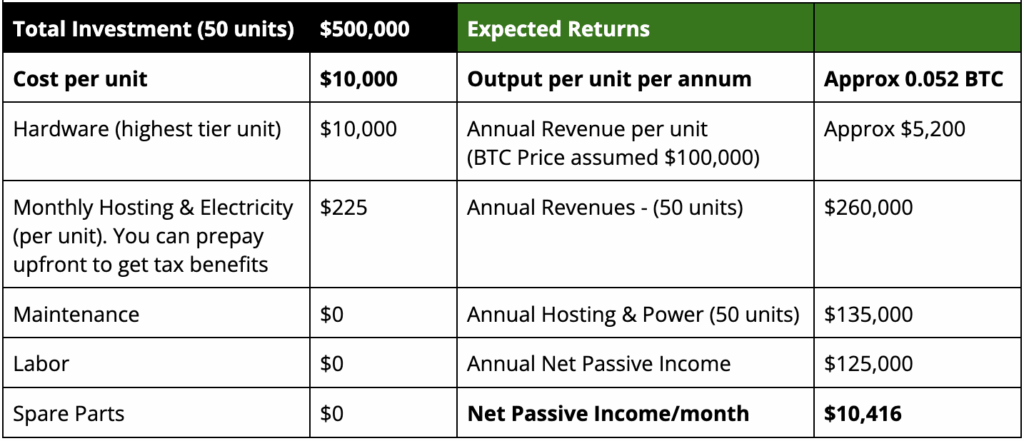
(To get additional color around the ideal structure, review Abundant Mines' December 2024 video, which shows a different configuration to generate ~$10,000 per month.)
This model becomes particularly powerful, however, when considered in tandem with the direct ownership of the hardware.
Tax deductions
By setting up as an operational business, mining setups may qualify for significant first-year tax deductions.
Under US law, extended depreciation may be available, estimated to be 40% as of 2024. (Please note: Definitely check with your own tax advisor to ensure these provisions apply to your jurisdiction/personal situation)
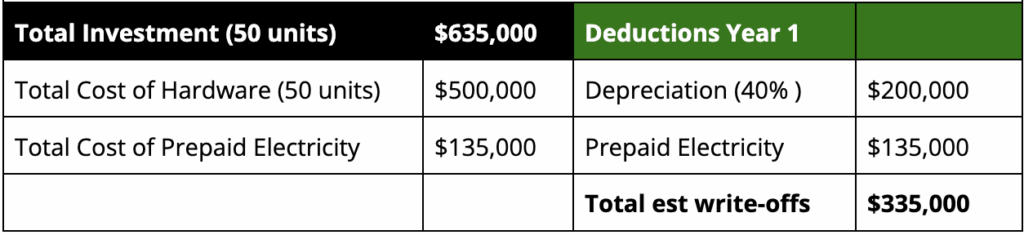
The hardware is an asset too
In discussions with Beau, the hardware itself is also in high demand due to its high-level computing power, which means the value of the hardware tends to retain 75% of the initial purchase price at the end of Year 1, thereby generating additional asset value.
(There have even been situations where the units have sold for more than their initial purchase price, especially during Bitcoin price runs!)
Flexibility
If you're new to mining, or can't afford a half a million dollar investment, you can start with as little as 1 unit and scale over time — ideal for learning how mining works without a significant upfront commitment.
Bitcoin’s achilles heel
What happens when BTC crashes?
Now, to be clear, Bitcoin's price swings can definitely impact mining profitability.
Over the last 12 months, BTC has ranged from $49,000 (Aug 2024) to an all-time high of $109,500 (Jan 2025).
At a high-level, if the Bitcoin price goes up, the profitability of mining rises, and if the price falls, the reverse is true.
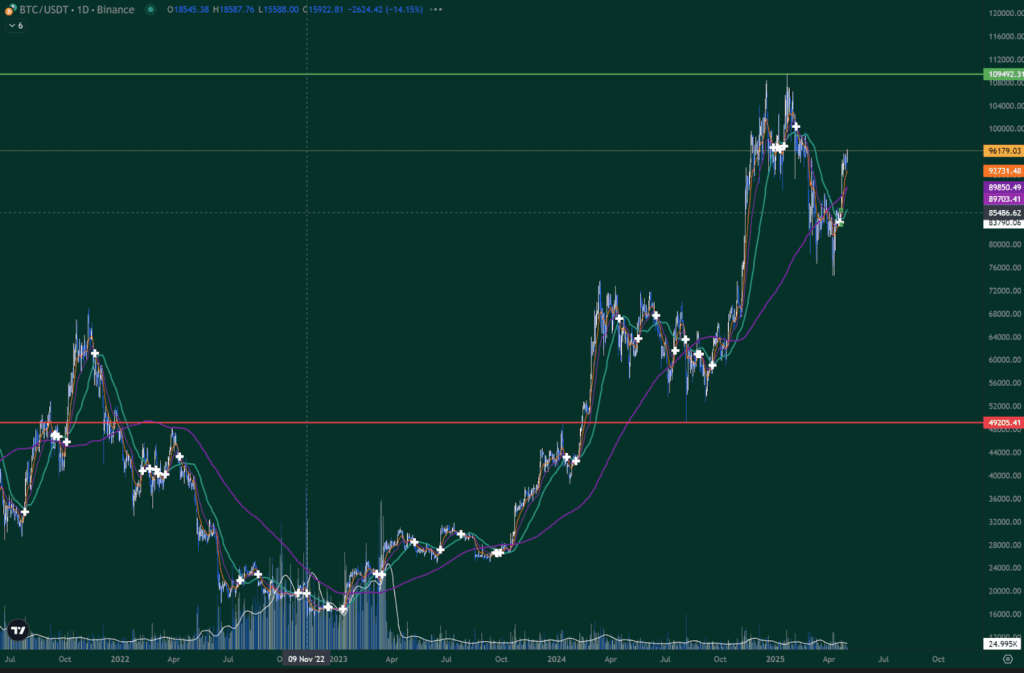
From its inception, the Bitcoin network took this into consideration. The network's design maintains a consistent ~10 minute block production time.
Bitcoin's self-stabilizing mining system
However, the Bitcoin network maintains balance, even as market conditions fluctuate.
It does this through a self-correcting mechanism that ensures new Bitcoins are created every 10 minutes, no matter how many parties are mining, and it’s all based on game theory.
Here’s how this works, in plain English:
Bitcoin mining is fundamentally about miners’ computer hardware solving cryptographic puzzles
When the price of Bitcoin increases, mining becomes more profitable, attracting more miners to mine.
As more miners join, the total computing power (called the hashrate) increases, which means blocks are getting mined faster than the intended 10 minutes.
To bring things back into balance, the Bitcoin network automatically raises its mining difficulty by making the puzzles that miners solve increasingly harder to solve, requiring an increase in hashrate so that the block time returns to ~10 minutes.
The reverse happens when Bitcoin’s price falls or electricity costs rise — some miners temporarily power down, reducing the hashrate.
This automatic adjustment occurs every two weeks, and it is what keeps Bitcoin mining stable and predictable, even within a volatile landscape.
In short, it’s a built-in balancing act — a self-tuning system that ensures Bitcoin continues to function smoothly, regardless of the number of players participating in the game.
As Beau Turner is keen to point out: with smart management, it also creates an opportunity:
“There’s a period in the market where spirits run high, price is ripping, economics look amazing - and you just can’t deploy capacity fast enough in the physical world to catch up. If you’re already ahead of the game and deployed, you’re doing very well.”
And when the price falls...
“Even when you're mining at break-even, you're still accumulating Bitcoin at cost (while still incurring your depreciation and operating expense benefits). For many of our high net worth and high- earning clients, that’s the goal. They’re not chasing short-term profit, they’re playing the long game.”
Of course, you also have the option to switch off your hardware at any time, should you wish.
Mining Bitcoin vs holding
One of the most compelling arguments in favor of Bitcoin mining is that it can outperform simply holding Bitcoin.
The chart from Abundant Mines compares three return profiles from 2020 to early 2024:
⚪ Spot BTC returns (Black Line): Reflects the performance of simply buying and holding Bitcoin.
🔵 Mining returns (Blue Line): Returns from operating ASIC machines over time, excluding hardware resale value.
🟠 Mining returns with ASIC resale (blue line): Total return including the estimated resale value of mining hardware at different points of the cycle.
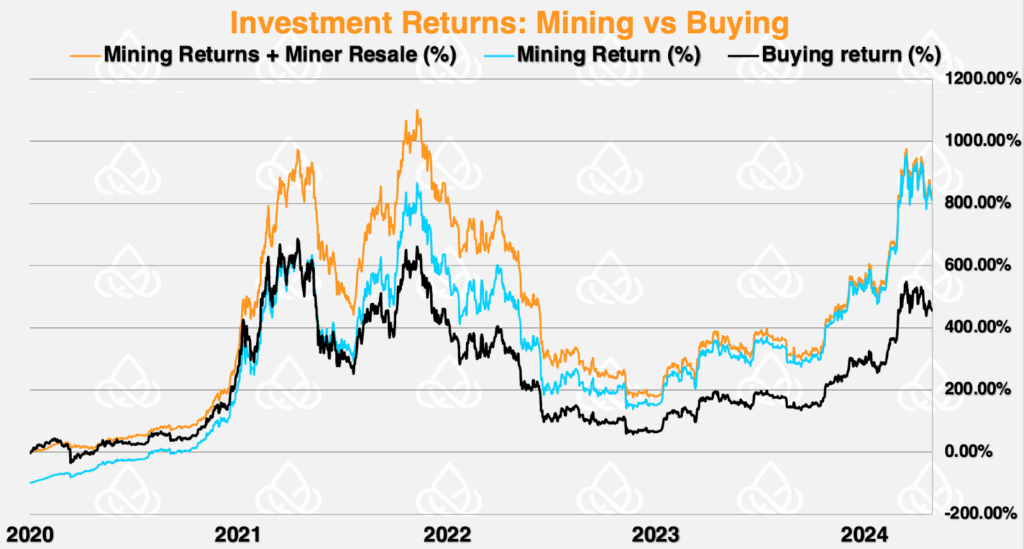
This chart shows a 4 year hold period comparing return profiles of buying bitcoin, mining bitcoin with no residual value to the miner itself, and mining bitcoin with the resale value of the miner included. Even assuming no price movement in bitcoin itself, you can model a 2x return on capital at year 6, assuming Bitcoin stays level and machines retain 50% of their value in year 6. In other words, Bitcoin can stay flat, but you would still 2x your capital when mining with all else held equal.
Over the period analyzed:
Spot BTC delivered an impressive +455% return.
Mining operations alone outperformed with +810%.
When factoring in ASIC resale (common when demand for hardware spikes), returns were +826%.
In other words, during this period of 4.5x returns for underlying BTC, mining was an 8.2x return, outperforming holding bitcoin by 82%.
The data reinforces a key point: while mining carries operational risks and monthly costs, it also has multidimensional upside.
In bull markets, not only do miners earn BTC at increasingly valuable rates, but the hardware itself can appreciate, creating a secondary layer of value.
Two Paths to Bitcoin: Buying and Mining
Note: The rest of the article contains discussion of US tax law. We’re not tax professionals and we don’t offer tax advice. Always speak to a CPA or other tax pro before executing any of the strategies we discuss!
There are two (legitimate) ways to acquire Bitcoin – buying it on the open market or mining it using high-performance computers.
(Technically, a third way is to get paid in BTC for services you render, but that is outside the scope of this issue.)
Depending on the path you choose, your acquisition costs can differ sharply:
When you buy existing Bitcoin on an exchange, you’re paying spot prices. A $100K purchase gets you $100K worth of Bitcoin (actually slightly less, due to transaction costs).
But mining is different. You’re essentially acquiring newly minted Bitcoin at the cost of production, which could be quite a bit less than the prevailing spot price.
It makes sense that production costs should generally be lower than spot prices. After all, there wouldn’t be much incentive to mine without the potential for profit.
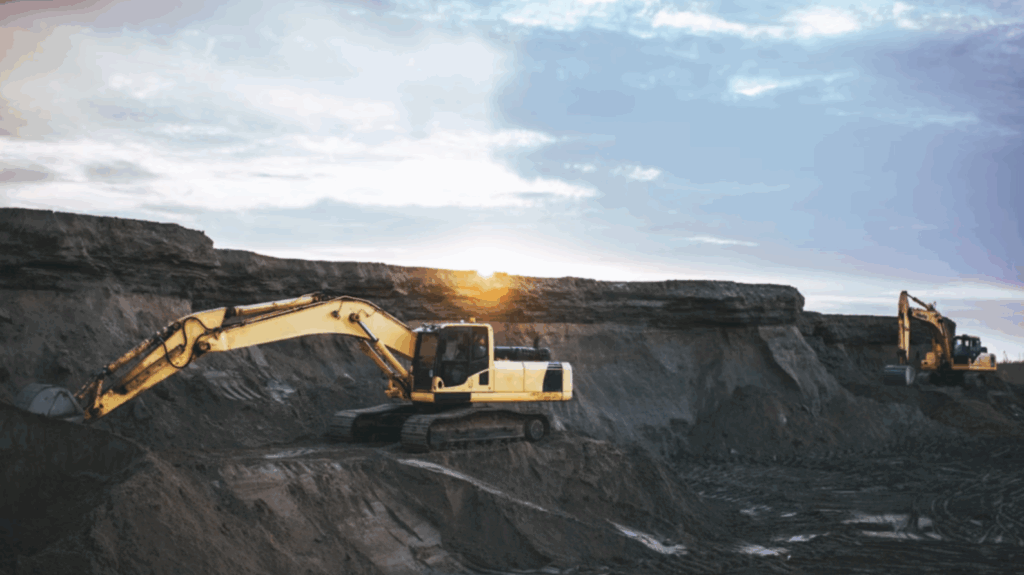
There’s a reason it’s called ‘mining’ – just like physical mining firms, Bitcoin miners attempt to produce a scarce, valuable asset at a profitable spread below spot prices. Image: Artyom Korshunov
What most people don’t realize, however, is that the tax treatment also differs between mining and buying:
Buying Bitcoin is an investment activity, like buying stocks. The main tax impact occurs when you sell your coins, with capital gains taxes paid on any appreciation.
In contrast, mining Bitcoin is a business activity. You’re not just buying coins and hoping for the best, but producing assets through active operations.
As a result, Bitcoin miners have the potential to be taxed like businesses. And under US tax law, being treated like a business can be hugely beneficial.
For one, a miner is able to deduct virtually all of their operating expenses, including labor, rent, and electricity costs. That can significantly reduce taxable income.
Arguably even more important, however, is the ability to benefit from writing off depreciation.
Understanding depreciation (and its supercharged cousin)
If you’re not familiar with the concept, depreciation refers to the idea that physical assets (like buildings, machines, and computers) become less valuable over time. For example, a brand-new car is inherently worth less after being driven for five years.
As assets decline in value, businesses can (usually) treat the associated depreciation as an expense. On its own, this can be a big tax benefit – you’re writing off a non-cash expense that provides actual cash savings by lowering your tax bill.

Depreciation is one reason that real estate can be so attractive from a tax perspective. Buildings can ‘lose’ money on paper while still generating a cash profit. Image: Jason Dent
Under normal circumstances, this depreciation needs to be booked bit by bit over the years. And that makes sense – assets wear out over time, not immediately.
But due to a special quirk in US tax law, depreciation doesn’t always need to be slow and steady:
There’s a powerful version of depreciation that allows businesses to potentially write off the entire value of an asset the first year that it enters service: bonus depreciation.
With bonus depreciation, you get essentially all of the tax benefits upfront, instead of having them trickle out over the years. That’s crucial for businesses looking for a significant write-off today – while still investing in a useful asset.
Unlike standard depreciation, the ‘point’ of bonus depreciation isn’t to match the economic life of an asset. Instead, it’s a policy choice, designed to deliberately incentivize businesses to make capital investments.
Bonus depreciation was once a niche carve-out. But recent federal legislation has significantly upgraded and expanded it.
As a result, it’s now a viable tax tactic for many different businesses – including Bitcoin miners.
Bitcoin mining & bonus depreciation: OBBBA’s impact
When structured properly, Bitcoin miners have always been able to write off depreciation. But in late 2017, newly installed rigs began qualifying for bonus depreciation thanks to the Tax Cuts and Jobs Act (TCJA).
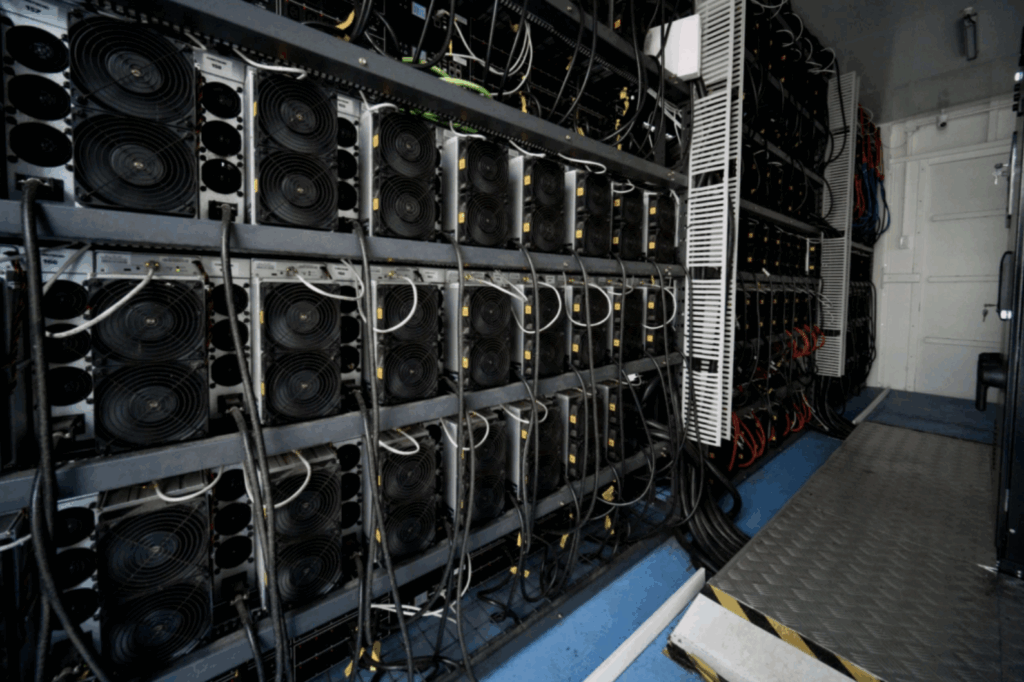
Sure, computer hardware doesn’t decay quite like a building does. But technological improvements mean that mining rigs (pictured) still become less valuable over time. Image: Abundant Mines
The TCJA set the bonus depreciation rate at 100%. In other words, miners could spend $50K on equipment and immediately book a $50K tax write-off.
But here’s the thing: this was only supposed to be a temporary boost. Under the terms of the legislation, bonus depreciation was set to expire completely by 2027.
However, another piece of legislation changed the rules just in time. The One Big Beautiful Bill Act (OBBBA), passed this summer, renewed the bonus depreciation rate on qualified property at 100% – permanently.
By making bonus depreciation a permanent part of US tax law, OBBBA cemented a strategy that allows investors to:
Book a tax write-off of almost any conceivable size (there’s no dollar limit on bonus depreciation)...
By acquiring qualified property with the potential to produce a competitive ROI (such as Bitcoin mining rigs)...
With ample timing flexibility – you just need to make sure you put your assets into service before the end of the tax year you want a write-off in.
To underscore the point, lowering your tax bill isn’t that hard if you’re willing to just throw away money.
The key is figuring out a way to lower your tax bill while also spending your money on something useful (like a cash-flowing asset). And that’s exactly what the Bitcoin mining bonus depreciation strategy offers the potential to do.
Final caveat: structure matters
This bonus depreciation strategy can be lucrative in the right circumstances. But it’s important to get the structure right, or you’ll fall foul of IRS regulations:
First, you’ll probably want to own your mining rigs through an LLC or another business entity. This helps establish that the activity is a legitimate business, not just a hobby.
Next, it’s useful to work with a professional hosting provider that can provide clear documentation about your rigs. The last thing you want is a missing form when your CPA asks for it.
Finally, while it should go without saying, remember that these tax advantages are just the top layer of an investment with its own risk-reward dynamics – Bitcoin mining. Ensure that this approach aligns not just with your tax strategy, but your investment strategy as well.
If you’re interested in learning more, this is an approach that Abundant Mines is well-versed in.
They’re experienced in working closely with CPAs and other tax professionals to help ensure that individuals can access the tax benefits of Bitcoin mining in a legally compliant way.
Their website is a host of useful information, and interested investors can also schedule a call directly with CEO Beau Turner.
This is one of the few legitimate tax strategies in the crypto space. It’s absolutely worth considering for individuals facing a hefty 2025 tax bill that they’d like to lower.
Closing thoughts: Who is Abundant Mines best for?
Abundant Mines offers an extremely interesting value proposition — passive Bitcoin exposure through infrastructure ownership rather than token speculation.
For long-term Bitcoin believers, tax-savvy investors, and those seeking real-world yield from digital assets, it’s a play worth considering.
With turnkey service, green energy sourcing, and real hardware ownership, it opens up a high-potential alternative to simply holding BTC.
However, like all things crypto, it comes with volatility, so ensure it aligns with your time horizon, tax situation, and, especially, your risk appetite.
And on that note, one thing I really appreciate in chatting with Beau is that he gives it to you straight. Per Beau:
"One of my least favorite questions to answer is about ROI, since it has so many variables and is heavily impacted by time horizon. Anybody who only does it for 2 years and misses the 1 year where it booms is going to be mad at me. I would rather people have realistic expectations and not feel like they were sold a bag of goods.
Making predictions is a dangerous game, and I try to stay away from predictions while still giving clear bowling lanes of what can happen."
Hopefully in this issue, we've done exactly that.
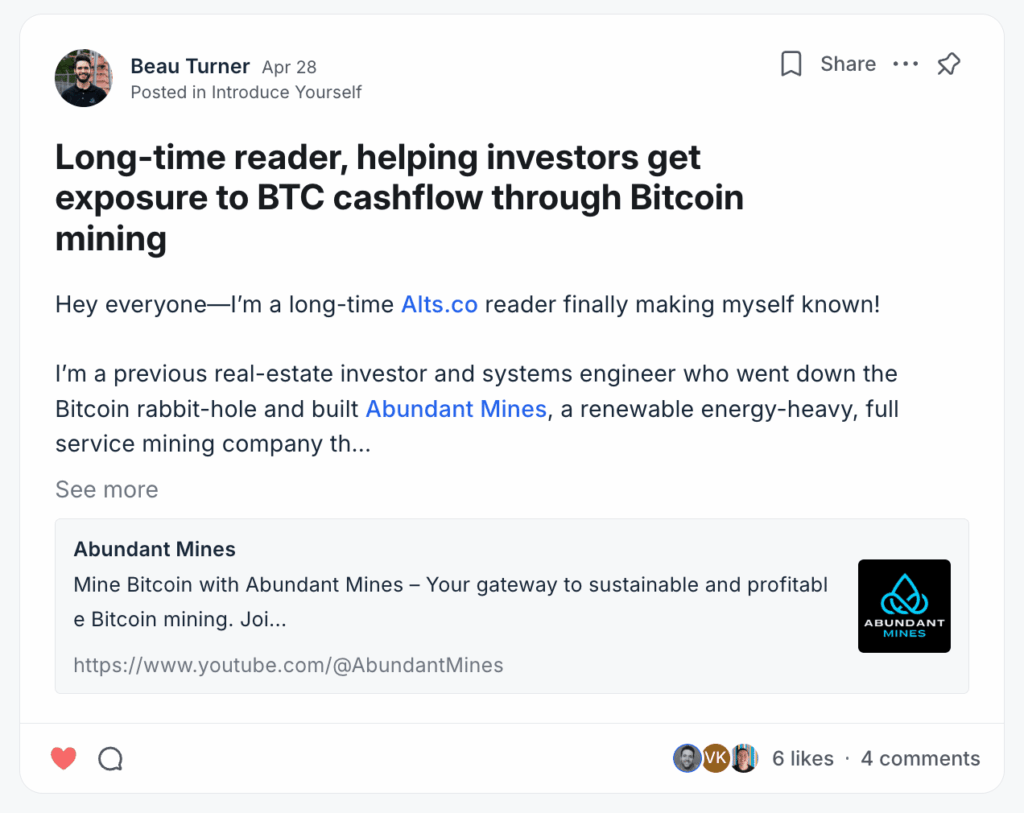
Or if you have questions for Beau, feel free to ping him in the Alts Community
That's it for today
See you next time,
Brian
Disclosures
This issue was written by Tim Lea and Brian Flaherty, and edited by Stefan von Imhof
Abundant Mines was able to review an early draft of this article. Tim, Brian and Stefan made final editorial decisions.
Stefan has purchased a mining rig through Abundant Mines
This issue is a sponsored deep dive, meaning Alts has been paid to write an independent analysis of Abundant Mines. Abundant Mines has agreed to offer a deep look at its business, offerings, and operations. Abundant Mines is also a sponsor of Alts, but our research is neutral and unbiased. This should not be considered financial, legal, tax, or investment advice, but rather an independent analysis to help readers make their own investment decisions. All opinions expressed here are ours, and ours alone. We hope you find it informative and fair.