The Paraguay Persimmon Farm
In last week's issue on Investing in Paraguay, I mentioned that I originally traveled here to check out a persimmon farm we're investing in.
Today I'm going to take you there.
The operation is called Frutas del Paraguay, and it sits on 139 hectares in Misiones, a solid four-hour drive southeast from Asunción.
Accompanying me for the journey is Tigran Kalaydzhyan, the OG Altea community member and prolific farmland investor who brought this company to our attention a year ago.
Incredibly, this is the only fruit export operation in all of Paraguay. We woke up at 5am to hitch a ride with Miguel Basomba, the Valencia-born entrepreneur who led the team which brought this to life a decade ago.
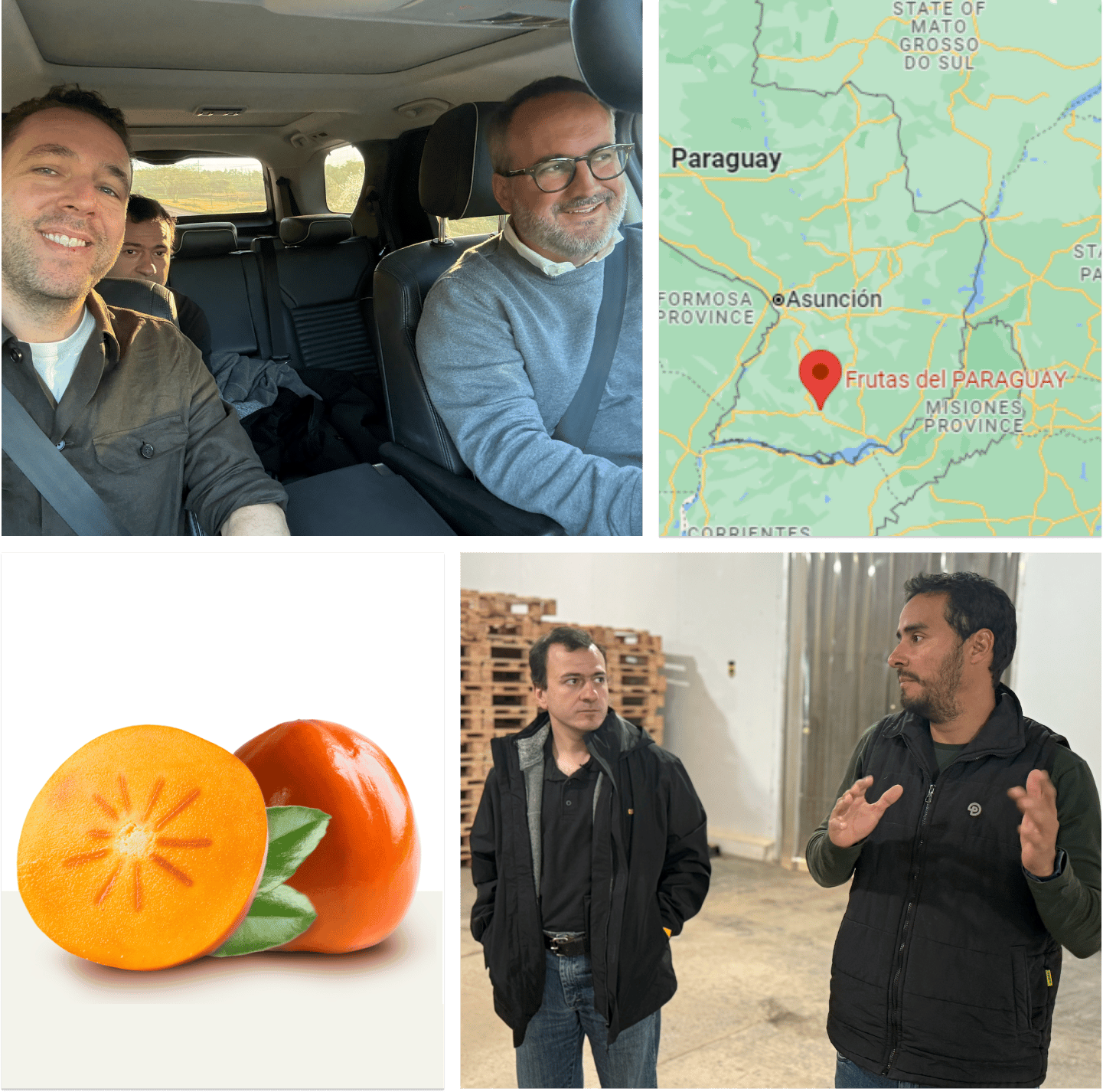
Clockwise from top left: Me, Tigran and Miguel traveling through rural Paraguay countryside while sharing alt investing stories | The farm lies four hours southeast of Asunción | Tigran with farm manager Juan Andres Moráez | The farm grows a sweet, seedless, pulpy variety of persimmons called Red Brilliant.
Last week I made the case for Paraguay as a country. This issue is not that. It's the story of a well-run farming operation that just happens to sit here.
You're not betting on Paraguay with this alt investment. You're betting on the land, fruit, and most importantly, the people.
As Tigran says: when it comes to farmland investing, nothing is more important than the team. He has been invested in this operation for over a year. We're planning on investing as well through an SPV, and you can join us.
Express Interest Now →
Let's head to the farm 👇
Paraguay grows almost no fruit (except for Miguel's team)
Paraguay exports a lot. It's one of the largest soybean exporters on the planet, and a top global beef supplier. The Chaco is perfect for it. That's the vast, semi-arid scrubland is ideal for grazing cattle across huge tracts of cheap land. Cows, seeds and grains rule the land.
But not fruit.
The country grows an astonishingly small amount of fruit given the vast arable land — a fact which is best illustrated by visiting local markets.
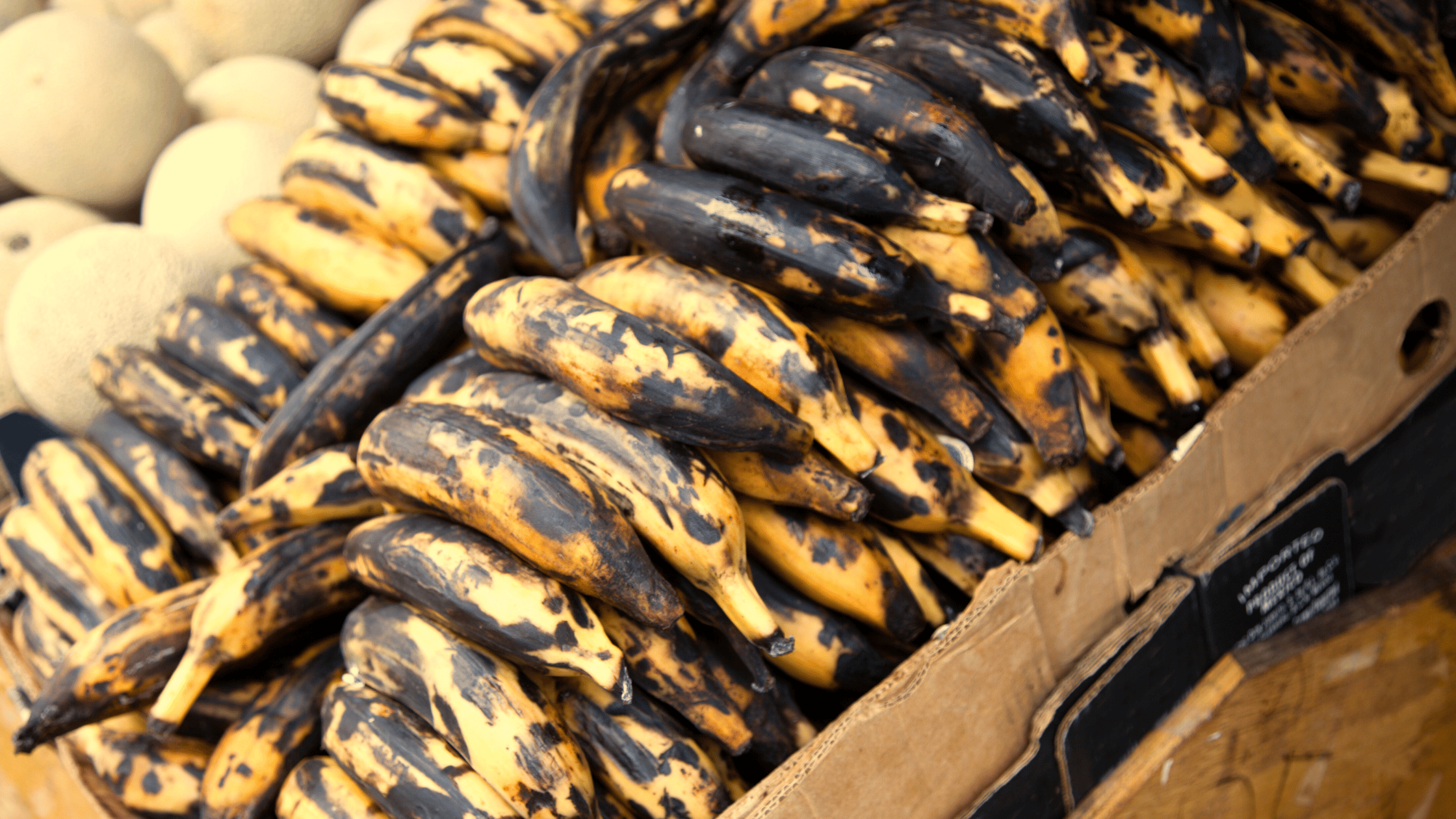
While market shelves are full of meats, cheeses, seeds and Argentinian wines, the fruit selection and quality is severely lacking. Small, bruised bananas are the norm. Apples are mostly absent. Grapes are a minor local crop with inconsistent quality.
The only real exception is bananas, and even those only get exported as far as Argentina. Why? Mainly because local growers don't meet the quality standards required by Europe or the US.
In fact, before Miguel and the team came around, no Paraguayan company had ever shipped bulk fresh fruit to Europe. He’s the very first one.
Miguel could have named the company “Caquis Paraguay,” or “Paraguay Persimmons” (which has a nice ring to it!) But he named the company Frutas del Paraguay, because he sees the long-term potential. He's planting seeds for the future.
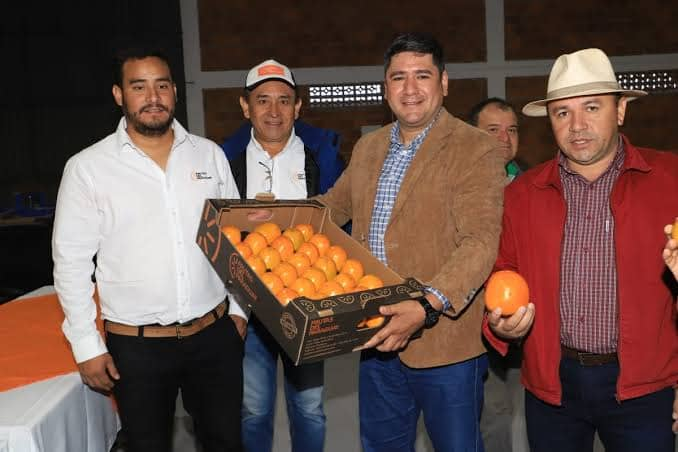
In 2023, Fructas del Paraguay became the first Paraguayan company to export fresh fruit to Europe. They were also the first to earn GLOBAL G.A.P. certification, the food-safety standard that the European Union treats as table stakes for any farm who wants to sell there.
Interestingly, Miguel actually wants some company in the space. Not competitors exactly, but more fruit growers and shippers to help bring the nation’s import/export infrastructure up to speed. It takes capital and connections.
This is industry building, after all. He’s not just growing a company, he’s effectively spearheading a new national industry. He’s actively encouraging local growers to consider exporting.
The government wants operations like this to succeed. Alongside other small growers developing non-traditional crops, Frutas del Paraguay has been helping shape a legal framework for self-use imports, working with SENAVE, the country's phytosanitary authority, to carve out an exception that lets growers legally bring in certain products not registered in Paraguay, as long as they're used only on their own farms. It's the kind of groundwork that clears the path for everyone who follows
Crops travel by truck to a port in Brazil, where they're shipped to Europe on a 24 day voyage. It's tempting to ship by air, but one of the biggest efficiency blockers has been the lack of cold storage at Asunción airport. (Pallets sit baking in the sun before they're even loaded.) So now they are working directly with the airport to fund and develop a massive refrigerated hangar.
Why persimmons?
In most of the world, persimmons are a niche, alternative fruit.
Originating in Asia, the pulpy fruit is often found in salads, side dishes, and custom cocktails. It shines bright like an orange and is shaped a little bit like a pepper. It’s firm on the outside, with a thin skin that gives a juicy, fleshy bite.
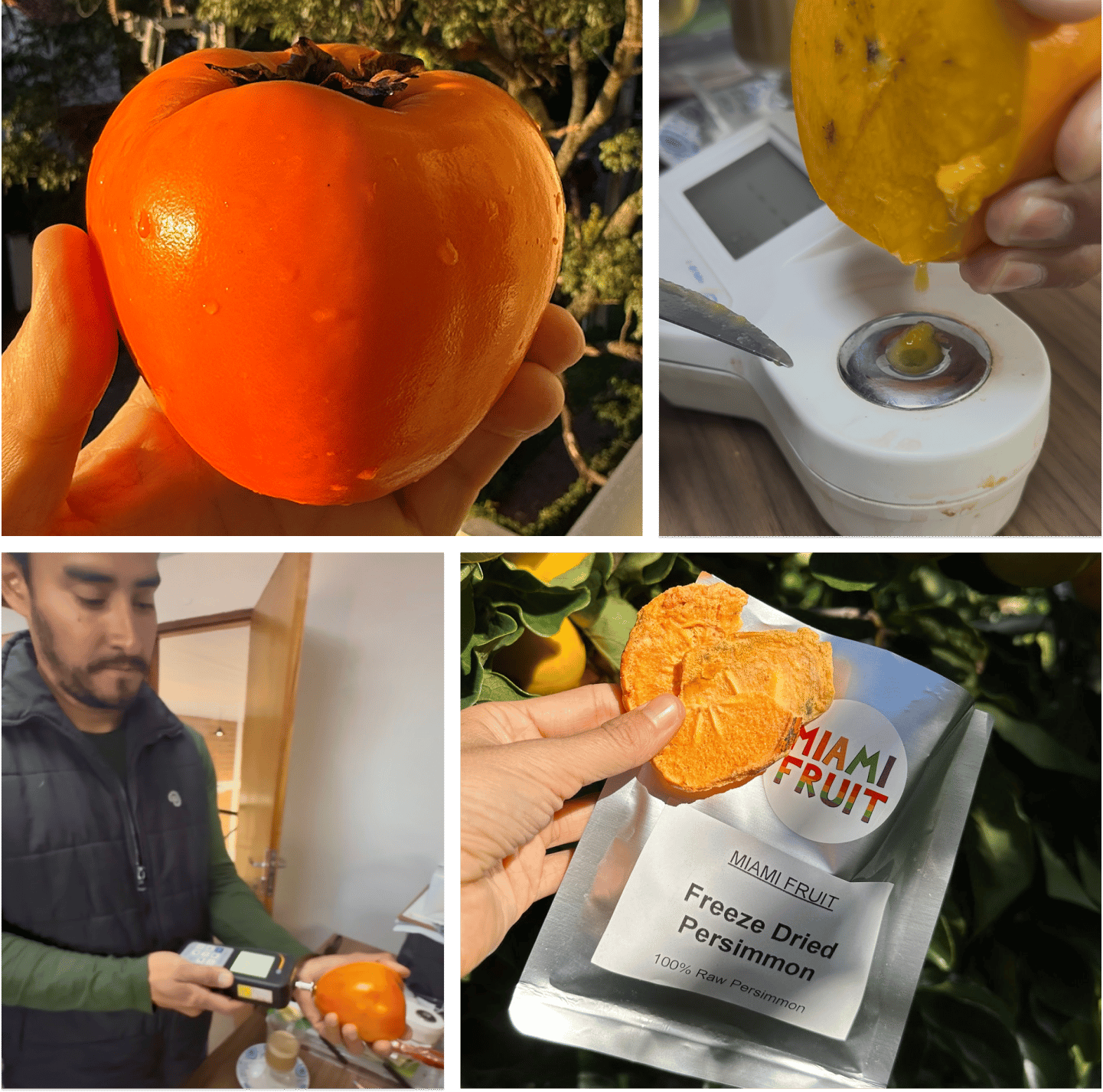
Clockwise from top left: When perfectly ripe, a bright red persimmon should crunch like an apple and be equal parts sweet & tangy | A machine tests the sweetness | Freeze-dried persimmons sell at an insane markup in western luxury markets | A "penetrometer" tests the fruit's firmness.
China grows two-thirds of the world's persimmons — producing 2x every other country combined. This is followed distantly by Spain, then a scattering of countries including Israel, Italy, Morocco, Peru, and now Paraguay.
The fruit growing in popularity. Not as fast as trendy millennial/gen Z products like matcha or quinoa or mate (which actually comes from Paraguay). But European consumption has been climbing at a steady 4-5% a year. In Spain, the category's home market, it's grown over 15%/year for a decade. (Perhaps it’s my own recency bias, but it feels like I've noticed it more on menus lately.)
When Tigran first told me about persimmons, I thought back to a house I rented in Santa Barbara back in 2010. It had a persimmon tree in the backyard, which I recall biting into and being, well, absolutely disgusted.
What I didn't know is that there are two main kinds of persimmons: astringent, which are inedible until fully soft (Hachiya is the common one you may have seen), and non-astringent, which you can eat firm and crunchy right off the tree (Fuyu is the one that shows up at Whole Foods).
The Bright Red is astringent, technically, but the whole point of everything happening at the Frutas del Paraguay packing line is neutralizing that astringency before it ships. So it eats like a non-astringent by the time it reaches the customer.
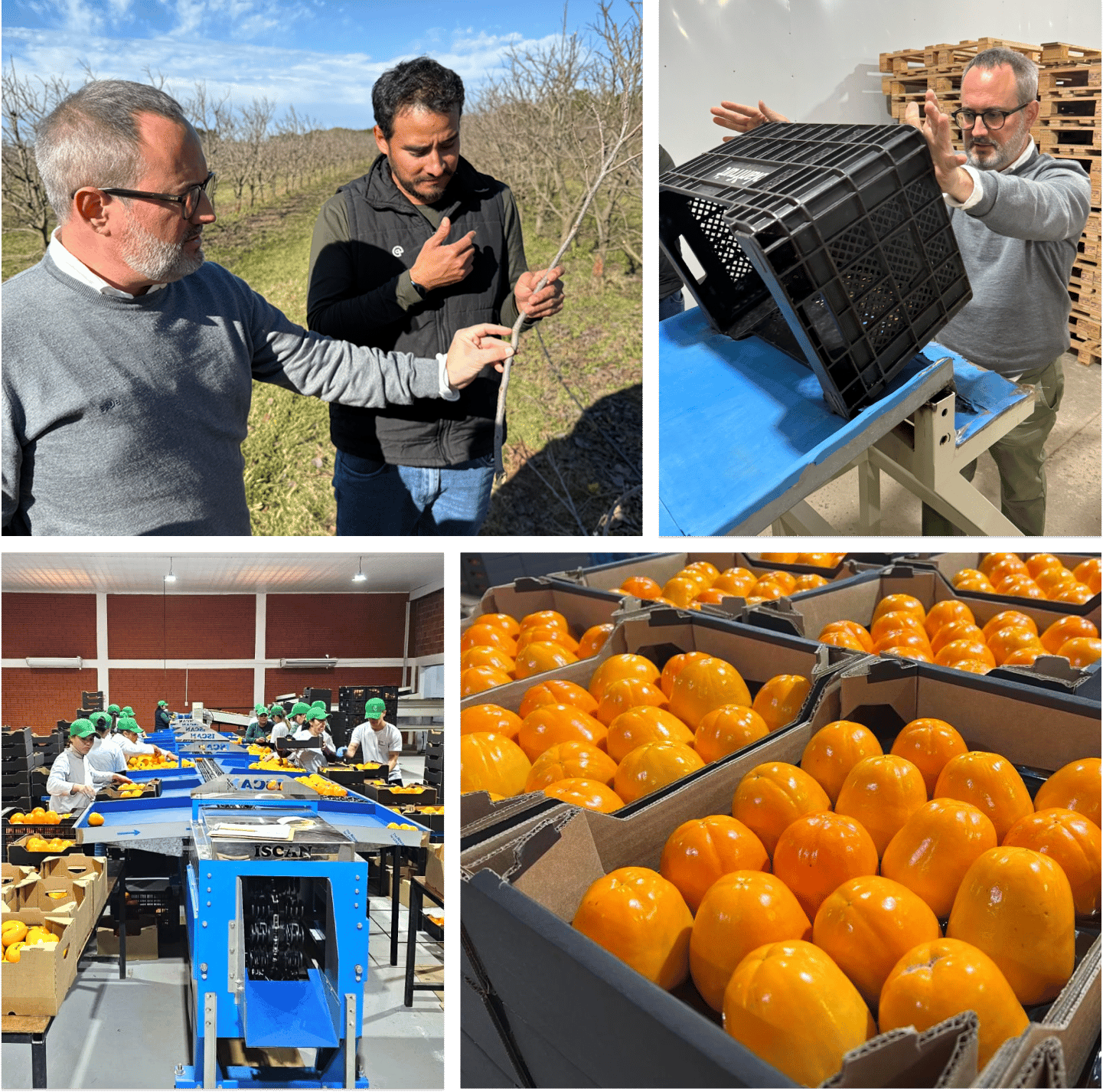
If your only experience of persimmon is the soft/gooey kind you have to eat with a spoon, forget it. This is the opposite. Frutas del Paraguay grows the "Bright Red" variety (Rojo Brillante). Firm, crunchy, seedless. You peel it and slice it like an apple, or just bite in. Sweet, but balanced, not cloying. Around 20 on the Brix scale, for the nerds. Rich in vitamins A, C and potassium.
Here's the trick that makes Paraguay work. While most of the world’s persimmons come from China, nearly all the world's Brilliant Red comes from Spain, and the Spanish season runs roughly October to January. Because Paraguay sits in the southern hemisphere, its seasons are flipped.
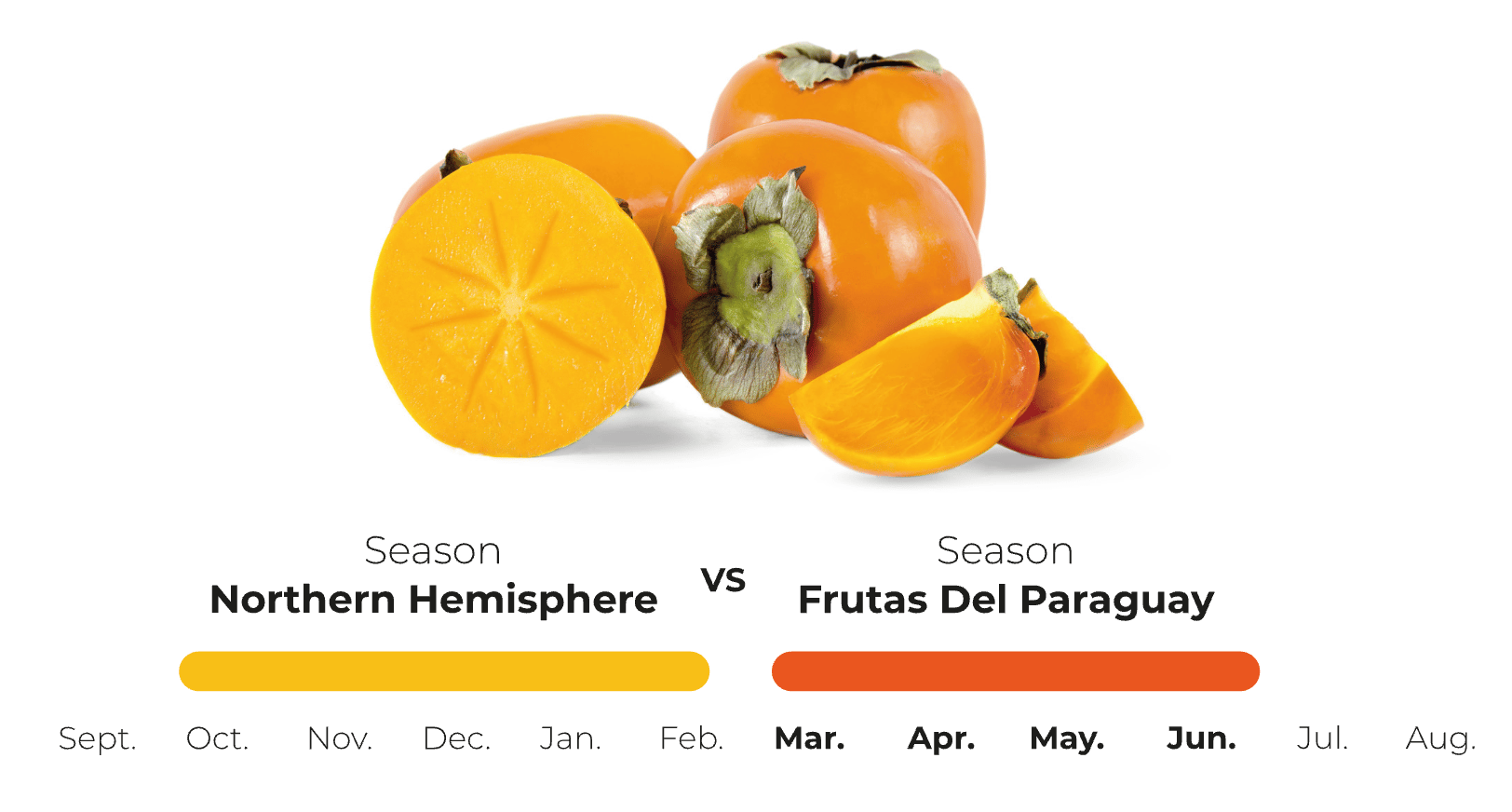
Frutas del Paraguay harvests February through May, and ships to Europe exactly when Spain has gone quiet. For those months, theirs is very nearly the only Bright Red persimmons on Earth. An empty market window like this tends to be a profitable one.
And Paraguay itself is well-suited to this particular fruit. As I mentioned last week, it sits atop the Guaraní Aquifer, the second-largest underground freshwater reserve in the world. (In fact, the team's problem is that they actually have too much water. More on that below.)
Building the farm from scratch
When Miguel started in 2017, he didn't buy a working farm. He and his team built this up from scratch, on raw land, in a country with no blueprint to copy.
Before Frutas del Paraguay, Miguel spent 25 years as a rare plant dealer, supplying ornamental plants for luxury buyers, including Jewel project at Singapore’s Changi Airport, and gardens for Moroccan royalty He was already well familiar with Paraguay as a sourcing country.
Then the 2008 crisis hit Spain, hard. Unemployment ran to 25%. The company spent years just surviving, and Miguel started looking seriously at Paraguay as somewhere to build something new.
They found the right plot and made a bid at well under $10,000 per acre — an absolute steal. 139 acres of sandy soil, good drainage (they deliberately chose one of the drier parts of the country) and road access. 24 hours to the port in Brazil, 24 days to Europe. Not bad.
Powering up
There were two big roadblocks in setting everything up: power and water.
When they acquired the property, there was no connection to the electricity grid. (The previous farm was a cattle farm that had no need for it.) So Miguel and his team had to erect power lines all the way to the grid — a pretty significant undertaking that would have cost dramatically more in Europe or the US, where labor and permitting costs are far higher.
It doesn't hurt that Paraguay runs on 100% renewable electricity, and enjoys some of the lowest power prices in the region. Labor is young and affordable, with more than half the population under 35, and plenty of folks looking for good, honest work.
Water management
But what really blew my mind was the water situation.
Many farmland investments around the world live or die on water access. If you're investing in a farm in say, California, the first question is often, "where does your water come from, and what does it cost?"
But sitting here on the Guaraní Aquifer, in a country this wet, the challenge isn't finding water, it's managing the excess.
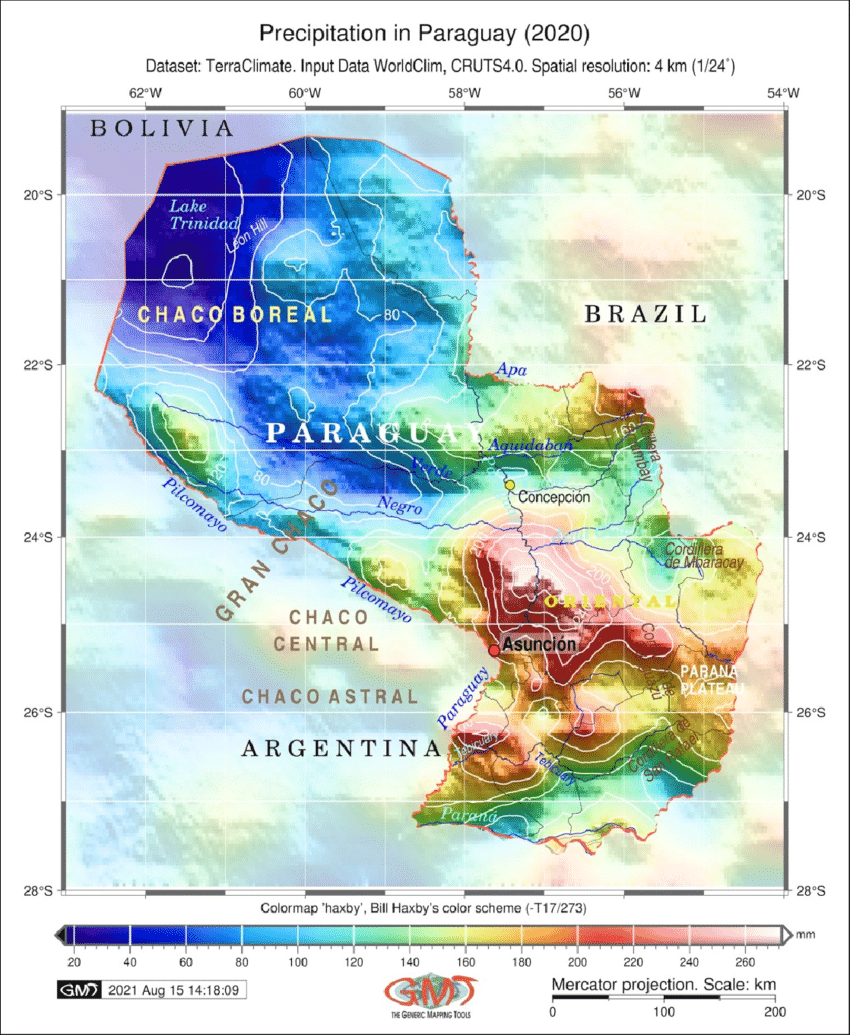
Some regions of Paraguay get over 2,200mm of rain per year. The team deliberately chose a drier zone (1,400mm) precisely so they could control the water rather than fight it.
To control the flows, they embarked on a huge irrigation project; digging a 50,000 cubic meter reservoir, enough to run three months with no rain at all.
The project didn't go smoothly at first. They built it the way you would in Spain, with cabling. But Paraguay's violent electrical storms kept frying the solenoids, and they spent months replacing burned-out parts. Eventually they tore it out and rebuilt the whole thing on radio control, no cables to fry.
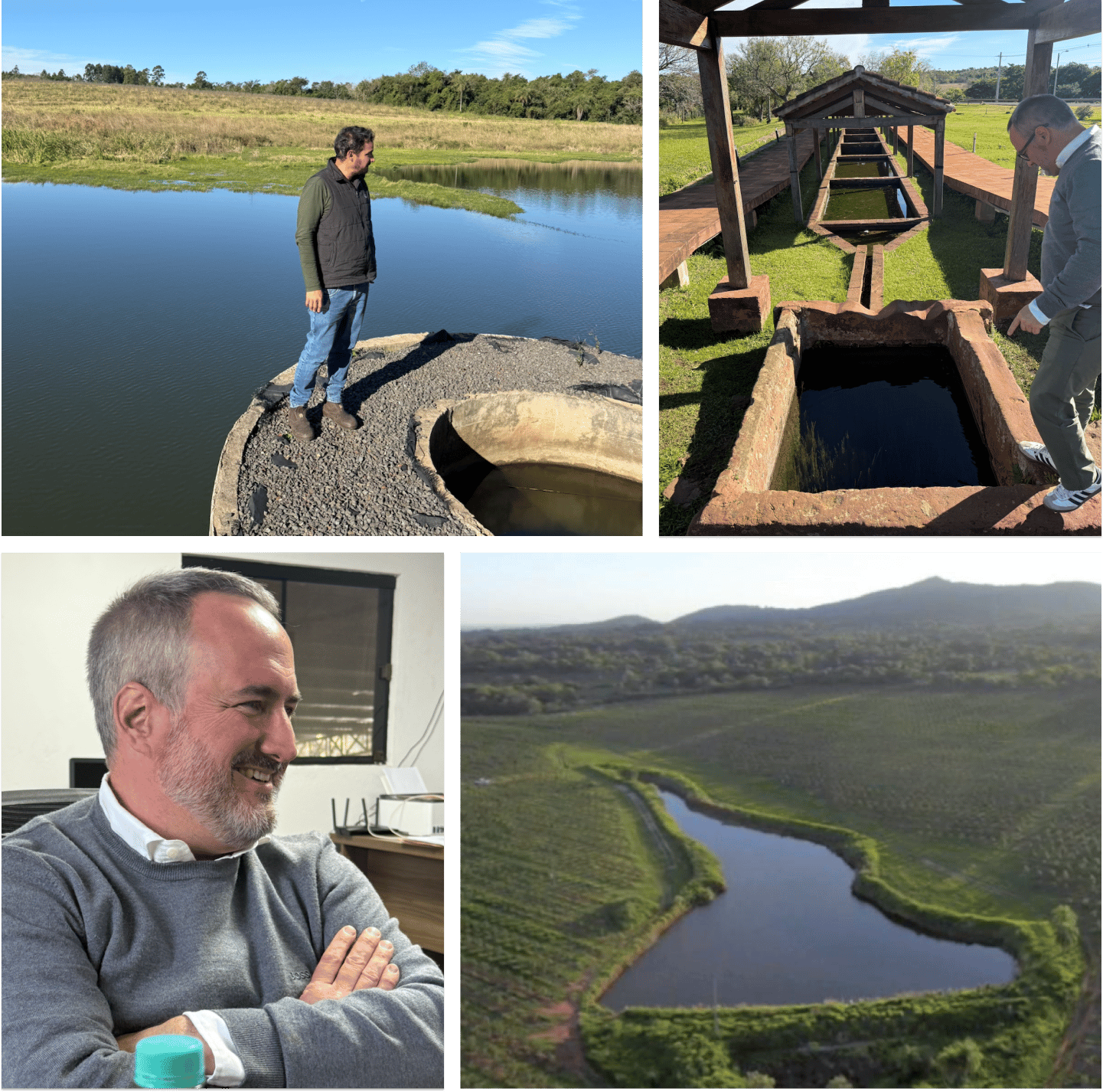
Thanks to the Guaraní Aquifer, water in this part of Paraguay practically bubbles up to the surface. Miguel's team designed and built their own reservoir and irrigation system from scratch. It's worked so well that they've since been contracted to replicate it for other farms
A brutal early lesson
The harshest, most expensive lesson came early.
In 2018 their very first persimmon seedlings shipped over from Spain in refrigerated containers. But the containers reached Montevideo right as the port's stevedores (dockworkers) went on strike!
This was a truly terrible situation. The containers sat for three weeks, rotting. They lost a huge share of their young trees, and spent the next five years replanting to fill the gaps. They didn't consider the plantation truly back on track until 2023.
Today, roughly 50,000 trees are in the ground. The infrastructure is built and paid for. The certifications are in hand. The export routes are open and running — to both Europe and Brazil.
Creating a well-oiled machine from scratch is not easy, and it's never quick. But the hard part of building is done.
Now it’s an endless game of experimentation, optimization, and efficicency.
On the ground
We'll have the deal memo for you next week. In the meantime, here are a few more anecdotes from our time at the farm.
The niche advantage
This is probably the part that stuck with me most: Persimmons don't trade on any exchange.
There's no Chicago commodities exchange price for a Bright Red. Compare that to soy, which Paraguay grows across three million hectares, where the price is set in a room somewhere and every grower is a price-taker with their margin decided for them.
This is a glorious thing for Frutas del Paraguay, and an underrated reason to be in the persimmon game.
"Why would I want to be in a position where somebody else controls my price? A niche fruit means the buyer doesn't know your costs as well as you do. That information gap works in your favor. Lower volume, yes, but higher margin and real control. Most farmers would kill for that position. Persimmon growers have it by default." — Miguel Basomba
Who they sell to
Each June, they sell their entire crop to a single distributor, which keeps things simple.
This year they started working with Spain's largest persimmon exporter — a demanding partner, but one who ships to Hong Kong and Japan and brings serious operational know-how with him.
Brazil is opening up too, with its enormous nearby cities. São Paulo, Rio, and Buenos Aires all sit within a day and a half drive of the farm.
Logistics
Getting fruit from landlocked Misiones to Madrid is its own operation.
Trucks run to a Brazilian port rather than Buenos Aires, because heading north shortens the ocean transit by about a week.
The Paraguayan authorities have been real partners here. They agreed to run the export phytosanitary inspections directly at the farm rather than at the port, which streamlines the whole process, and they turn around the required documentation quickly and stay responsive whenever a regulatory question comes up. It's the kind of institutional support that makes building a new industry possible.
Then it's refrigerated sea containers, temperature and GPS monitored the whole way, about 24 days when nothing goes wrong. (This is the nerve-wracking part of the operation — the only one that does not depend on the Frutas del Paraguay team)
Stressing the trees
Given plenty of water and heat, a persimmon tree grows leaves and branches instead of holding its fruit — and drops much of the crop.
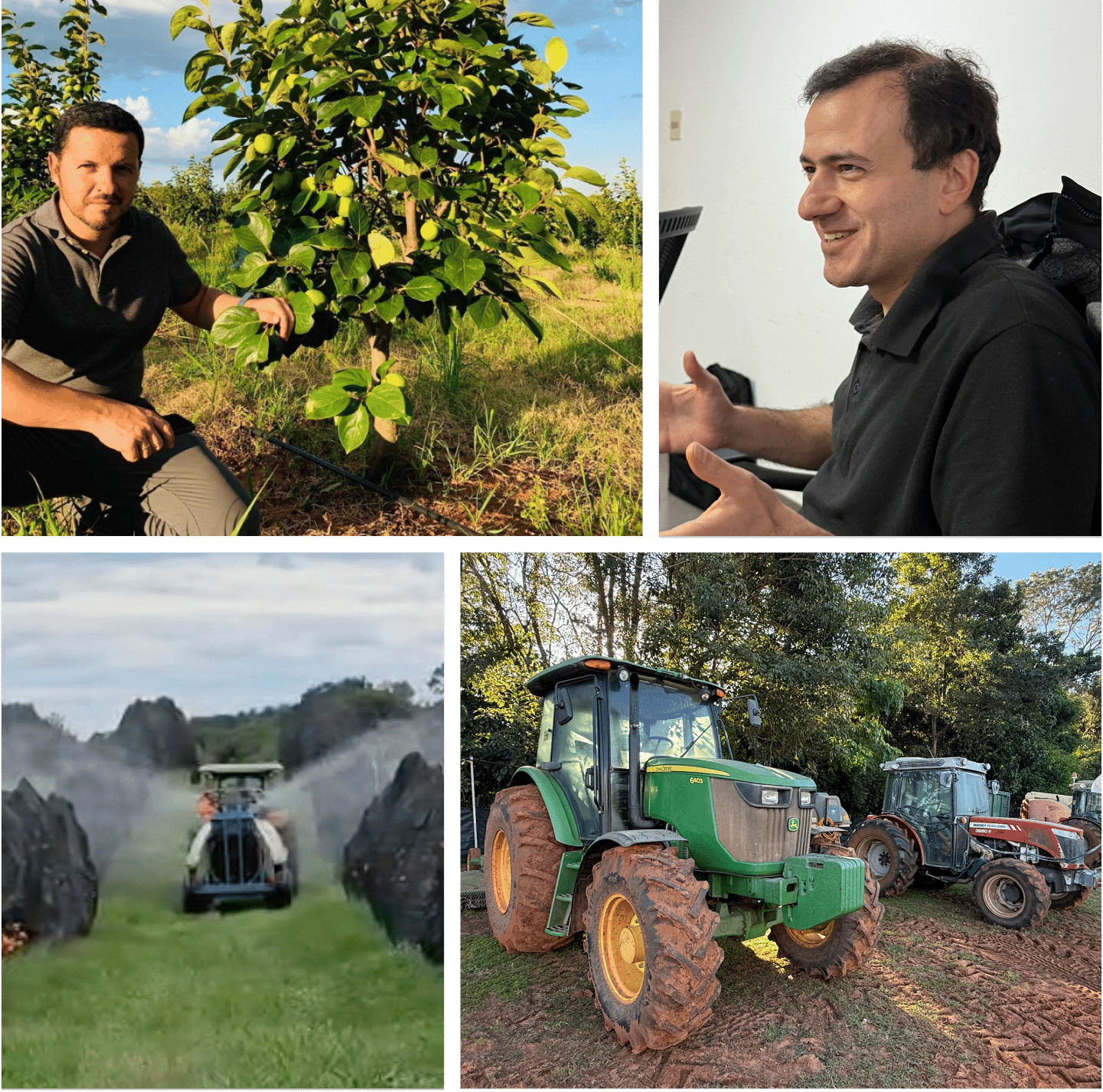
In Spain, growers fix this by cutting off the water. The tree feels "threatened" and clings to its fruit. But in Paraguay they can't do that, because, well, it won't stop raining!
So instead, they induce the stress chemically, and they're constantly experimenting with new methods:
Mechanical root pruning
Adjusting soil pH with lime at depth
The team even wants to plant other types of trees between the rows to compete for water (make the persimmon trees "fight harder")
Remember: Nobody has grown this fruit here before. Miguel's team is writing the manual as they go.
Shelf life and astringency
If there's one flaw with the Bright Red persimmons, it's astringency. It's sort of a stringy, chalky mouthfeel.
You can get rid of it, but unfortunately, this fruit is inedibly astringent straight off the tree. It has to be treated first.
The old way was to ship the fruit, then have the buyer place it in CO2 chambers for a couple of days once it arrives in Europe.
But this year, they started removing the astringency themselves during the packing process. This way the fruit lands in Spain ready to eat, paired with a proprietary treatment that pushes shelf life toward 60 days.
They're quite not there yet, but getting closer to that target every season.
Sunshine and equipment
Finally, the intense summer sun can scorch the fruit's skin. It's only cosmetic, but cosmetics set the price.
So they spray a calcium carbonate coating, basically a "physical sunscreen."
Their fungus control runs on an ozone machine (the only one in South America) which replaced most of their chemical treatments with an eco-friendly one.
And when a ripening-delay chemical they rely on turned out to be unavailable locally, Miguel simply flew 90 bottles in from Spain in his own suitcase. (Sounds illegal, but he had all the right paperwork!)
Here in Paraguay you need a plan B, a plan C, and if you have a plan D, even better. — Miguel Bosamba
Playing the long game
I've saved the least flattering fact for last: Frutas del Paraguay just had a bad year.
Too much rain came at the worst possible moment and knocked immature fruit off the trees before it could hold. Hail has hit them three times in six years, in a region that historically sees it once every twenty. Roughly 35% of this season's crop went to waste, against a normal 20%.
So why am I ending on that bad note?
Because in farming, having a bad year is normal. It's the reality of the asset. Good years and bad ones average out over a decade, and the only thing that matters is the long-term trend. Miguel says it best to his own team when they get discouraged: "If we have one good year, wait, because the bad one is coming. It cuts both ways." The trees in the ground today are rock solid, and will be producing well into the 2040s. One rainy spring seven years in doesn't change that arc.
And the arc is what you're buying here. The projections run on deliberately conservative assumptions, a low sale price, no resale value assigned to the land itself, and still pencil out to a mid-teens IRR over the life of the project.
I won't walk through the numbers line by line, Wyatt's deal memo next week will get into that. This issue was about the thing the numbers can't show you.
Because what you're really underwriting here is the team. And this team is doing exactly what you'd want. Bringing in a root-pruning machine to break up compacted soil and dose lime at depth. Testing intercropping to manage tree stress. Building out the anti-astringency process to push shelf life further. Pushing to open Argentina and Chile to take their lower-grade fruit at a fair price. Creating a citrus contingency as real optionality rather than just a slide in a deck.
This is a team in year seven of a 20+year project, still testing, still learning, still de-risking. The kind of people where one of them calls Miguel at three in the morning because something needed attention at the farm. You can't easily hire for that. That sort of loyalty is earned over years.
Miguel and his team have built a fruit export operation from raw land in a country that had never done it, survived a disaster that would have ended most projects, and came out the other side as the first and only operation of its kind in Paraguay. The machine is built. The market is there. The team is exceptional.
You're not betting on a fruit, or even a country. You're betting on the people. And these are the right people.
--
That's it for today! 🍊
A big thanks to Miguel Basomba from Frutas del Paraguay for hosting us, and Tigran Kalaydzhyan for accompanying me on this trip.
If you're interested in our upcoming SPV, express interest below.
Express Interest →
See you next time, Stefan
Disclosures
This issue was written and edited by Stefan von Imhof
This issue has no sponsors. Frutas del Paraguay did not pay to be featured in this issue.
Alt Assets, Inc has no holdings in any companies mentioned in this issue. We are considering creating an SPV to invest in Frutas del Paraguay.
Tigran has invested in Frutas del Paraguay. Stefan plans to invest personally through the SPV.