Fed Survey Paints a Grim Picture
The Fed survey of consumer expectations (the Super Bowl for nerds like me) has just come out, and the results are troubling. I say troubing. I mean, historically bad.
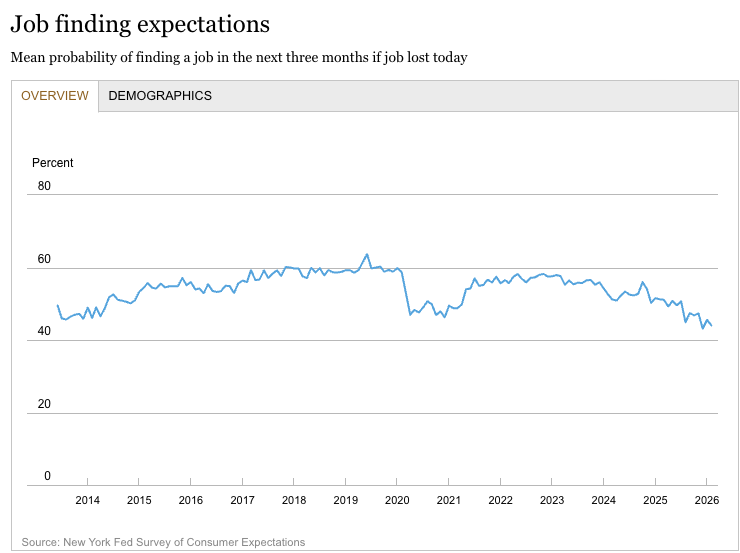
Job-finding confidence is near historic lows. Only 44% of workers believe they could find a new job within three months if laid off today, down from 57% in 2019. This is an all-time low.
For workers without a college degree, that figure drops to 35% -- close to the lowest ever recorded.
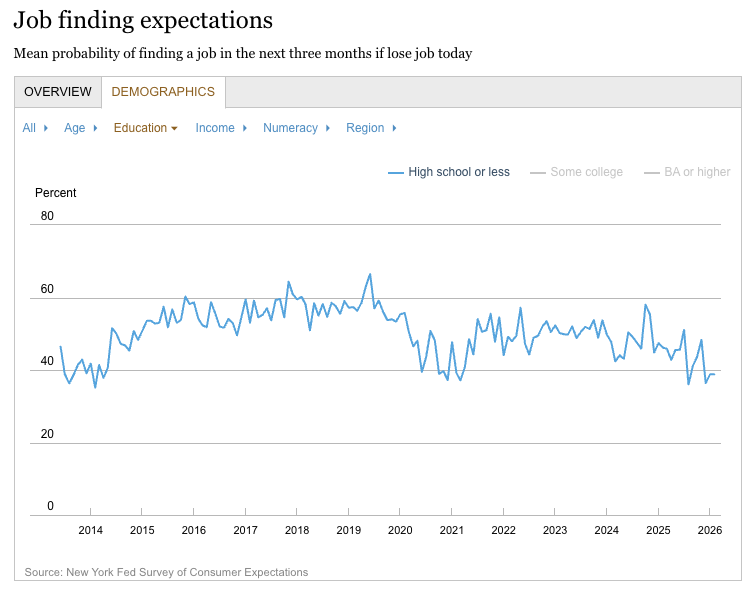
This is a leading indicator worth watching: when people stop believing they can move, labour market weakness tends to follow.
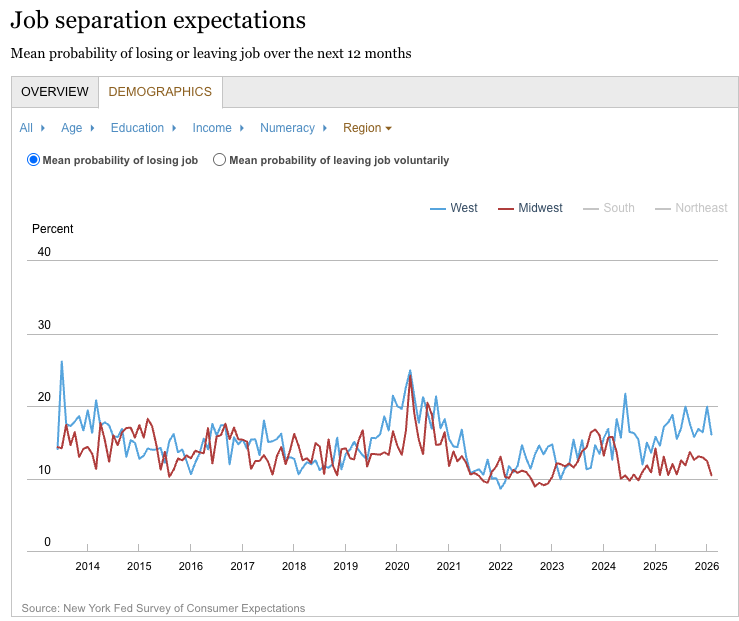
The quit rate tells the same story. At 15.9%, voluntary job departures are at an all-time series low. Workers aren't leaving because they don't feel they can. The contrast with the 2021--22 "Great Resignation" couldn't be sharper. Notably, the West and Midwest have meaningfully diverged for some reason.
Gold price expectations have hit a series high, with consumers anticipating roughly 6% annual appreciation.
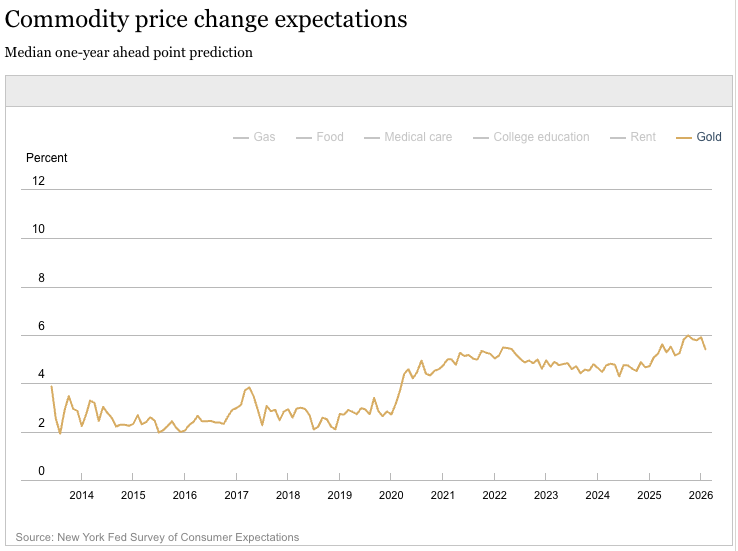
That's the highest in the survey's history and a clean read on macro anxiety. Safe-haven demand is not a fringe view right now.
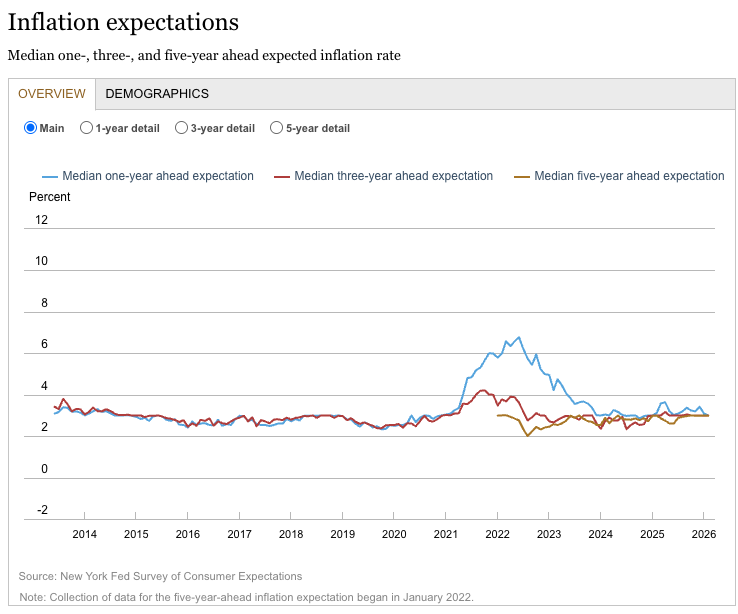
Inflation expectations have converged at exactly 3.0% across the 1-, 3-, and 5-year horizons — 100 basis points above the Fed's target.
Household financial sentiment hasn't recovered.
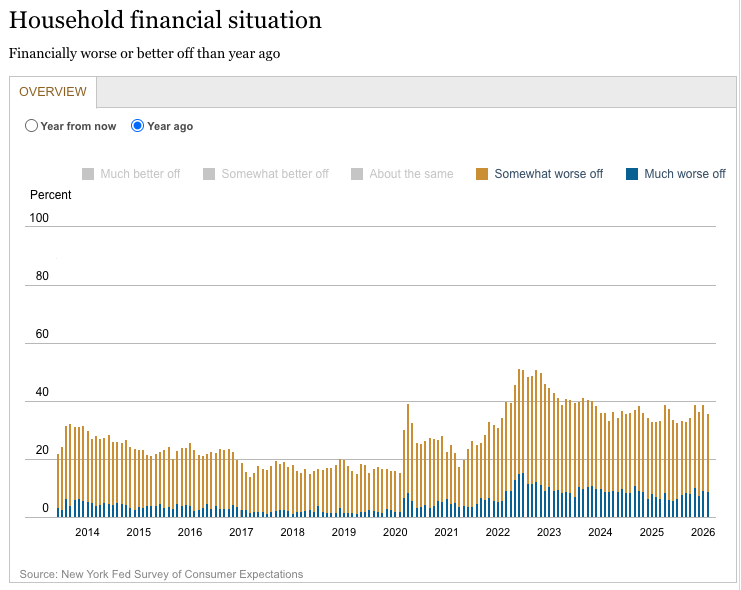
The share of respondents describing themselves as "worse off" remains structurally elevated and has not returned to pre-2021 levels, even as inflation has cooled. Cumulative price levels are still doing damage that the rate-of-change data obscures.
The income divide in debt stress is widening. Households earning under $50k report roughly a 20% probability of missing a minimum debt payment in the next three months.
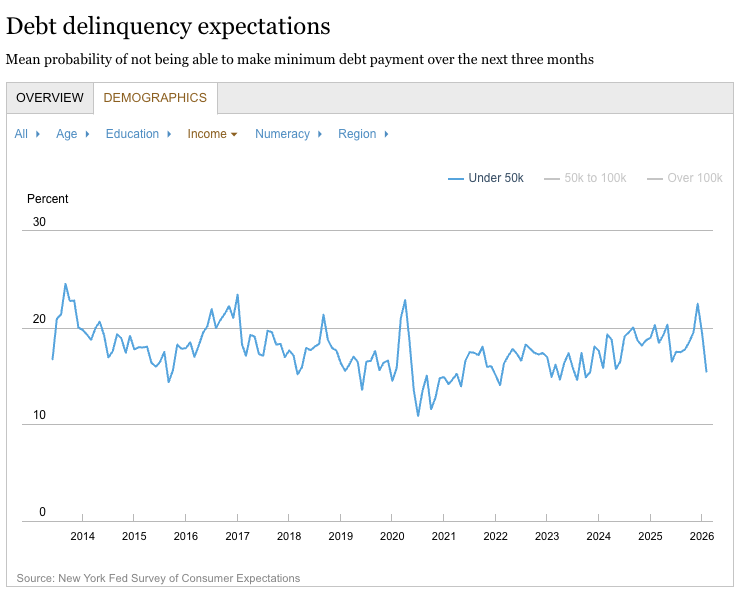
For households over $100k, that figure is 5--7%.
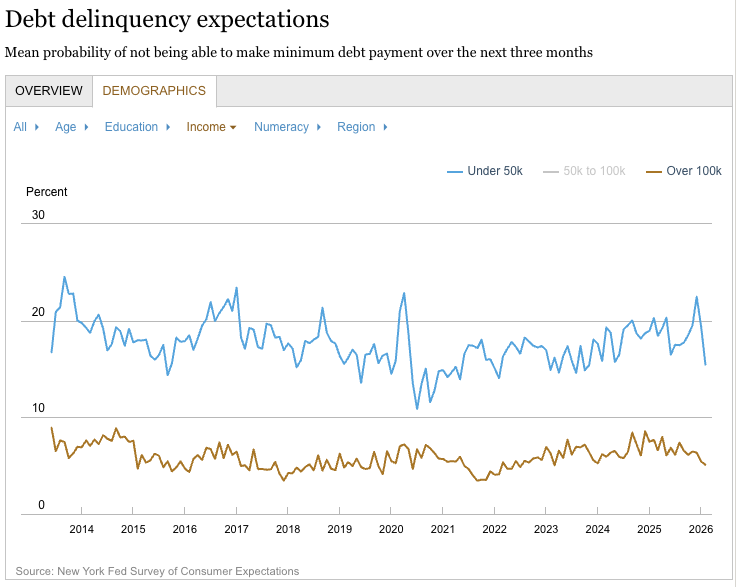
That gap hasn't meaningfully closed in years and is moving in the wrong direction.
Earnings expectations for low-income workers have nearly collapsed.
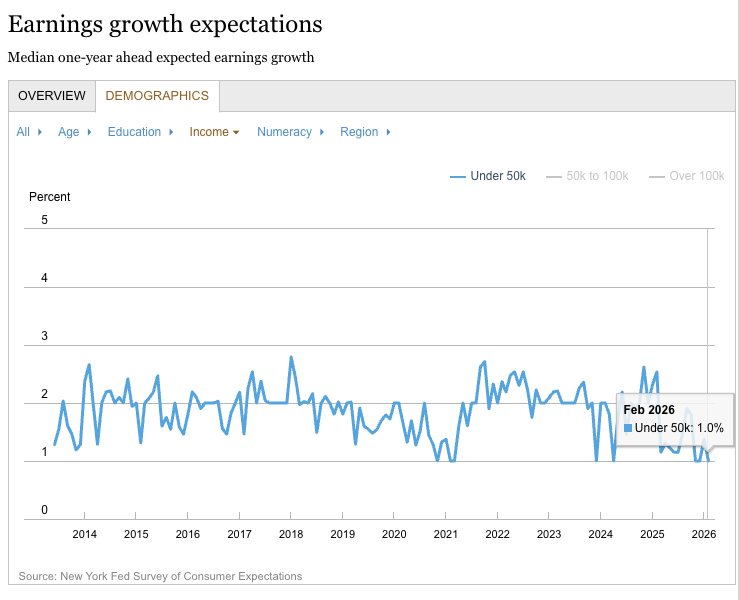
The under-$50k cohort's wage growth expectations recently fell to around 1%, a near-series low. The over-$100k cohort sits at 2.5--3%.
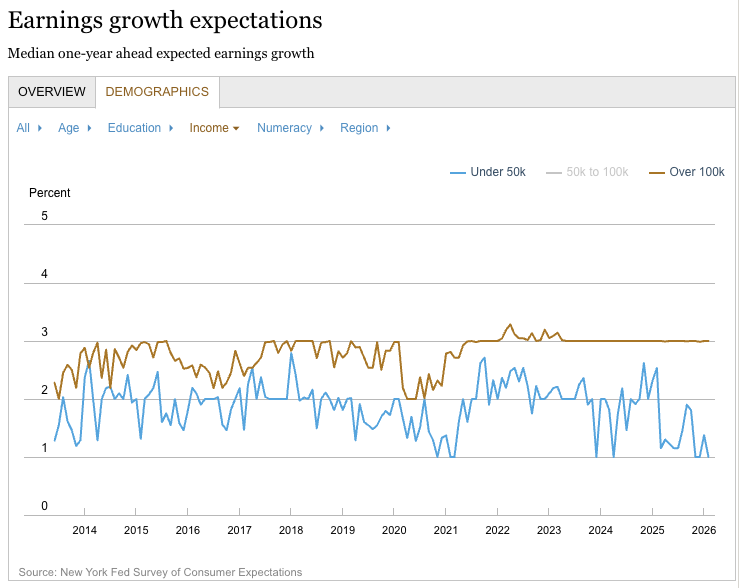
The divergence is widening, which matters for retail spending, debt serviceability, and political sentiment alike.
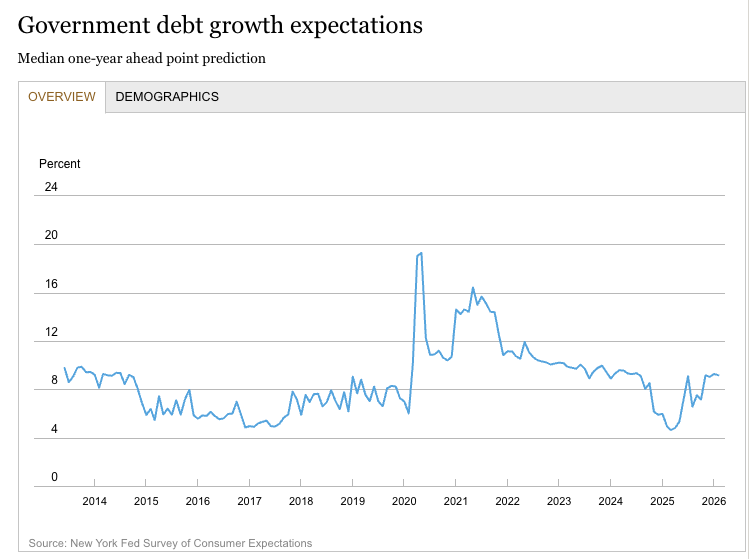
Finally, expectations for government debt growth are ticking back up to 8--9% after declining from COVID-era peaks.