What could really pop the AI bubble?
I saw a stat last week that stopped me cold.
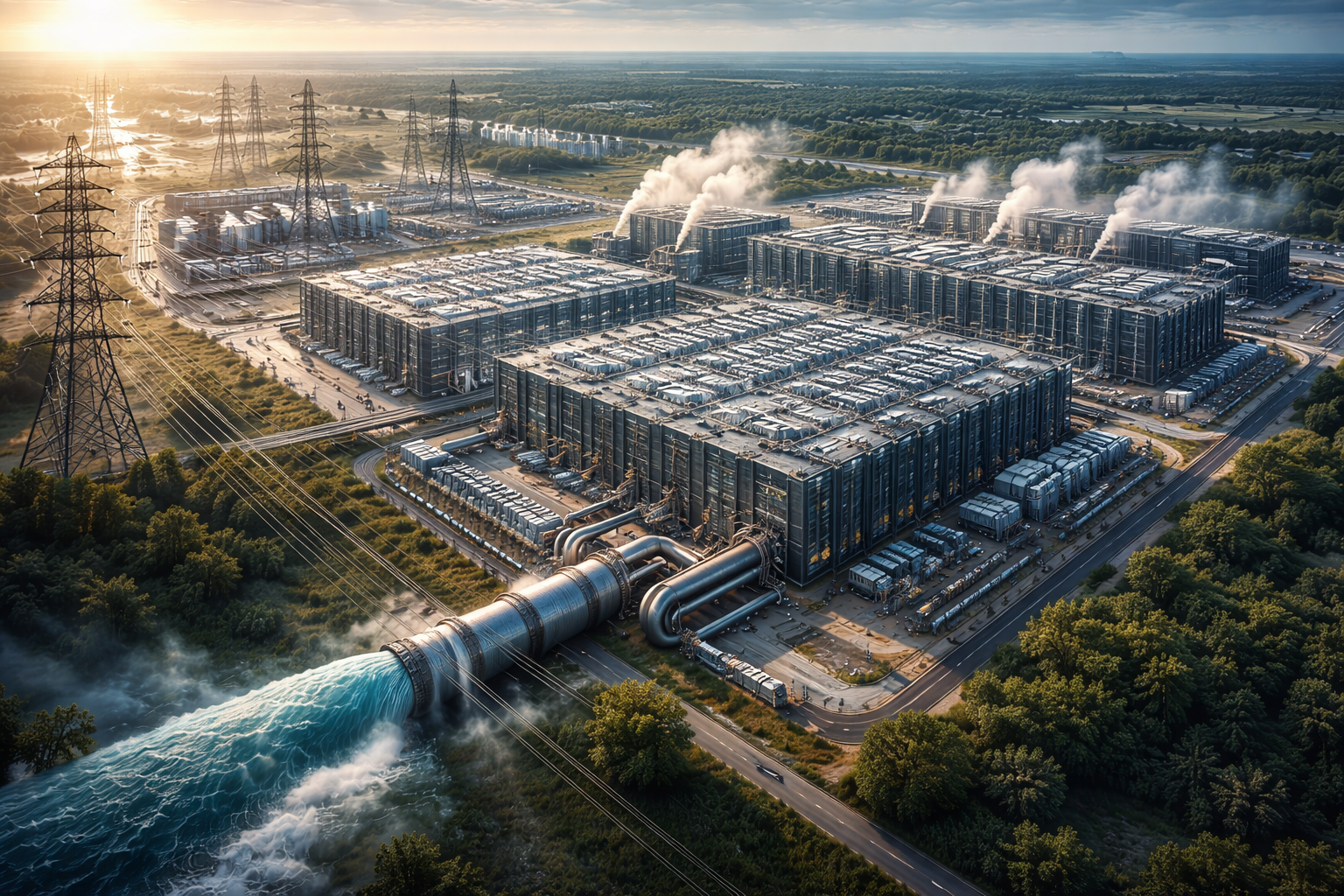
A single AI server rack inside a data center - built around NVIDIA’s Blackwell chips - can draw over 100 kilowatts of electricity, about the same as 100 average US homes running at once.
But AI being power-hungry wasn’t the surprise to me.
This was:
“The cooling cost for a single Blackwell Ultra rack can run upwards of $50,000.”
Not the chips, or the servers.
The cooling.
That came straight from Nvidia’s data center engineering leadership.
Digging deeper, I found that cooling can account for ~7–30% of total data center energy use, with AI-heavy facilities consistently at the high end.
Yet the cooling stack is build on 40+ year old technology not designed for this strain.
That triggered a bigger question.
While Wall Street debates which AI models will win, what if the real constraint behind the next AI slowdown may be physical, not digital.
Stuff like power delivery, heat management and water usage.
Most data centers were never designed for sustained 100+ kW per rack densities.
As a result, capex is rising, build timelines are stretching and resources are the bottleneck. And it’s going to drastically intensify as AI adoption goes parabolic.
This feels meaningfully different from the dot-com era setup.
In the late 90s, capital ran ahead of demand and the infrastructure was cheap.
Today, immediate AI demand and utility is real - but the infrastructure is the constraint that can stall out the system.
I’m in a learning phase and developing a long-term thesis around a data center + real estate-adjacent investment focused on efficiency and sustainability.
A picks-and-shovels approach to serving AI “gold miners”.
If you’re connected to operators or investors deep in data center design, cooling, or power, I’d appreciate an intro.
Happy to share notes or discuss further as this evolves.