🎬 Recap: Altea Film Night in Brooklyn (Private film screening)
Last week we took the Acela down to New York City for something we'd never done before: a private screening of The Dutchman, an actual film that Launch helped finance through bridge lending.
This was our 9th NYC event, and the largest one we've ever done. (It was also, honestly, one of my favorite Altea events, full stop.)
We took over Nitehawk Cinema in Williamsburg, the first liquor-licensed movie theater in New York State. The place has two bars and multiple private screening rooms, which made it the perfect spot for a night like this.
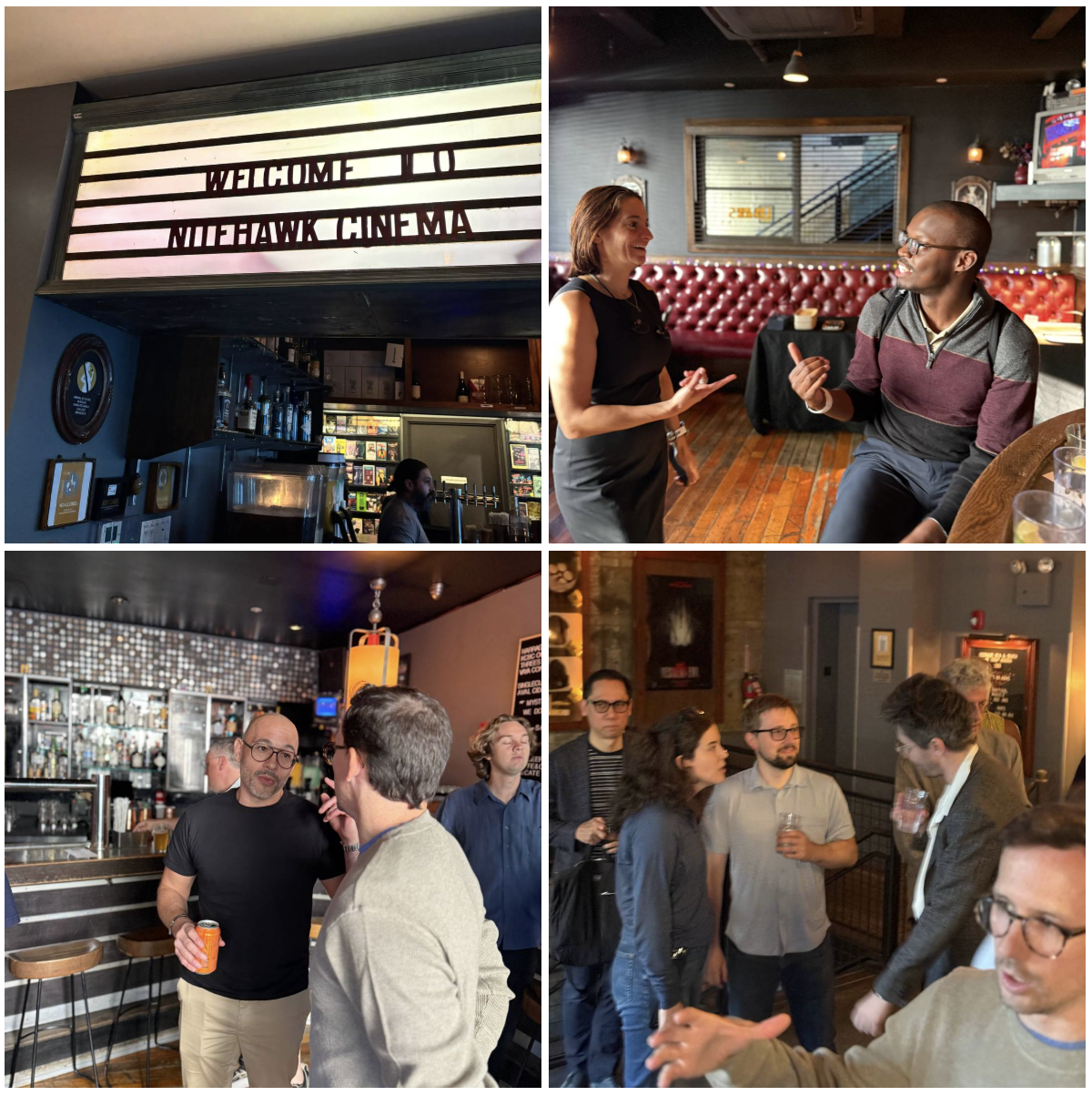
We started downstairs at the Lo-Res Bar for drinks and bites, catching up with old and new faces from around the neighborhood and from as far away as Baltimore.
This wasn't a trip to the multiplex, and we weren't watching someone else's movie. We were watching a film that Launch actually helped capitalize, through bridge lending. Film bridge financing is one of the most misunderstood corners of private credit.
There are only a handful of people in the world who understand Hollywood gap financing inside and out, and Chris Daniels, producer, director, and founder of Launch Film Financing, is one of them.
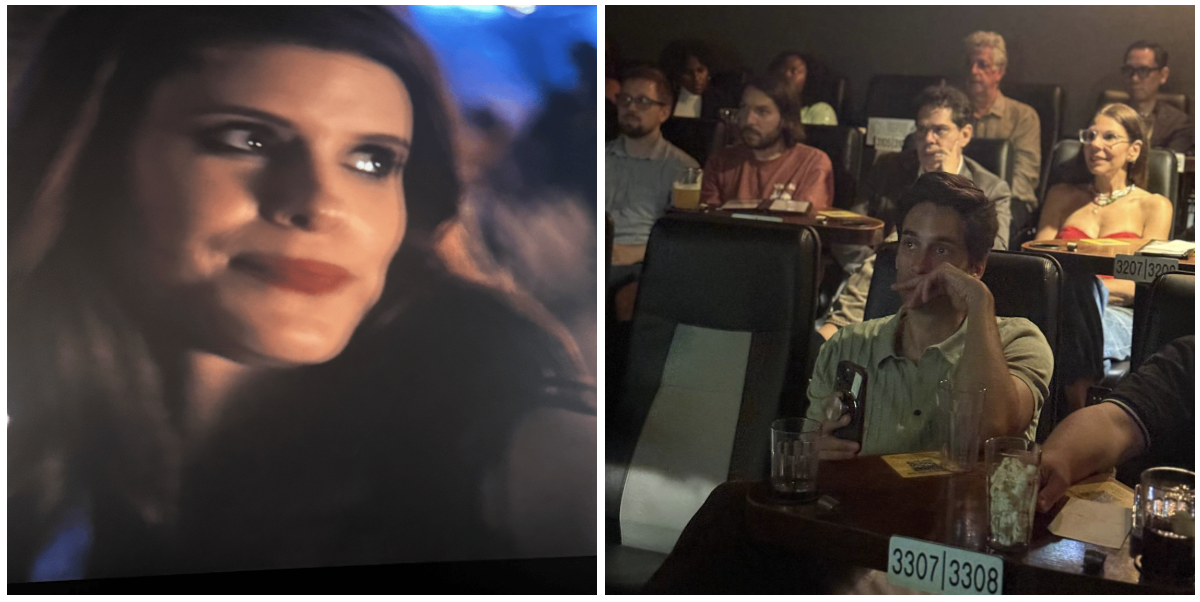
After happy hour we headed upstairs for introductions, dinner, and the film. I hadn't done many private screenings before, and it's very cool how they bring the food and drinks right to your table while the film rolls.
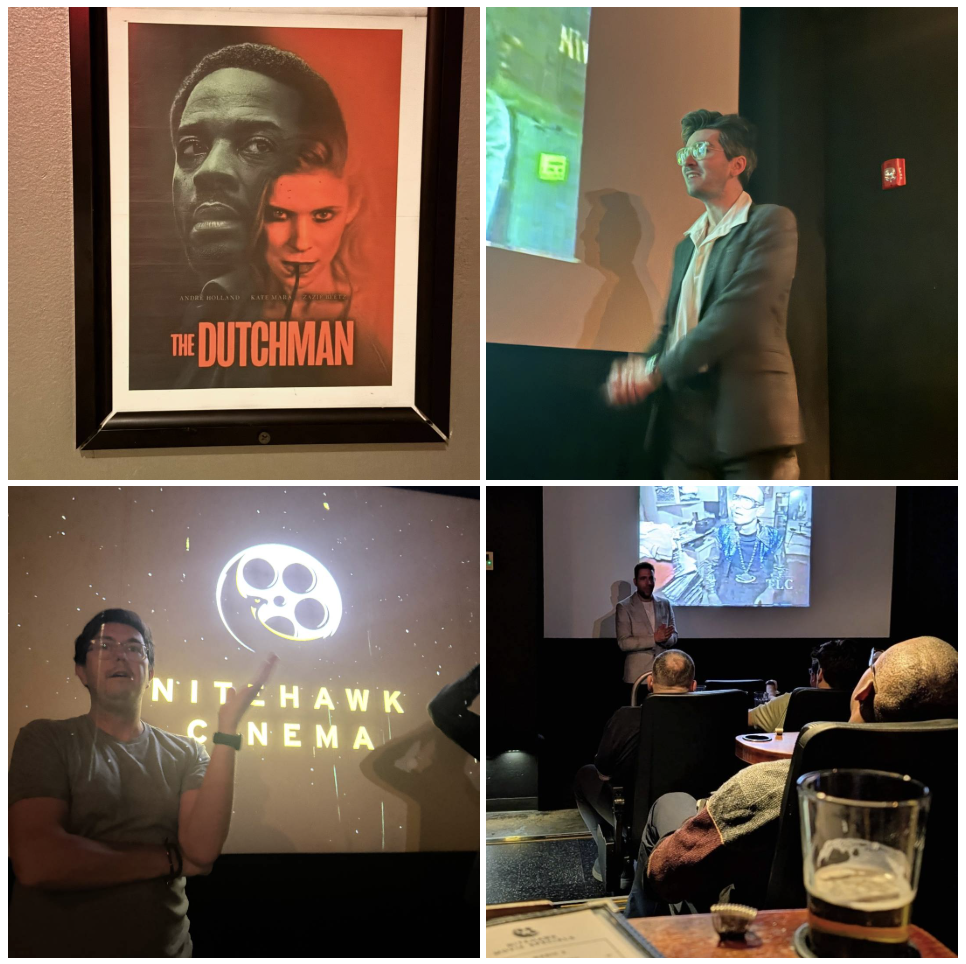
The film was The Dutchman (2026), starring Kate Mara and André Holland. A successful Black businessman, haunted by a crumbling marriage and an identity crisis, is drawn into a sexually charged game of cat and mouse with a mysterious white woman on a subway that builds to a violent end.
Before we rolled the film, Chris walked us through how The Dutchman came to life and the critical role his bridge loan played in getting it made. He also told an important story about how capital recovery actually works when a loan goes bad, which is exactly the kind of thing you almost never hear spelled out.
Here's Chris explaining the story of how The Dutchman came to life, and the critical role his bridge loan played in making it happen:
You can watch our full 17-minute introduction below. It's chock full of interesting tidbits and context — including an important story of how capital recovery works when a loan goes bad:
We got into the details that usually stay behind closed doors: how these deals get put together, where the money sits in the capital stack, how the downside is protected, and why film gap financing might be the most underrated alternative asset class in the world.
A big thank you to our NYC city captains Valerie Fristachi and Kaylock Yam, and to everyone who came out. Meeting so many of you in person, and actually watching a film we helped bring to life in a venue like that, made this one genuinely special.
We'll definitely be hosting more screenings in cities around the world. Join Altea to get notified about future meetups. And if you want to get involved in film bridge lending yourself, sign up at film.alts.co.
See you at the next one,
Stefan
*** SPOILER WARNING *** The Dutchman (2025/26): A Full Director‑Level Analysis
The Dutchman (2025/26): Rewriting Fate — How André Gaines Reimagined Baraka’s Most Explosive Work
When The Dutchman premiered, the audience didn’t just watch a film — they witnessed a director wrestling with history, confronting a legacy, and rewriting a fate that had been sealed for sixty years. André Gaines chose Baraka’s 1964 play as his directorial debut not because it was easy, but because it was dangerous. As he joked at the premiere, “I thought it was going to be easy — two people on a train. How hard could it be?”
It turned out to be very hard. And that difficulty is exactly what makes this adaptation remarkable.
Gaines spent six years pursuing the rights from Baraka’s widow, Amina Baraka, who initially resisted revisiting the pain embedded in the original text. But once she heard Gaines’ vision — a reinterpretation rather than a reproduction — she agreed. What followed was a creative process defined by expansion, interrogation, and a refusal to be paralyzed by reverence.
⭐ 1. Why This Story — and Why Now?
At the premiere, co-writer Qasim Basir said something striking:
“Some stuff you don’t have to change at all. And that’s kind of wild — that stuff from ’64 is still the same today.”
This is the uncomfortable truth that makes The Dutchman timeless. The racial dynamics Baraka wrote about — seduction, accusation, misinterpretation, danger — remain painfully relevant. Gaines understood this, but he also understood something else: relevance alone is not enough.
A modern adaptation must do more than echo the past. It must challenge it.
⭐ 2. Expansion as Interpretation — Not Padding
Baraka’s play is a one‑act pressure chamber: 55 pages, two characters, one subway car. Gaines’ challenge was turning that claustrophobic structure into a full-length feature without diluting its intensity.
He solved it by expanding the world around Clay — not to “pad” the story, but to reinterpret it.
Before the subway
We see Clay’s life:
his marriage to Kaya (played with layered vulnerability by Zazie Beetz)
his emotional distance
his polished professional identity
his therapy sessions with Dr. Amiri
his navigation of white spaces
his burden of “Black excellence”
These scenes create what Gaines calls “accumulation rather than explosion.” Silences, glances, and mundane domestic moments become loaded with tension.
After the subway
Unlike Baraka’s fatal ending, Gaines explores what survival looks like. Clay “comes out clean on the other side,” creating an optimistic counter‑narrative to the 1964 fatalism.
The world expands
New Harlem, Kaya, Warren, and Dr. Amiri become mirrors reflecting Clay’s identity conflict. The film isn’t longer — it’s wider.
⭐ 3. Clay’s Character Arc — From Containment to Clarity
At the premiere, André Holland described his approach to Clay:
“I thought I knew what it was about when I was younger. I’m still not sure I know what it’s about — it’s so deep.”
Holland began with Baraka’s text, studying Clay’s original arc: a man who tries to step out of a racial dynamic alone and is destroyed for it. Baraka’s pessimism is clear — individual change is impossible without community.
But under Gaines’ direction, Clay becomes something new.
Modern Clay is defined by:
restraint
calculation
emotional containment
strategic silence
professional polish
the burden of representing his community
the pressure of performing “Black excellence”
Clay’s arc is the slow realization that perfection is not protection — clarity is.
⭐ 4. Lula’s Symbolism — From Allegory to Psychological Threat
Kate Mara spoke candidly about the challenge of playing Lula:
“I didn’t want her to just be a villain. I wanted her to have layers.”
Baraka’s Lula is mythic — a symbol of white seduction and violence. Gaines keeps the symbolism but adds psychological texture.
Lula becomes:
unpredictable
destabilizing
seductive
chaotic
dangerous in a modern, psychological way
She is less ritualistic and more humanly volatile — a force that cracks Clay’s carefully constructed identity.
⭐ 5. Kaya’s Role — Complication, Not Archetype
Zazie Beetz originally passed on the film because she was getting married — until Gaines and Holland “ambushed” her on the street and convinced her otherwise. Her performance adds a crucial dimension.
Beetz insisted Kaya not be the stereotypical “grounded supportive Black wife.” She wanted Kaya to be:
complicated
struggling
dealing with her own identity
emotionally distant
imperfect
Her dynamic with Clay becomes a mirror of his internal fragmentation.
⭐ 6. The Story Within a Story — Meta‑Cinema as Confrontation
One of Gaines’ boldest choices is the meta-narrative device:
Clay receives the Dutchman script from his therapist
Clay reads the text
Clay watches scenes from the original play
Clay confronts the fate Baraka wrote for him
This creates a mirror effect: Clay is both inside the story and watching the story. He becomes aware of the cycle — and chooses differently.
The film becomes a dialogue between Clay and Clay, between Baraka and Gaines, between past and present.
⭐ 7. Tone and Restraint — “Accumulation Rather Than Explosion”
Gaines avoids the theatrical explosiveness of Baraka’s text. Instead, he builds tension through:
implication
silence
micro‑expressions
domestic mundanity
psychological unease
He balances realism, allegory, and nightmare. The subway confrontation feels inevitable not because it is scripted, but because the film has been quietly tightening the screws for an hour.
⭐ 8. Film vs Play — The Key Differences
Structure
Play: one location, two characters, ritualistic fatalism
Film: expanded world, psychological thriller, modern agency
Tone
Play: confrontational, explosive
Film: restrained, psychological, accumulative
Clay’s Fate
Play: Clay dies
Film: Clay survives
Lula
Play: pure allegory
Film: layered psychological threat
Worldview
Play: cycles of racial violence are inevitable
Film: cycles can be broken through awareness and identity clarity
⭐ 9. The Optimistic Counter‑Narrative — Breaking Baraka’s Cycle
Baraka’s ending is stark: Clay dies, and the cycle repeats.
Gaines refuses this inevitability.
Clay survives. Clay chooses clarity. Clay repairs his marriage. Clay breaks the cycle.
This is not a softening — it is a philosophical rebuttal.
Gaines said it plainly at the premiere:
“History doesn’t have to be cyclical. It can be changed. If you know your history, you can try not to repeat it.”
This is the film’s most radical act.
⭐ 10. Why This Adaptation Matters
Gaines’ Dutchman is not simply a modernization. It is a dialogue across six decades of racial politics, masculinity, identity, and survival.
It transforms:
tragedy → psychological thriller
fatalism → agency
allegory → lived experience
inevitability → possibility
It treats Baraka’s text as a provocation — not a relic.
And in doing so, it becomes something rare: A film that rewrites fate without erasing history.